


Japanese Minister of Economy, Trade and Industry Yasutoshi Nishimura pledged the government would hike its financial support for chipmaker Rapidus Corp as it works to develop cutting-edge semiconductors, saying that domestic production of such components is essential for the country to excel in artificial intelligence (AI) and autonomous driving.
“I have high hopes that Rapidus can mass produce 2-nanometer chips and beyond in Japan, and the government is ready to continue and beef up financial support to the company, as it will need to spend trillions of yen to make that happen,” Nishimura said in an interview.
Tetsuro Higashi, former chairman of Tokyo Electron Ltd, and Atsuyoshi Koike, former president of Western Digital Corp, established Tokyo-based Rapidus last year with the goal of making the cutting-edge, 2-nanometer chips in Japan by 2025. The duo drew investment from companies including Toyota Motor Corp, Sony Group Corp and Nippon Telegraph & Telephone Corp.

Photo: Bloomberg
The project is seen as a quasi-public-sector effort, with Rapidus becoming a potential national champion as the nation tries to develop a strong local chip sector. The government contributed ¥70 billion (US$532 million) in financial aid for its launch.
Japan’s efforts come as countries around the world are seeking to build their own semiconductor capabilities, a strategic priority after the COVID-19 pandemic shut down global commerce and as the US-China conflict threatens the old standards of free trade. The US, China, South Korea and Europe are all pouring billions of US dollars into the sector to secure supplies.
Japan was once a chip superpower with a dominant share of the memorychip market, but it ceded that position in part because of its own clash with the US over what constituted fair industrial policy.
Japanese lawmaker Akira Amari, a former minister of economy, trade and industry, told Bloomberg in January that Japan lost its edge because individual companies made development choices independently and the government failed to work well with the US administration of the time.
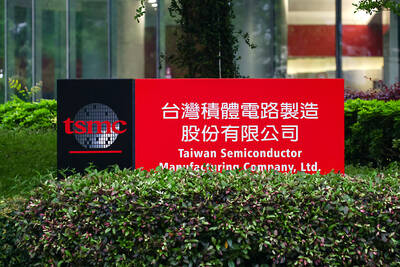
Some analysts are skeptical that Rapidus can achieve 2-nanometer production in such a short period of time, considering it is more advanced than what leaders such as Taiwan Semiconductor Manufacturing Co (台積電) and Samsung Electronics Co offer now.
They also question whether Japan will have many buyers for such chips; the nation’s biggest industries, including automaking, use mostly older, less advanced chips.
“Unfortunately, Japan isn’t a home of companies like Apple Inc that would use a lot of newest chips today,” Nishimura said in the interview. “But cutting-edge chips will be a key for a wide range of industries within the next five to 10 years, such as autonomous driving, ChatGPT-like AI services, as well as quantum computing.”
He said the government would monitor Rapidus’ progress with a plan to “provide continued, bigger support” if necessary.
Rapidus has international support: It is working with IBM Corp of the US and Interuniversity Microelectronics Centre of Belgium on its production plans.
“I want to see Japan once again make top-notch chips domestically,” Nishimura said. “There are already a lot of Japanese firms that have long been providing the world’s top-class chip production machinery and materials.”

SECOND-RATE: Models distilled from US products do not perform the same as the original and undo measures that ensure the systems are neutral, the US’ cable said The US Department of State has ordered a global push to bring attention to what it said are widespread efforts by Chinese companies, including artificial intelligence (AI) start-up DeepSeek (深度求索), to steal intellectual property from US AI labs, according to a diplomatic cable. The cable, dated Friday and sent to diplomatic and consular posts around the world, instructs diplomatic staff to speak to their foreign counterparts about “concerns over adversaries’ extraction and distillation of US AI models.” Distillation is the process of training smaller AI models using output from larger, more expensive ones to lower the costs of training a powerful new
Shares of Taiwan Semiconductor Manufacturing Co (TSMC, 台積電) have repeatedly hit new highs, but an equity analyst said the stock’s valuation remains within a reasonable range and any pullback would likely be technical. The contract chipmaker’s historical price-to-earnings (P/E) ratio has ranged between 20 and 30, Cathay Futures Consultant Co (國泰證期) analyst Tsai Ming-han (蔡明翰) told Central News Agency. With market consensus projecting that TSMC would post earnings per share of about NT$100 (US$3.17) this year, supported by strong global demand for artificial intelligence (AI) applications, and the stock currently trading at a P/E ratio of below 25, Tsai said the valuation
The artificial intelligence (AI) boom has triggered a seismic reshuffling of global equity markets, with Taiwan and South Korea muscling past European nations one by one. With its stock market now valued at nearly US$4.3 trillion, Taiwan surpassed the UK, Europe’s biggest market, earlier this month, data compiled by Bloomberg showed. South Korea is about US$140 billion away from doing the same. The tech-heavy Asian markets have shot past Germany and France in the past seven months. The shift is largely down to massive gains in shares of three companies that provide essential hardware for AI: Taiwan Semiconductor Manufacturing Co (TSMC, 台積電),

The US Department of Commerce last week ordered multiple chip equipment companies to halt shipments of certain tools to China’s second-largest chipmaker, Hua Hong Semiconductor Ltd (華虹半導體), its latest action to slow the country’s development of advanced chips, two people familiar with the matter said. The department sent letters to at least a handful of companies informing them of restrictions on tools and other materials destined for two Hua Hong facilities US officials believe make China’s most sophisticated chips, the people said. Top US chip equipment companies Lam Research Corp, Applied Materials Inc and KLA Corp, each of which has significant


 RSS
RSS