


Asian stocks on Friday followed Wall Street higher ahead of a US inflation update that traders hope might prompt the US Federal Reserve to ease plans for more interest rate hikes.
Taipei, Shanghai, Tokyo, Hong Kong and Sydney advanced.
Wall Street rose on Thursday as worries about the global financial system eased following the collapse of two US banks and one in Switzerland.
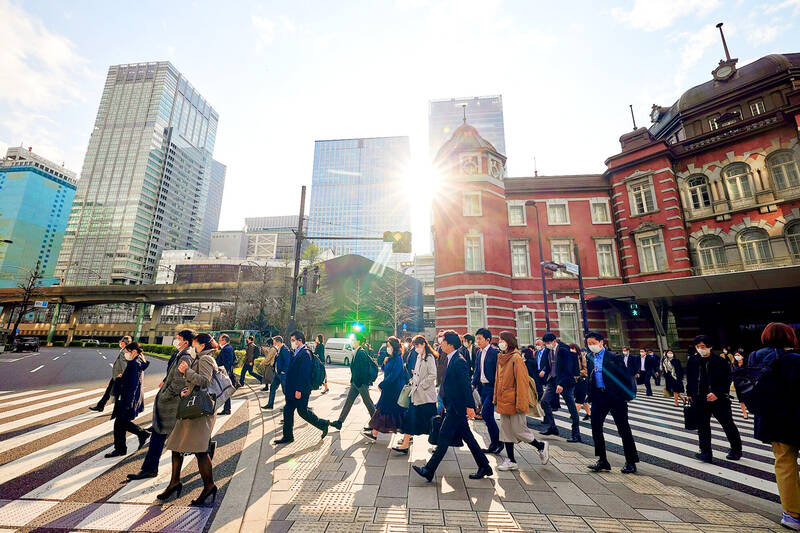
Photo: Bloomberg
Traders hope a measure of US inflation released on Friday that is closely watched by the Fed might prompt the Fed to postpone plans for a possible rate hike at its meeting next month.
A softer inflation reading would be a “signal to continue with the risk-on theme,” Kohle Capital Markets chief market analyst Tim Waterer said in a report.
In Taipei, the TAIEX gained 50.75 points, or 0.12 percent, to close at 15,868.06, losing 0.29 percent weekly. Turnover on Friday totaled NT$199.88 billion (US$6.56 billion).
In China, the Shanghai Composite Index rose 0.36 percent to 3,272.86 after an official survey showed the country’s factory activity grew at a slower pace last month, but was stronger than expected following the end of COVID-19 restrictions. It was gained 0.22 percent for the week. Hong Kong’s Hang Seng added 0.45 percent to 20,400.11, rising 2.43 percent weekly.
The Nikkei 225 in Tokyo advanced 0.93 percent to 28,041.48 after government data showed that factory output rebounded and retail sales rose in February. It rose 2.4 percent for the week. The broader TOPIX added 20.18 points, or 1.02 percent, to 2,003.50 to close up 2.46 percent weekly.
Seoul’s KOSPI added 0.97 percent to 2,476.86 after government data showed factory output declined 3.2 percent from the previous month in February. It gained 2.56 percent from the previous week.
Sydney’s S&P/ASX 200 closed 0.78 percent higher at 7,177.8, rising 3.2 percent weekly, while India’s S&P BSE SENSEX advanced 1.78 percent to 58,991.52, up 1.84 percent weekly.
New Zealand and Jakarta declined, while Singapore and Bangkok advanced.
Traders were rattled by this month’s bank failures, but regulators appear to have calmed fears by promising lending measures if needed to keep other institutions stable after repeated rate hikes caused prices of bonds and other assets on their books to fall.
Markets have shifted focus back to uncertainty about the global economic outlook as central banks try to extinguish inflation.
Additional reporting by staff writer, with CNA
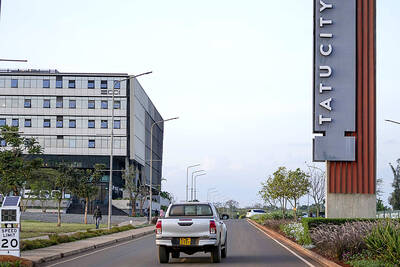
To many, Tatu City on the outskirts of Nairobi looks like a success. The first city entirely built by a private company to be operational in east Africa, with about 25,000 people living and working there, it accounts for about two-thirds of all foreign investment in Kenya. Its low-tax status has attracted more than 100 businesses including Heineken, coffee brand Dormans, and the biggest call-center and cold-chain transport firms in the region. However, to some local politicians, Tatu City has looked more like a target for extortion. A parade of governors have demanded land worth millions of dollars in exchange
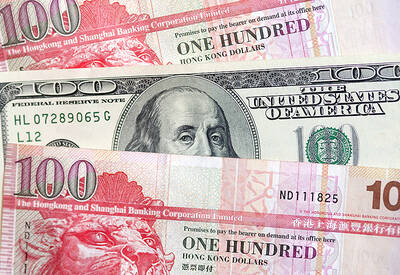
Hong Kong authorities ramped up sales of the local dollar as the greenback’s slide threatened the foreign-exchange peg. The Hong Kong Monetary Authority (HKMA) sold a record HK$60.5 billion (US$7.8 billion) of the city’s currency, according to an alert sent on its Bloomberg page yesterday in Asia, after it tested the upper end of its trading band. That added to the HK$56.1 billion of sales versus the greenback since Friday. The rapid intervention signals efforts from the city’s authorities to limit the local currency’s moves within its HK$7.75 to HK$7.85 per US dollar trading band. Heavy sales of the local dollar by

Taiwan Semiconductor Manufacturing Co’s (TSMC, 台積電) revenue jumped 48 percent last month, underscoring how electronics firms scrambled to acquire essential components before global tariffs took effect. The main chipmaker for Apple Inc and Nvidia Corp reported monthly sales of NT$349.6 billion (US$11.6 billion). That compares with the average analysts’ estimate for a 38 percent rise in second-quarter revenue. US President Donald Trump’s trade war is prompting economists to retool GDP forecasts worldwide, casting doubt over the outlook for everything from iPhone demand to computing and datacenter construction. However, TSMC — a barometer for global tech spending given its central role in the

An Indonesian animated movie is smashing regional box office records and could be set for wider success as it prepares to open beyond the Southeast Asian archipelago’s silver screens. Jumbo — a film based on the adventures of main character, Don, a large orphaned Indonesian boy facing bullying at school — last month became the highest-grossing Southeast Asian animated film, raking in more than US$8 million. Released at the end of March to coincide with the Eid holidays after the Islamic fasting month of Ramadan, the movie has hit 8 million ticket sales, the third-highest in Indonesian cinema history, Film


 RSS
RSS