


Salesforce Inc’s venture capital arm is launching a US$250 million fund, its largest to date, to invest in generative artificial intelligence (AI) start-ups.
Salesforce Ventures has previously invested in companies that have gone public, including Zoom Video Communications Inc, Snowflake Inc and DocuSign Inc. Such investments might become more important for the software company, as large acquisitions appear to be off-the-table due to pressure from activist investors.
The fund will be focused on “nurturing the next generation of generative AI start-ups,” Clara Shih (史宗瑋), chief executive officer of Salesforce’s service cloud, said in a briefing with reporters.

Photo: Reuters
The enterprise giant based in San Francisco on Tuesday also unveiled new generative AI tools for functions, such as drafting customer service responses or initial sales e-mails. Dubbed Einstein GPT, the new tools are integrated with OpenAI’s generative models.
After OpenAI’s ChatGPT gripped the technology industry’s imagination late last year, many large firms have sprinted to announce features taking advantage of AI that generates content. Last month alone, Microsoft Corp integrated OpenAI technology into the Bing search engine, Google announced its ChatGPT rival Bard, Meta Platforms Inc released one of its large language models under an open-source license and Snapchat Inc unveiled a generative tool for socializing.
On Tuesday, the AI Education Project (aiEDU), a nonprofit backed by companies such as Microsoft, Google, OpenAI and AT&T Inc, announced a national call for AI education, with an expanded list of backers and partner schools at the South by Southwest EDU conference in Austin, Texas.
So far, aiEDU has reached 100,000 students and has relationships with districts representing 1.5 million low-income and underserved children across the US.
Other backers include Nvidia Corp, Intel Corp, GSV Ventures, Verizon Communications Inc, and nonprofits such as Teach for America and the Boys and Girls Club.
“People may not be replaced by AI directly, but people will be replaced by people that are proficient users of artificial intelligence,” aiEDU chief executive officer Alex Kotran said.
“So students who have no experience or no knowledge of how to use a tool, have no experience creating projects with generative AI, are going to totally be outclassed by students who have,” Kotran said.
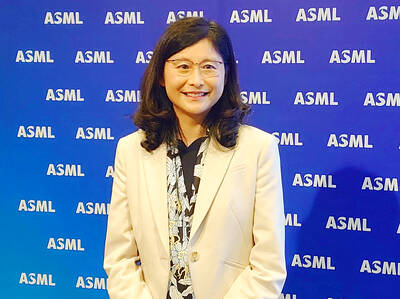
Netherlands-based semiconductor equipment supplier ASML Holding NV yesterday said that it is planning to hire an additional 1,000 people in Taiwan this year in response to growing demand from clients. ASML had previously planned to recruit 600 people this year, but that the plan has been adjusted upward, ASML vice president and ASML Taiwan general manager Grace Wang (汪佳慧) told reporters. ASML has a workforce of more than 4,500 in Taiwan, accounting for about 10 percent of its global total, Wang said. This year’s recruitment campaign would focus on adding people in the customer support, manufacturing and supply chain domains to assist ASML
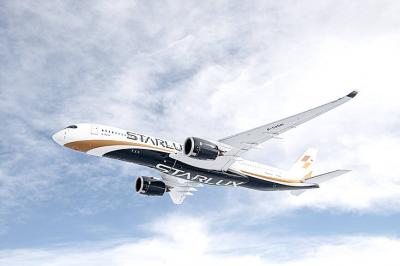
Starlux Airlines Co (星宇航空) today unveiled a long-haul network expansion plan at a shareholders’ meeting in Taipei, including direct flights to Barcelona, Spain, and Zurich, Switzerland, as well as a service connecting Taipei, Sydney and New Zealand. Starlux is to become the first Taiwanese carrier to offer non-stop services to the two European cities, while the inaugural oceanic route is expected to expand transit opportunities within the Australia-New Zealand market, Starlux said. Flight services to Chicago, Dallas, Washington and New York are under evaluation, the airline added. Prior to the shareholders’ meeting, the airline earlier this year announced that it would be
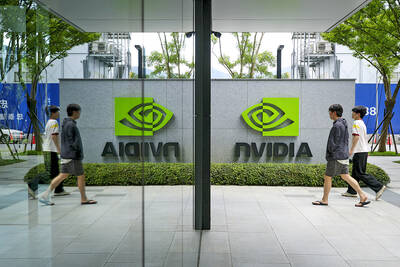
UNDER MICROSCOPE: Taiwan detained three people who allegedly conspired to buy servers in Taiwan and export them using fraudulent documentation, prosecutors said Nvidia Corp chief executive officer Jensen Huang (黃仁勳) on Saturday urged Super Micro Computer Inc to tighten up on compliance after Taiwan detained three people this week for allegedly making fraudulent declarations about artificial intelligence (AI) servers made by its US partner. The development marked the nation’s first crackdown on semiconductor smuggling, which grew after the US slapped restrictions on exports of high-end chips such as Nvidia AI accelerators to China. Nvidia is “rigorous” in explaining regulations to all of its partners, Huang told reporters after arriving in Taipei. “Ultimately Super Micro has to run their own company,” he said in response to

Nvidia Corp yesterday announced that CEO Jensen Huang (黃仁勳) would attend an employee meeting in Taipei tomorrow to celebrate the launch of the company’s Taiwan headquarters project. Huang would attend a gathering at the site of Nvidia’s planned headquarters in Beitou Shilin Technology Park (北投士林科技園區), the company said in a statement. After arriving in Taiwan on Saturday last week, Huang told reporters that he plans to meet with Quanta Computer Inc (廣達) chairman Barry Lam (林百里) and Taiwan Semiconductor Manufacturing Co (TSMC, 台積電) chairman C.C. Wei (魏哲家), and would attend the groundbreaking ceremony for Nvidia’s Taiwan headquarters tomorrow. Nvidia has not yet applied


 RSS
RSS