


Toymaker Lego said store openings in China and healthy demand in Western Europe and the Americas had delivered 17 percent sales growth last year, adding that it expects to outpace the market this year.
The family-owned company known for its colorful plastic bricks said sales rose to 64.6 billion kroner (US$9.27 billion) last year, when it opened 155 new stores, bringing the total number of Lego shops globally to more than 900.
“We have really good momentum, and I think it will continue in 2023,” Lego CEO Niels Christiansen said.

Photo: AP
Lego plans to open another 145 stores this year, mostly in China, which Christiansen said in an interview he expects would help it to grow sales by a high single-digit percentage.
Top sellers last year included Lego’s Star Wars and Harry Potter building sets, and its City and Technic ranges.
The Danish company, which employs more than 27,000 people globally, saw sales spike during the COVID-19 pandemic when many people stayed home and after lockdowns were lifted.
“After a few extraordinary years we may see a return to more normal growth, but we believe we can continue to outpace the market,” Christiansen said.
Last year, Lego’s operating profit of 17.9 billion kroner was up 5 percent annually, after 32 percent growth the previous year.
The company had raised prices on some products in September last year, but by less than increases in its input costs, Christiansen said.
“High growth in sales has helped us compensate for those extra costs on freight, energy and raw materials,” he said.
Christiansen said that Lego has no immediate plans to raise prices, and was optimistic that costs of freight and raw materials were coming down.
As part of its strategy of placing production close to its key markets, Lego plans to begin operating new factories in Vietnam and Virginia next year and in 2025 respectively.

Taiwanese firms have increased investment in the Philippines in recent years as Manila’s ties with Washington deepen and global supply chains continue to shift away from China, an expert at the Chung-Hua Institution for Economic Research (CIER, 中華經濟研究院) said yesterday. The Philippines had not been among Taiwanese investors’ top choices in Southeast Asia, CIER Taiwan ASEAN Studies Center director Kristy Hsu (徐遵慈) said at a seminar in Taipei. However, Taiwan’s investment in the country has grown significantly since the COVID-19 pandemic, reaching US $257 million last year, a high in recent years, she said. Although Taiwan’s total investment in the Philippines still lags

Intel Corp regards Taiwan Semiconductor Manufacturing Co (TSMC, 台積電) as a longstanding partner, as the US chipmaker would continue outsourcing production of advanced chips to TSMC, Intel chief executive officer Lip-Bu Tan (陳立武) said yesterday. “I don’t look at people as competitors. I look at the collaboration... Nvidia is also, you know, a good friend,” Tan told a news conference following his keynote speech at the Computex trade show in Taipei. “It’s a very trusted partnership for us... We are a big, top customer for them, and we’re going to continue doing that,” he said, referring to TSMC, the world’s largest foundry

Artificial intelligence (AI) agents would supplant smartphones as the center of people’s digital lives, fundamentally reshaping personal devices and driving a major computing upgrade cycle, Qualcomm Inc CEO Cristiano Amon said yesterday. In his keynote speech for this year’s Computex trade show in Taipei, Amon said that the rise of "agentic AI" — AI systems capable of reasoning, planning and carrying out tasks autonomously — would transform how people interact with technology across phones, PCs, vehicles and wearable devices. Describing the technology as the next major evolution in computing, Amon said that "2026 is the year of agents.” For decades, smartphones have sat
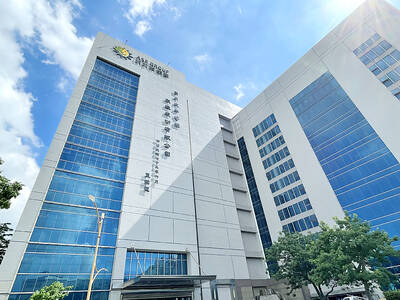
The average pay to employees by ASE Technology Holding Co (日月光投控) was the highest among the companies listed on the local main board last year, while contract chipmaker Taiwan Semiconductor Manufacturing Co (TSMC, 台積電) ranked seventh, the Taiwan Stock Exchange (TWSE) said on Monday. Data compiled by the exchange showed ASE Technology, the world’s largest chip packaging and testing services provider, paid its employees an average of NT$6.28 million (US$199,746) last year, up 40 percent from a year earlier. TSMC, the world’s largest contract chipmaker and the most profitable company in Taiwan, paid its employees NT$4.09 million on average, up


 RSS
RSS