


The four major units of Formosa Plastics Group (FPG, 台塑集團), the nation’s largest industrial conglomerate, yesterday reported across-the-board losses for last quarter, due to weak demand and lower product prices, as well as reduced investment gains and narrower spreads between revenues and material costs.
The group’s four listed companies — Formosa Plastics Corp (台灣塑膠), Formosa Chemicals and Fibre Corp (台灣化學纖維), Nan Ya Plastics Corp (南亞塑膠) and Formosa Petrochemical Corp (台塑石化) — posted a combined net loss of NT$25.29 billion (US$830.19 million) in the fourth quarter of last year.
Formosa Petrochemical’s refining business suffered a larger loss last quarter than the previous quarter due to the fall in oil prices, equipment abnormalities and delays in scheduled maintenance, while both Formosa Plastics and Formosa Chemicals were impacted by the sharp freeze in end demand and the oversupply of petrochemical products, which saw prices of some products fall below the costs and resulted in operating losses, the companies said in separate regulatory filings.
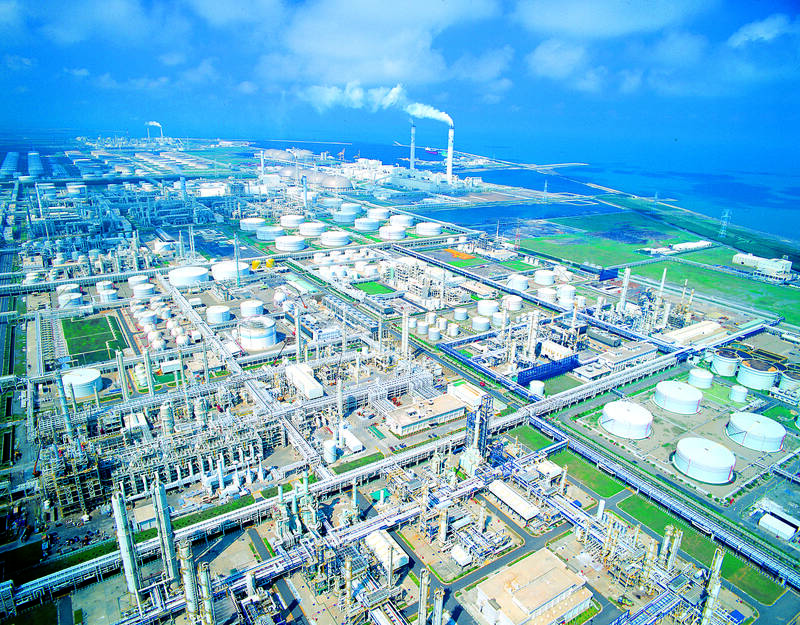
Photo: Taipei Times File Photo
Nonetheless, Nan Ya said it saw a recovery of operations in the electronics, chemical and plastic processing businesses.
Due to last quarter’s lackluster results, the four units posted a combined net profit of NT$90.04 billion for last year, down 62.5 percent from NT$240.3 billion in 2021, or earnings per share of NT$3.37.
Despite a decline in profits, FPG announced that it would still give year-end bonuses equivalent to 4.06 months of wages on average to its employees ahead of the Lunar New Year holiday that is to start on Jan. 20.
Based on the four companies’ regulatory filings, Formosa Plastics Corp, the group’s flagship company, swung into a net loss of NT$7.3 billion last quarter from the previous quarter, or losses per share of NT$1.15.
The company’s net profit for last year decreased 49.3 percent year-on-year to NT$36.1 billion, or earnings per share of NT$5.69, while revenue dropped 8 percent to NT$251.6 billion.
Nan Ya Plastics, the nation’s largest plastics maker, posted a net loss of NT$660 million last quarter, or losses per share of NT$0.08.
The firm remained in the black last year with a net profit of NT$32.11 billion, but the figure dropped 60.5 percent from the previous year, with earnings per share of NT$4.05, after revenue retreated to NT$355.18 billion, down 13.7 percent from 2021.
Formosa Chemicals and Fibre, which manufactures aromatics and styrenics, reported net losses of NT$7.45 billion last quarter, or losses per share of NT$1.27. Its full-year profit decreased 80.6 percent to NT$7.49 billion, or earnings per share of NT$1.27, even though last year’s revenue increased 3.8 percent to NT$379.89 billion.
Formosa Petrochemical, the nation’s only listed oil refiner, last quarter posted a quarterly loss of NT$9.89 billion, or losses per share of NT$1.04.
For the year, the firm’s net profit decreased 70.8 percent annually to NT$14.39 billion, or earnings per share NT$1.51, while revenue rose 36.8 percent to NT$848.05 billion.
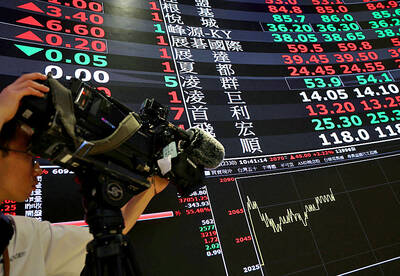
After several years flying high as Asia’s best Nvidia Corp proxy, Taiwan Semiconductor Manufacturing Co (TSMC, 台積電) is increasingly vying with other artificial intelligence (AI) stocks for investor attention. Stock traders are chasing a wider array of beneficiaries as mainstream usage of AI creates demand for hardware beyond the most-advanced chips TSMC makes for Nvidia. Subthemes from the deepening memory crunch to advances in robotics are also luring bids. At the same time, investment caps on single stocks are pushing funds to diversify, while retail investors long familiar with TSMC through its US depositary receipts are being offered a broader set of
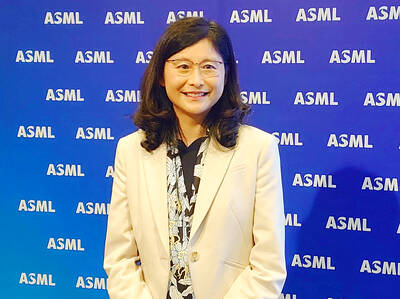
Netherlands-based semiconductor equipment supplier ASML Holding NV yesterday said that it is planning to hire an additional 1,000 people in Taiwan this year in response to growing demand from clients. ASML had previously planned to recruit 600 people this year, but that the plan has been adjusted upward, ASML vice president and ASML Taiwan general manager Grace Wang (汪佳慧) told reporters. ASML has a workforce of more than 4,500 in Taiwan, accounting for about 10 percent of its global total, Wang said. This year’s recruitment campaign would focus on adding people in the customer support, manufacturing and supply chain domains to assist ASML

UNDER MICROSCOPE: Taiwan detained three people who allegedly conspired to buy servers in Taiwan and export them using fraudulent documentation, prosecutors said Nvidia Corp chief executive officer Jensen Huang (黃仁勳) on Saturday urged Super Micro Computer Inc to tighten up on compliance after Taiwan detained three people this week for allegedly making fraudulent declarations about artificial intelligence (AI) servers made by its US partner. The development marked the nation’s first crackdown on semiconductor smuggling, which grew after the US slapped restrictions on exports of high-end chips such as Nvidia AI accelerators to China. Nvidia is “rigorous” in explaining regulations to all of its partners, Huang told reporters after arriving in Taipei. “Ultimately Super Micro has to run their own company,” he said in response to

Nvidia Corp yesterday announced that CEO Jensen Huang (黃仁勳) would attend an employee meeting in Taipei tomorrow to celebrate the launch of the company’s Taiwan headquarters project. Huang would attend a gathering at the site of Nvidia’s planned headquarters in Beitou Shilin Technology Park (北投士林科技園區), the company said in a statement. After arriving in Taiwan on Saturday last week, Huang told reporters that he plans to meet with Quanta Computer Inc (廣達) chairman Barry Lam (林百里) and Taiwan Semiconductor Manufacturing Co (TSMC, 台積電) chairman C.C. Wei (魏哲家), and would attend the groundbreaking ceremony for Nvidia’s Taiwan headquarters tomorrow. Nvidia has not yet applied


 RSS
RSS