


MediaTek Inc (聯發科), the world’s largest 5G smartphone chip supplier, yesterday said it would miss its revenue growth target for this year, as it is facing the sharpest downturn in the history of the semiconductor industry, due to weakening consumer spending on smartphones and computers amid deteriorating economic prospects and a strong US dollar.
As most customers concentrate on digesting excessive inventory and are cautious about placing new orders, MediaTek expects revenue to drop by 7 to 16 percent annually to NT$108 billion to NT$119.4 billion (US$3.36 billion to US$3.71 billion) during this quarter.
The chip company attributed the decline to weak demand for chips used in 4G phones as consumers in emerging economies, such as Southeast Asian and African countries, are reluctant to buy phones, which have become more expensive due to the strong US dollar against local currencies, MediaTek said.
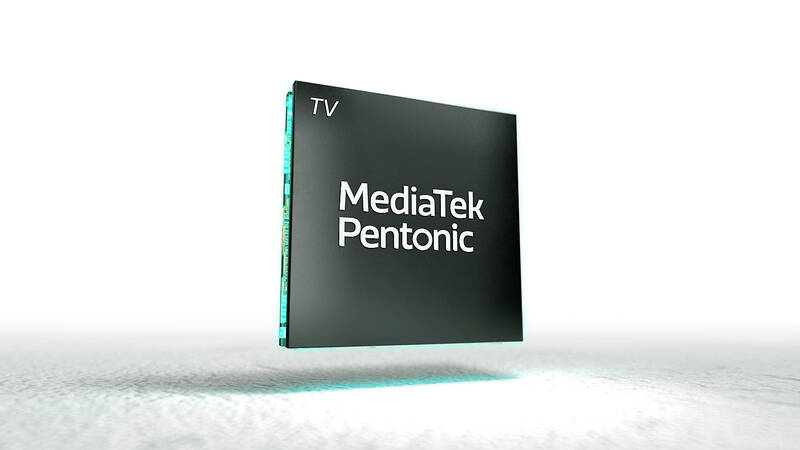
Photo courtesy of MediaTek
“Given the uncertainties of the global macroeconomic environment and market demand, we see customers in general hold back orders even though channel and customer inventories have come down from last quarter. We expect the largest impact from customer adjustments to be in the fourth quarter,” MediaTek chief executive officer Rick Tsai (蔡力行) told a virtual investors’ conference yesterday.
MediaTek’s revenue this year would reach NT$560 billion at best, up 13.5 percent from NT$493.41 billion last year. That would fall short of MediaTek’s previous estimates of 17 percent, or 19 percent annual growth in revenue.
“Our feeling is, in general, customer sentiment is in a very, very cautious mode,” Tsai said. “Some of them have their inventory down to two to three months’ level, which during normal times, the replenish cycle would have started. But at this unusual time, I think they probably would hold down even further.”
Gross margin this quarter is to range from 47 to 50 percent, the company said. It saw gross margin unchanged at 49.3 percent last quarter from the quarter earlier.
Despite expecting a mild and nascent recovery in the first quarter of next year, after revenue hitting the trough this quarter, MediaTek said it remains cautious about next year’s business outlook.
“Our industry has not seen a downturn of this magnitude in probably over a decade. There were fluctuations in the last 10 to 12 years, but nothing compared to this. I would call it a severe downturn,” Tsai said.
MediaTek said it would not cut prices to stimulate short-term demand, while manufacturing costs are mounting as its foundry partners are hiking prices, Tsai said. The company’s primary objective is to “manage” its market share next year, he said.
The world’s 5G smartphone penetration would rise to account for 55 percent of total smartphones shipped next year, compared with 48 or 49 percent this year, MediaTek said.
Commenting on escalating geopolitical tensions, MediaTek said it does not expect any material impact from the US’ last semiconductor export controls on China. It did not see signs that Chinese smartphone vendors are turning to Chinese chip suppliers, it said.
MediaTek yesterday posted the weakest quarterly net profits in about three quarters last quarter. Net profits contracted 12.6 percent to NT$30.96 billion last quarter, compared with NT$35.44 billion in the second quarter. On an annual basis, net profits rose 9.4 percent from NT$28.29 billion in the third quarter last year.
Earnings per share dropped to NT$19.54 last quarter from NT$22.39 in the second quarter, which is an improvement from NT$17.92 made in the third quarter last year.
MediaTek yesterday said it would stick to its goal of distributing an 80 to 85 percent payout ratio. It would also keep unchanged a three-year special cash dividend payment of NT$16 per share per year through 2024.


Taiwan’s foreign exchange reserves fell below the US$600 billion mark at the end of last month, with the central bank reporting a total of US$596.89 billion — a decline of US$8.6 billion from February — ending a three-month streak of increases. The central bank attributed the drop to a combination of factors such as outflows by foreign institutional investors, currency fluctuations and its own market interventions. “The large-scale outflows disrupted the balance of supply and demand in the foreign exchange market, prompting the central bank to intervene repeatedly by selling US dollars to stabilize the local currency,” Department of Foreign

Intel Corp is joining Elon Musk’s long-shot effort to develop semiconductors for Tesla Inc, Space Exploration Technologies Corp and xAI, marking a surprising twist in the chipmaker’s comeback bid. Intel would help the Terafab project “refactor” the technology in a chip factory, the company said on Tuesday in a post on X, Musk’s social media platform. That is a stage in the development process that typically helps make chips more powerful or reliable. The chipmaker’s shares jumped 4.2 percent to US$52.91 in New York trading on Tuesday. The Terafab project is a grand plan by Musk to eventually manufacture his own chips for

Some robotaxi passengers were left stranded in the middle of fast-moving traffic in a major Chinese city after their driverless vehicles stopped running, according to police and media reports on Wednesday. A preliminary investigation indicates more than 100 robotaxis came to a halt because of a “system malfunction,” police in the city of Wuhan said in a statement, without elaborating. No injuries were reported. One passenger told Chinese media that their robotaxi stopped after turning a corner. An instruction on a screen read: “Driving system malfunction. Staff are expected to arrive in 5 minutes.” After no one showed up, the passenger pushed
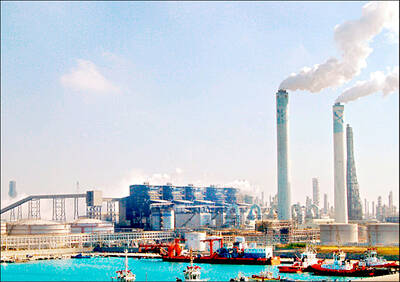
Taiwan Power Co (Taipower, 台電) yesterday said it plans to resume operations at two coal-fired power generators for three months to boost security of electricity supply as liquefied natural gas (LNG) supply risks are running high due to the Middle East conflict. The two coal-fired power generators are at Mailiao Power Plant in Yunlin County’s Mailiao Township (麥寮). The plant, operated by Formosa Plastics Group (台塑集團), supplied electricity to Taipower’s power grid until the end of last year. Taipower’s decision came about one month after Minister of Economic Affairs Kung Ming-hsin (龔明鑫) on March 10 said that the nation had no imminent


 RSS
RSS