


The yuan extended declines after breaching the 7 per US dollar level as concerns that the US Federal Reserve might deliver an outsized rate hike next week eclipsed a string of attempts from the People’s Bank of China (PBOC) to support the currency.
The onshore and offshore yuan fell to the lowest since July 2020, even as China’s central bank yesterday set the currency fixing at 456 pips stronger than the estimates in a Bloomberg survey, on concern that Fed rate hikes would exacerbate China’s yield gap with the US and drive outflows.
The fixing pushback also fell short of the record 598 pips on Wednesday.
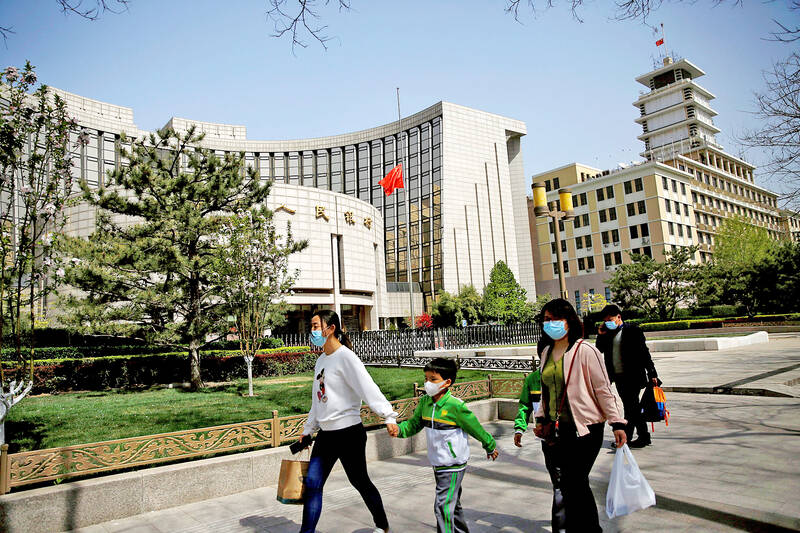
Photo: Reuters
While warning investors not to bet on any particular level, the 17 straight days of stronger-than-expected fixings have been the most visible signal from Beijing yet that it is seeking to stabilize the currency ahead of the Chinese Communist Party Congress next month, when Chinese President Xi Jinping (習近平) is expected to secure an unprecedented third term.
“It’s not a house-on-fire move,” said Brad Bechtel, global head of foreign exchange at Jefferies LLC, referring to the Chinese central bank reference rates. “The PBOC is quietly pushing back through the daily fixing, but they are not really doing anything else. Central banks have realized that it’s a dollar trade. They could fight it, but there’s not much they can do about it.”
Traders responded to the move by the People’s Bank of China by pushing the onshore yuan to as low as 7.0195 per US dollar, about 0.7 percent shy from the weak end of the 2 percent trading band around the fixing.
The gap between onshore yuan and the fixing stayed near 800 pips, which was the most since 2020.
Both of these indicate deepening bearish sentiment on the yuan.
The currency’s slide gathered pace on Thursday amid geopolitical concerns surrounding a meeting between Russian President Vladimir Putin and Xi, and the approval of the Taiwan Policy Act in the US, Morgan Stanley said in a note.
The stronger fixing is “unlikely to defend the psychological 7 level, but delay and smooth out the yuan depreciation pace, unless the PBOC takes other measures to support the yuan,” said Ken Cheung (張建泰), chief Asian foreign exchange strategist at Mizuho Bank.
A Shanghai Securities News report downplayed yuan’s losses and cited unnamed experts, saying wider swings in the exchange rate have become normal in recent years amid increased uncertainties in the global economy.
Still, policymakers have plenty in their toolbox to manage the currency, including by raising costs for investors to bet against the yuan by using forwards contracts, reducing the amount of dollar deposits banks need to set aside as reserves again as it did earlier this month, or in the worst case, resolve to direct intervention by selling the dollar.
However, the yuan’s relative strength versus other regional currencies might act as a deterrent. The yuan is at a 13-year high versus the South Korean won and 29-year high versus the Japanese yen.
Moreover, the trade-weighted yuan has remained little changed since last month, a Bloomberg tracker of the CFETS Index showed.
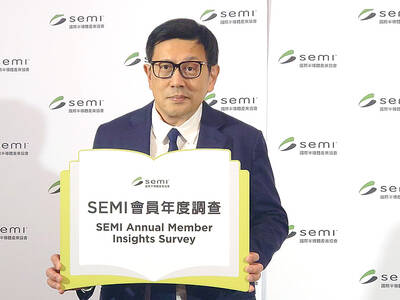
PRICE HIKES: The war in the Middle East would not significantly disrupt supply in the short term, but semiconductor companies are facing price surges for materials Taiwan’s semiconductor companies are not facing imminent supply disruptions of essential chemicals or raw materials due to the war in the Middle East, but surges in material costs loom large, industry association SEMI Taiwan said yesterday. The association’s comments came amid growing concerns that supplies of helium and other key raw materials used in semiconductor production could become a choke point after Qatar shut down its liquefied natural gas (LNG) production and helium output earlier this month due to the conflict. Qatar is the second-largest LNG supplier in the world and accounts for about 33 percent of global helium output. Helium is
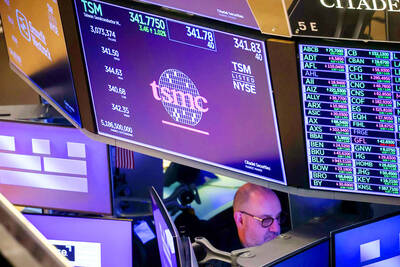
STRONG INTEREST: Analysts have pointed to optimism in TSMC’s growth prospects in the artificial intelligence era as the cause of the rising number of shareholders The number of people holding shares of chipmaker Taiwan Semiconductor Manufacturing Co (TSMC, 台積電) hit a new high last week despite a decline in its stock price, the Taiwan Depository and Clearing Corp (TDCC, 台灣集保) said. The number of TSMC shareholders rose to 2.46 million as of Friday, up 75,536 from a week earlier, TDCC data showed. The stock price fell 1.34 percent during the same week to close at NT$1,840 (US$57.55). The decline in TSMC’s share price resulted from volatility in global tech stocks, driven by rising international crude oil prices as the war against Iran continues. Dealers said

DOMESTIC COMPONENT: Huang identified several Taiwanese partners to be a key part of Nvidia’s Vera Rubin supply chain, including Asustek, Hon Hai and Wistron Nvidia Corp chief executive officer Jensen Huang (黃仁勳), addressing crowds at the company’s biggest annual event, unveiled a variety of new products while predicting that its flagship artificial intelligence (AI) processors would help generate US$1 trillion in sales through next year. During a two-and-a-half-hour keynote address, Huang announced plans to push deeper into central processing units (CPUs) — Intel Corp’s home turf — and introduced semiconductors made with technology acquired from start-up Groq Inc. The company even said it was developing chips for data centers in outer space. At the heart of Huang’s speech was the message that demand for computing power
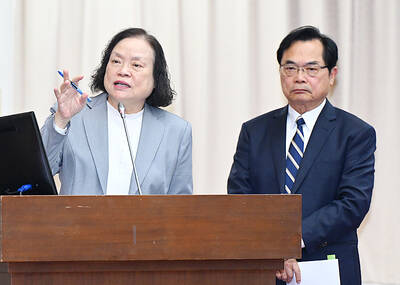
OPTIMISTIC: Inflation still has a chance of remaining below the central bank’s 2 percent alert level, as Taiwan’s economy is resilient with healthy exports, the NDC minister said Taiwan’s inflation could exceed 2 percent this year if oil prices continue to surge amid escalating tensions in the Middle East, prompting the government to reassess its economic outlook, the Directorate-General of Budget, Accounting and Statistics (DGBAS) said yesterday. DGBAS Minister Chen Shu-tzu (陳淑姿) told lawmakers at a meeting of the legislature’s Finance Committee that the agency’s earlier growth forecast of 1.68 percent in the consumer price index (CPI) and 7.71 percent for GDP this year did not account for the ongoing Middle East conflict and would need revision, if tensions persist. The previous forecast assumed an average international crude price of


 RSS
RSS