


Traders rushed to sell BYD Co (比亞迪) after Warren Buffett’s Berkshire Hathaway Inc trimmed its stake in the Chinese electric vehicle (EV) maker, fearing that the legendary investor might be gearing up for an eventual exit after a decade as the company’s most notable backer.
BYD shares yesterday plunged as much as 13 percent in Hong Kong, the most in seven weeks and the worst performance on the benchmark Hang Seng Index. The selling followed Berkshire’s filing to the exchange late on Tuesday notifying that the firm reduced its holding of BYD’s Hong Kong-listed shares to 19.92 percent from 20.04 percent on Wednesday last week.
Speculation has been swirling for weeks about Buffett’s intentions, ever since a 20.49 percent stake — identical to the size of Berkshire’s last reported BYD position as of December last year — entered the Hong Kong’s central clearing and settlement system last month, a move that is often seen as a precursor to share sales. BYD stock has fallen more than 25 percent from a July high.
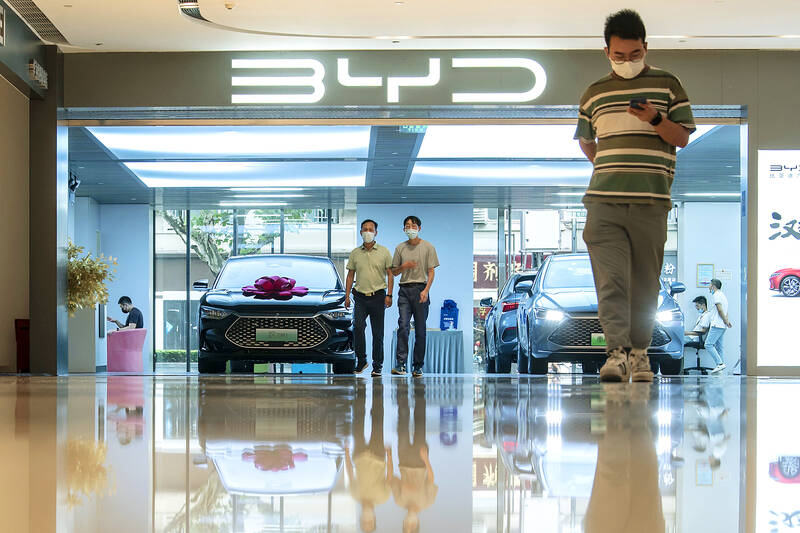
Photo: Bloomberg
“Investors could interpret this as the beginning of Berkshire closing its position in BYD,” said Bridget McCarthy, a market research analyst at hedge fund Snow Bull Capital Inc. “I would expect arguably one of the world’s greatest investors to take some profits after over a decade, especially on his highest-returning investment, percentage-wise.”
Buffett has sold about 6.3 million shares since June 30 through Wednesday last week, calculations based on BYD’s interim report and the investor’s latest filing showed. Berkshire, which first bought 225 million shares in September 2008, has been by far the largest shareholder in the EV giant.
The investment has also proved hugely lucrative as BYD shares have soared more than 2,000 percent since his initial purchase.
Investors view BYD, China’s biggest EV maker, as a bellwether for the sector. The company reported a jump in profit for the first half of the year as record output and sales shielded it from COVID-19 disruptions and supply-chain pain.
The automaker’s fundamentals suggest BYD might be able to endure further selling from Buffett, especially as investors pour into China’s green energy sector on bets the industry will benefit from Beijing’s policy push.
The auto industry has also been a key recipient of a range of tax and consumption incentives as authorities seek to dominate the shift away from combustion engines and accelerate the economy’s recovery.
BYD’s business model has improved significantly from the time Buffett first invested, said Andy Wong (黃耀宗), a fund manager at LW Asset Management Advisors Ltd (利達資產管理) in Hong Kong.
“Despite the short term share price struggle, there is value to invest in the company with its solid business model in the medium to long term,” he said, adding that some investors might have been waiting for a correction to buy.
A BYD official, in comments to China’s 21st Century Business Herald, said there is “no need to overinterpret” the stake sale, and added that the company’s operations remain normal.
As of Tuesday, BYD was the world’s second-most richly valued automaker, with its price to estimated earnings ratio below Li Auto Inc (理想汽車), a Chinese EV start-up listed in the US, and higher than Tesla Inc.
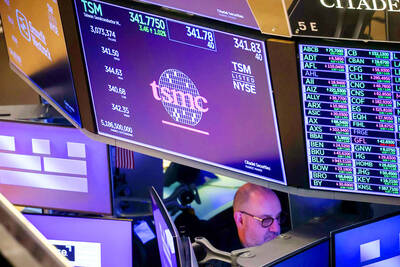
STRONG INTEREST: Analysts have pointed to optimism in TSMC’s growth prospects in the artificial intelligence era as the cause of the rising number of shareholders The number of people holding shares of chipmaker Taiwan Semiconductor Manufacturing Co (TSMC, 台積電) hit a new high last week despite a decline in its stock price, the Taiwan Depository and Clearing Corp (TDCC, 台灣集保) said. The number of TSMC shareholders rose to 2.46 million as of Friday, up 75,536 from a week earlier, TDCC data showed. The stock price fell 1.34 percent during the same week to close at NT$1,840 (US$57.55). The decline in TSMC’s share price resulted from volatility in global tech stocks, driven by rising international crude oil prices as the war against Iran continues. Dealers said
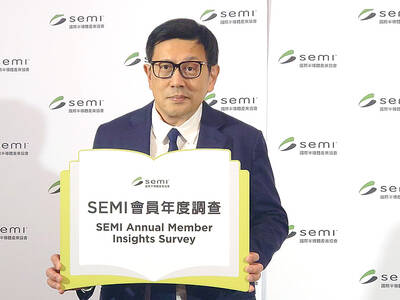
PRICE HIKES: The war in the Middle East would not significantly disrupt supply in the short term, but semiconductor companies are facing price surges for materials Taiwan’s semiconductor companies are not facing imminent supply disruptions of essential chemicals or raw materials due to the war in the Middle East, but surges in material costs loom large, industry association SEMI Taiwan said yesterday. The association’s comments came amid growing concerns that supplies of helium and other key raw materials used in semiconductor production could become a choke point after Qatar shut down its liquefied natural gas (LNG) production and helium output earlier this month due to the conflict. Qatar is the second-largest LNG supplier in the world and accounts for about 33 percent of global helium output. Helium is
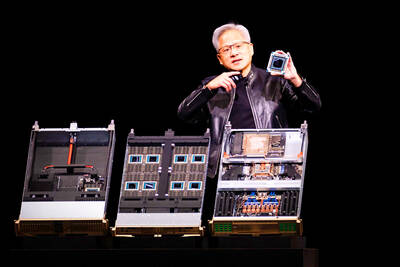
DOMESTIC COMPONENT: Huang identified several Taiwanese partners to be a key part of Nvidia’s Vera Rubin supply chain, including Asustek, Hon Hai and Wistron Nvidia Corp chief executive officer Jensen Huang (黃仁勳), addressing crowds at the company’s biggest annual event, unveiled a variety of new products while predicting that its flagship artificial intelligence (AI) processors would help generate US$1 trillion in sales through next year. During a two-and-a-half-hour keynote address, Huang announced plans to push deeper into central processing units (CPUs) — Intel Corp’s home turf — and introduced semiconductors made with technology acquired from start-up Groq Inc. The company even said it was developing chips for data centers in outer space. At the heart of Huang’s speech was the message that demand for computing power
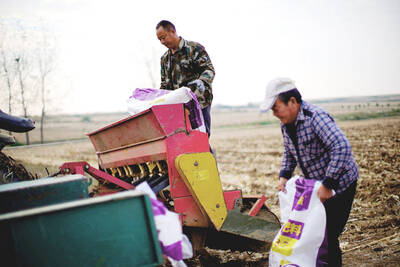
China is clamping down on fertilizer exports to protect its domestic market, industry sources said, putting an additional strain on global markets that were already grappling with shortages caused by the US-Israeli war on Iran. China is among the largest fertilizer exporters — shipping more than US$13 billion of it last year — and it has a history of controlling exports to keep prices low for farmers. Shipments through the war-blocked Strait of Hormuz account for about one-third of the sea-borne supply. This month, Beijing banned exports of nitrogen-potassium fertilizer blends and certain phosphate varieties, sources said. The ban, which has not


 RSS
RSS