


OPEC leader Saudi Arabia’s energy minister on Monday said that the oil cartel and its allies have the means to deal with market challenges — including by “cutting production.”
“OPEC+ has the commitment, the flexibility and the means within the existing mechanisms ... to deal with such challenges, including cutting production at any time,” Prince Abdulaziz bin Salman said in an interview with Bloomberg, according to Saudi Arabian state news agency SPA.
Saudi Arabia-led OPEC consists of 13 members.
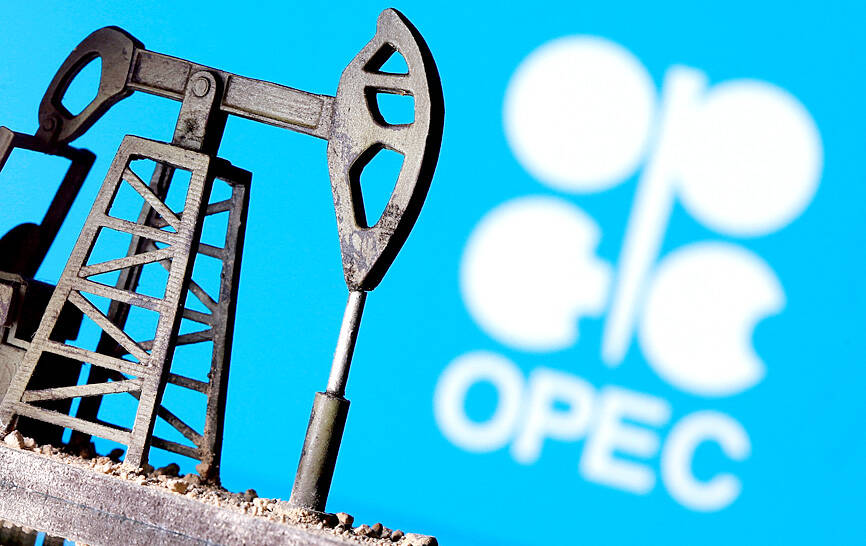
Photo: Reuters
OPEC and 10 allies led by Russia — a group known as OPEC+ — last month agreed to raise production by 100,000 barrels per day next month following Western calls for more output after Russia’s invasion of Ukraine and a post-COVID-19 pandemic surge in demand sent crude prices soaring.
They had agreed to increases of almost 650,000 barrels per day last month and this month, but the cartel has struggled to meet its quotas.
Oil prices rose to trade near US$91 a barrel after Prince Abdulaziz said OPEC+ might be forced to cut production to stabilize a volatile market.
“Volatility and thin liquidity send erroneous signals to markets at times when clarity is most needed,” Prince Abdulaziz told Bloomberg.
He warned that a “vicious circle” was being “amplified by the flow of unsubstantiated stories about demand destruction, recurring news about the return of large volumes of supply, and ambiguity and uncertainty about the potential impacts of price caps, embargoes and sanctions.”
OPEC raised production by 162,000 barrels last month to a total of 28.8 million barrels per day, with most of the output coming from Saudi Arabia, the United Arab Emirates and Kuwait, according to its monthly report.
“In OPEC+ we have experienced a much more challenging environment in the past, and we have emerged stronger and more cohesive than ever,” Prince Abdulaziz said. “Soon we will start working on a new agreement beyond 2022.”
Oil futures have lost about one-quarter since early June as escalating fears of an economic slowdown threatened the demand outlook. The potential revival of a nuclear deal with Iran, which could lead to a surge in crude exports from the OPEC producer, added to the bearish sentiment.
Traders were watching Purchasing Managers’ Index data from the US and Europe yesterday to glean further clues on the state of the global economy, ahead of the US Federal Reserve’s Jackson Hole symposium at the end of this week.
Additional reporting by Bloomberg

SECOND-RATE: Models distilled from US products do not perform the same as the original and undo measures that ensure the systems are neutral, the US’ cable said The US Department of State has ordered a global push to bring attention to what it said are widespread efforts by Chinese companies, including artificial intelligence (AI) start-up DeepSeek (深度求索), to steal intellectual property from US AI labs, according to a diplomatic cable. The cable, dated Friday and sent to diplomatic and consular posts around the world, instructs diplomatic staff to speak to their foreign counterparts about “concerns over adversaries’ extraction and distillation of US AI models.” Distillation is the process of training smaller AI models using output from larger, more expensive ones to lower the costs of training a powerful new
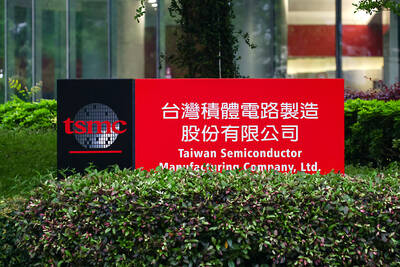
Shares of Taiwan Semiconductor Manufacturing Co (TSMC, 台積電) have repeatedly hit new highs, but an equity analyst said the stock’s valuation remains within a reasonable range and any pullback would likely be technical. The contract chipmaker’s historical price-to-earnings (P/E) ratio has ranged between 20 and 30, Cathay Futures Consultant Co (國泰證期) analyst Tsai Ming-han (蔡明翰) told Central News Agency. With market consensus projecting that TSMC would post earnings per share of about NT$100 (US$3.17) this year, supported by strong global demand for artificial intelligence (AI) applications, and the stock currently trading at a P/E ratio of below 25, Tsai said the valuation
The artificial intelligence (AI) boom has triggered a seismic reshuffling of global equity markets, with Taiwan and South Korea muscling past European nations one by one. With its stock market now valued at nearly US$4.3 trillion, Taiwan surpassed the UK, Europe’s biggest market, earlier this month, data compiled by Bloomberg showed. South Korea is about US$140 billion away from doing the same. The tech-heavy Asian markets have shot past Germany and France in the past seven months. The shift is largely down to massive gains in shares of three companies that provide essential hardware for AI: Taiwan Semiconductor Manufacturing Co (TSMC, 台積電),
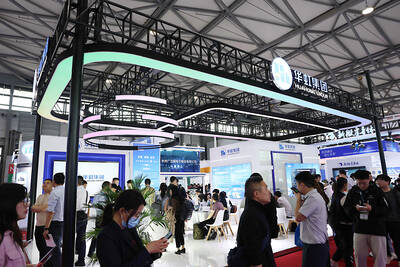
The US Department of Commerce last week ordered multiple chip equipment companies to halt shipments of certain tools to China’s second-largest chipmaker, Hua Hong Semiconductor Ltd (華虹半導體), its latest action to slow the country’s development of advanced chips, two people familiar with the matter said. The department sent letters to at least a handful of companies informing them of restrictions on tools and other materials destined for two Hua Hong facilities US officials believe make China’s most sophisticated chips, the people said. Top US chip equipment companies Lam Research Corp, Applied Materials Inc and KLA Corp, each of which has significant


 RSS
RSS