


From US$300 bucket hats to US$900 sneakers and US$700 T-shirts, the high-flying luxury sector is fretting over the appetite among financially stretched Gen Z consumers for such “aspirational” purchases.
Executives are troubled in particular by a hit to young Chinese shoppers, not only because mainland China has been a major driver of the industry’s growth in the past few years, but also because high-end consumers in the world’s second-largest economy are a decade younger than the global average of 38.
Young adults around the world have been “a very strong factor of luxury growth over the past decade,” said Gregory Boutte, chief client and digital officer at Gucci-owner Kering.
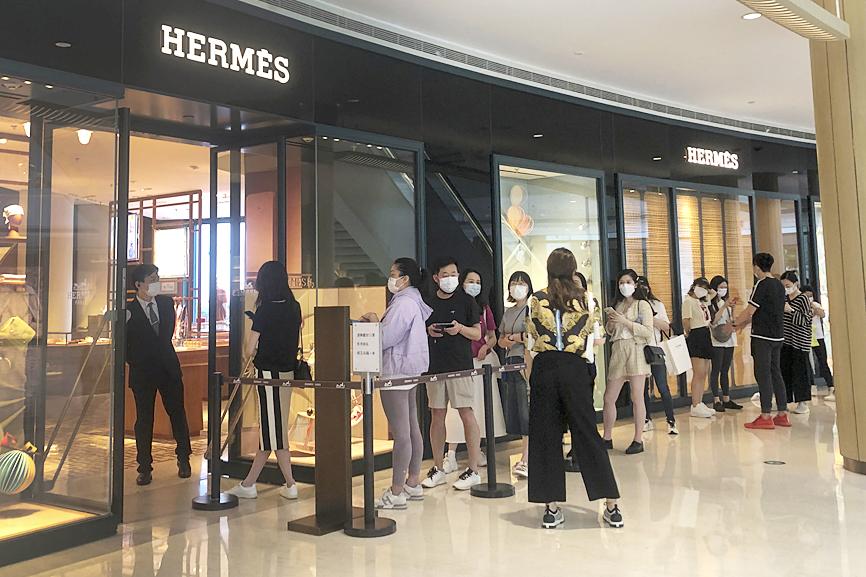
Photo: AP
Data last week showed that China’s economy slowed unexpectedly, prompting a central bank rate cut, while macroeconomic trends are disproportionately affecting the extra funds that those born between 1996 and 2012 might use to enter the world of luxury.
Whereas in North America and Europe, inflation and a rising cost-of-living are hitting discretionary incomes of young consumers especially hard, China’s problem is different.
“In the US, inflation is a huge issue, the major focus of a lot of luxury companies... In China, it’s the youth unemployment rate that’s alarming right now,” said Kenneth Chow (周啟諾), principal at consultancy Oliver Wyman.
Government data for last month registered the unemployment rate of China’s urban population aged 16 to 24 at a record 19.9 percent, exacerbated by the effects of COVID-19 lockdowns and a crackdown on big tech firms that traditionally hired droves of graduates.
“This might be the first time that a lot of young adults [in China] are facing [such an] economic impact, so it will be a testing ground on how these consumers are going to spend on luxury items going forward,” Chow said.
“If a recession happens, then I will 100 percent buy less or maybe even stop buying altogether,” said US-based luxury lifestyle and travel TikToker Jeffrey Huang, 28, who shares his Louis Vuitton shopping trips and hauls with his 150,000 followers.
A recent Oliver Wyman study showed that some luxury brands are significantly lowering their sales expectations for the Chinese market in response to current conditions, with 80 percent of executives questioned not expecting a “V-shaped” recovery this year. Oliver Wyman declined to name the brands it surveyed.
Nevertheless, earnings last month from firms including LVMH and Kering painted a picture of resilience in the face of economic headwinds, with luxury players riding a wave of post-COVID-19 spending by their wealthiest clients.
And big brands have signaled their intention to grow top end sales of US$10,000 handbags and US$5,000 coats rather than focus on attracting new entrants onto the bottom rung of the ladder.
Chanel, Louis Vuitton and Dior have raised prices on high-margin leather goods several times over the past year, with Chanel planning stores dedicated to VIP consumers.
“As the prices are rising, I’m becoming more and more cautious because I feel like I did do a good amount of spending in the last year,” said Sara Yogi, a 26-year-old San Francisco, California resident, adding that she might hold off buying a US$2,900 Prada bag and one costing US$3,200 from Bottega Veneta, which are both on her wish list.
This shift to focus on core luxury consumers also encompasses a cohort of wealthy Gen Z consumers less likely to be affected by inflation or unemployment.
The concern is over would-be buyers who were meant to help Gen Z account for one-fifth of all spending in the luxury goods sector globally by 2025.
Brands such as Burberry have already reported weakness in sales of sneakers and slides, products Gen Z and millennial consumers have traditionally used as their entree into the world of luxury brands.
One way for luxury players to continue to attract Gen Z consumers might be to offer aspirational options at entry-level price points that can be worn often, said Yi Kejie, a 26-year-old marketing content manager.
Luxury branded mobile phone cases, earrings, hair clips and perfumes are all popular among her Gen Z peers in China, Yi said.
“These are items with the lowest threshold for [them] to have that logo, that icon,” Yi added.
Some luxury labels, including Balenciaga and Dior, are embracing the “metaverse” to seed interest with teens and young adults, offering affordable ways for them to kit out their virtual identities on gaming platforms such as Roblox.
Virtual sneakers from brands such as Gucci have already proved wildly popular, with a price point of US$17.99.
Whether in the real or virtual world, entry-level products call for high levels of creative investment.
“There is this young crowd of consumers that are entering into the market that requires a lot of creativity at more affordable price points,” said Bain & Co partner Claudia D’Arpizio, adding that not all brands are equipped for this.
However, there is good news for brands.
If they do find the right offering of entry-level products, or if the economic situation of Gen Z consumers improves, the desire for luxury products remains undimmed.
“Young people in China are enthusiastic about luxury products,” Yi said. “Lockdowns, or the temporary unemployment rate won’t change their long-term preferences.”
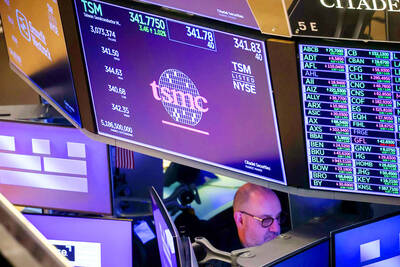
STRONG INTEREST: Analysts have pointed to optimism in TSMC’s growth prospects in the artificial intelligence era as the cause of the rising number of shareholders The number of people holding shares of chipmaker Taiwan Semiconductor Manufacturing Co (TSMC, 台積電) hit a new high last week despite a decline in its stock price, the Taiwan Depository and Clearing Corp (TDCC, 台灣集保) said. The number of TSMC shareholders rose to 2.46 million as of Friday, up 75,536 from a week earlier, TDCC data showed. The stock price fell 1.34 percent during the same week to close at NT$1,840 (US$57.55). The decline in TSMC’s share price resulted from volatility in global tech stocks, driven by rising international crude oil prices as the war against Iran continues. Dealers said
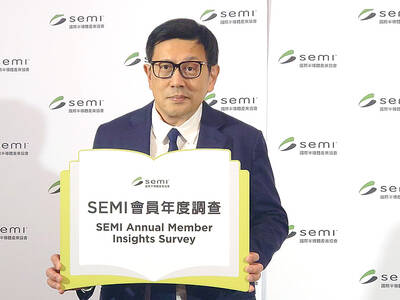
PRICE HIKES: The war in the Middle East would not significantly disrupt supply in the short term, but semiconductor companies are facing price surges for materials Taiwan’s semiconductor companies are not facing imminent supply disruptions of essential chemicals or raw materials due to the war in the Middle East, but surges in material costs loom large, industry association SEMI Taiwan said yesterday. The association’s comments came amid growing concerns that supplies of helium and other key raw materials used in semiconductor production could become a choke point after Qatar shut down its liquefied natural gas (LNG) production and helium output earlier this month due to the conflict. Qatar is the second-largest LNG supplier in the world and accounts for about 33 percent of global helium output. Helium is

China is clamping down on fertilizer exports to protect its domestic market, industry sources said, putting an additional strain on global markets that were already grappling with shortages caused by the US-Israeli war on Iran. China is among the largest fertilizer exporters — shipping more than US$13 billion of it last year — and it has a history of controlling exports to keep prices low for farmers. Shipments through the war-blocked Strait of Hormuz account for about one-third of the sea-borne supply. This month, Beijing banned exports of nitrogen-potassium fertilizer blends and certain phosphate varieties, sources said. The ban, which has not

AMAZING ABUNDANCE: Elon Musk has announced plans for a new facility in Texas which would manufacture chips for Tesla and SpaceX to use in robotics and AI Elon Musk said his Terafab project — a grand plan to eventually manufacture his own chips for robotics, artificial intelligence (AI) and space data centers — would be built in Austin and jointly run by Tesla Inc and Space Exploration Technologies Corp (SpaceX). Musk, the chief executive officer of the two companies, said he would start off with an “advanced technology fab” in Austin that would have all of the equipment necessary to make chips of any kind. The project would call for one day supporting 1 terawatt (TW) of computing power per year, the amount Musk expects the companies to


 RSS
RSS