


Stock investor Rakesh Jhunjhunwala, dubbed “India’s Warren Buffett” with an estimated net worth of US$6 billion, died early yesterday at age 62, his family said.
A chartered accountant by profession from the western state of Rajasthan, Jhunjhunwala started dabbling in stocks while in college and went on to manage a stock trading firm, RARE Enterprises Pvt Ltd.
“Rakesh-ji passed away surrounded by his family and close aides,” a family member told Reuters, using a term for respect.
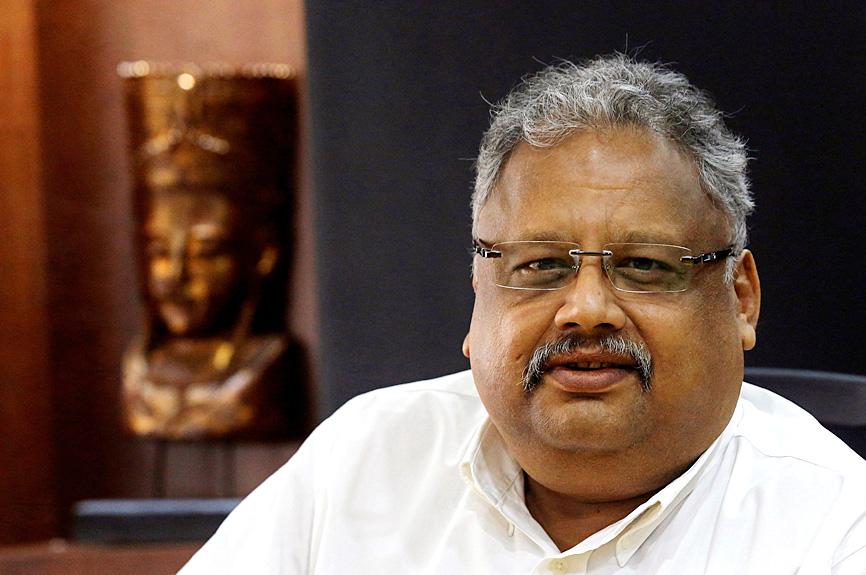
Photo: Reuters
The cause of death was not immediately announced.
The promoter of India’s newest airline, ultra low-cost Akasa Air, Jhunjhunwala appeared days ago at its public launch. He is survived by his wife and three children.
Jhunjhunwala’s excellent communication skills helped small investors understand the stock market, said businessmen and bankers based in India’s financial capital, Mumbai, who had interacted with him for more than 30 years.
His insights on the economy made him a popular TV celebrity.
Jhunjhunwala’s bets include a number of companies run by Tata Group, one of India’s largest conglomerates. They include Tata Motors Ltd, watchmaker Titan Co Ltd, Tata Communications Ltd and Indian Hotels Co, which runs the Taj hotel brand.
Other investments include Indiabulls Housing Finance Ltd, Star Health and Allied Insurance Co Ltd and Federal Bank Ltd.
Major politicians and business leaders mourned his death on social media.
“Rakesh Jhunjhunwala was indomitable,” Indian Prime Minister Narendra Modi wrote on Twitter. “Full of life, witty and insightful, he leaves behind an indelible contribution to the financial world. He was also very passionate about India’s progress. His passing away is saddening. My condolences to his family and admirers.”
Uday Kotak, chief executive of Kotak Mahindra Bank Ltd and a friend from school days, said Jhunjhunwala had “believed stock India was undervalued,” and was right.
“Amazingly sharp in understanding financial markets,” Kotak wrote on Twitter. “Will miss you Rakesh!”
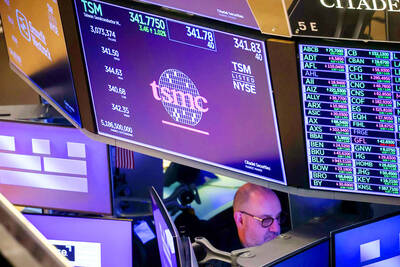
STRONG INTEREST: Analysts have pointed to optimism in TSMC’s growth prospects in the artificial intelligence era as the cause of the rising number of shareholders The number of people holding shares of chipmaker Taiwan Semiconductor Manufacturing Co (TSMC, 台積電) hit a new high last week despite a decline in its stock price, the Taiwan Depository and Clearing Corp (TDCC, 台灣集保) said. The number of TSMC shareholders rose to 2.46 million as of Friday, up 75,536 from a week earlier, TDCC data showed. The stock price fell 1.34 percent during the same week to close at NT$1,840 (US$57.55). The decline in TSMC’s share price resulted from volatility in global tech stocks, driven by rising international crude oil prices as the war against Iran continues. Dealers said
PRICE HIKES: The war in the Middle East would not significantly disrupt supply in the short term, but semiconductor companies are facing price surges for materials Taiwan’s semiconductor companies are not facing imminent supply disruptions of essential chemicals or raw materials due to the war in the Middle East, but surges in material costs loom large, industry association SEMI Taiwan said yesterday. The association’s comments came amid growing concerns that supplies of helium and other key raw materials used in semiconductor production could become a choke point after Qatar shut down its liquefied natural gas (LNG) production and helium output earlier this month due to the conflict. Qatar is the second-largest LNG supplier in the world and accounts for about 33 percent of global helium output. Helium is
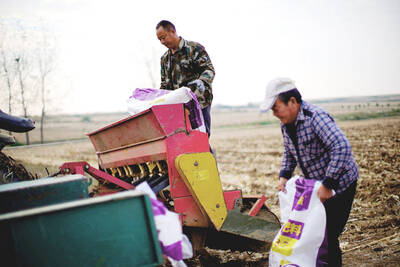
China is clamping down on fertilizer exports to protect its domestic market, industry sources said, putting an additional strain on global markets that were already grappling with shortages caused by the US-Israeli war on Iran. China is among the largest fertilizer exporters — shipping more than US$13 billion of it last year — and it has a history of controlling exports to keep prices low for farmers. Shipments through the war-blocked Strait of Hormuz account for about one-third of the sea-borne supply. This month, Beijing banned exports of nitrogen-potassium fertilizer blends and certain phosphate varieties, sources said. The ban, which has not
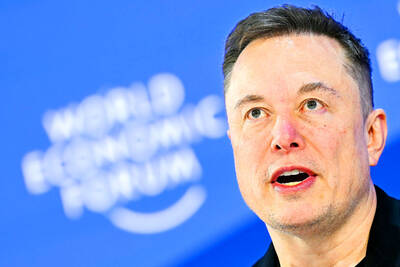
AMAZING ABUNDANCE: Elon Musk has announced plans for a new facility in Texas which would manufacture chips for Tesla and SpaceX to use in robotics and AI Elon Musk said his Terafab project — a grand plan to eventually manufacture his own chips for robotics, artificial intelligence (AI) and space data centers — would be built in Austin and jointly run by Tesla Inc and Space Exploration Technologies Corp (SpaceX). Musk, the chief executive officer of the two companies, said he would start off with an “advanced technology fab” in Austin that would have all of the equipment necessary to make chips of any kind. The project would call for one day supporting 1 terawatt (TW) of computing power per year, the amount Musk expects the companies to


 RSS
RSS