


Mergers and acquisitions (M&A) have become an important solution for investors facing a slowdown in India’s equity capital markets, JPMorgan Chase & Co said yesterday.
“India is a super important market for sovereign funds, private equity and global pension funds, who are taking an increasingly important role in the number of M&A transactions that are currently happening,” Kaustubh Kulkarni, JPMorgan vice chairman for the Asia-Pacific, investment banking India head and Southeast Asia co-head, said in a Bloomberg Television interview.
“The Indian market will offer larger size, larger quality and greater scale of investment for those investors to deploy those capital,” he added.
India saw about US$82 billion pending and completed mergers and acquisitions in the second quarter, the busiest ever, data compiled by Bloomberg showed.
Kulkarni expects this year’s deal volumes to be bigger than last year’s, driven by major themes including infrastructure and industrials.
Mergers and acquisitions would be big not only for the next six months but the coming two years, he said.
The banker expects the Indian initial public offering market to pick up in October, as participants are likely to have a better sense of the impact of inflation and interest rates.
The pipeline for listings is larger and more robust than it was last year, but a resurgence later in the year leaves just three months to get all the deals done, Kulkarni said.
“Volumes will be down, transactions will get pushed to next year and volumes will pick up again in 2023,” he said.

STRONG INTEREST: Analysts have pointed to optimism in TSMC’s growth prospects in the artificial intelligence era as the cause of the rising number of shareholders The number of people holding shares of chipmaker Taiwan Semiconductor Manufacturing Co (TSMC, 台積電) hit a new high last week despite a decline in its stock price, the Taiwan Depository and Clearing Corp (TDCC, 台灣集保) said. The number of TSMC shareholders rose to 2.46 million as of Friday, up 75,536 from a week earlier, TDCC data showed. The stock price fell 1.34 percent during the same week to close at NT$1,840 (US$57.55). The decline in TSMC’s share price resulted from volatility in global tech stocks, driven by rising international crude oil prices as the war against Iran continues. Dealers said
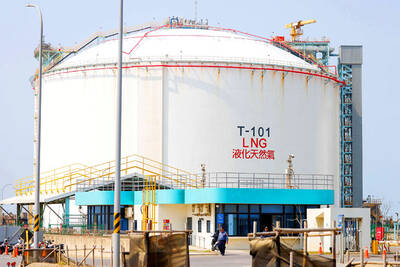
Taiwan’s natural gas supply remains stable through the end of May, despite rising concerns about potential disruptions to Qatari liquefied natural gas (LNG) supplies due to escalating conflicts in the Middle East, the Ministry of Economic Affairs said yesterday. The ministry in a statement said that Taiwan has completed preparations for natural gas supply and shipping schedules through the end of May. It has also made plans to increase natural gas imports from regions outside the Middle East in June to ensure a stable supply, it added. Taiwan sources natural gas from 14 countries and is not solely dependent on the Middle East,

China is clamping down on fertilizer exports to protect its domestic market, industry sources said, putting an additional strain on global markets that were already grappling with shortages caused by the US-Israeli war on Iran. China is among the largest fertilizer exporters — shipping more than US$13 billion of it last year — and it has a history of controlling exports to keep prices low for farmers. Shipments through the war-blocked Strait of Hormuz account for about one-third of the sea-borne supply. This month, Beijing banned exports of nitrogen-potassium fertilizer blends and certain phosphate varieties, sources said. The ban, which has not

Grab Holdings Ltd agreed to buy Delivery Hero SE’s Foodpanda operations in Taiwan for US$600 million, a deal that marks its first foray outside of its Southeast Asian base. The cash acquisition will allow Grab to expand into 21 cities across Taiwan, the Singapore-based ride-hailing and delivery company said in a statement yesterday. Grab expects the transaction to be completed in the second half, subject to regulatory approvals. The purchase will give Grab a presence on the island of about 23 million people, helping it to expand beyond its intensely competitive home market. Grab has seen growth slow dramatically as it takes


 RSS
RSS