


Japan’s key inflation gauge rose further above the central bank’s target level of 2 percent, a result that will likely keep speculation smoldering over possible policy adjustments, despite Bank of Japan (BOJ) Governor Haruhiko Kuroda’s continued commitment to ultra-low rates.
Consumer prices excluding fresh food last month climbed at a faster pace of 2.2 percent from a year earlier, with fuel costs amplified by a weaker yen and higher processed food prices the main contributors, Japanese Ministry of Internal Affairs data released yesterday showed.
The result matched economists’ estimates and would have been stronger without the impact of ramped-up government measures to limit gains in fuel prices.
Despite the continued price gains, the Bank of Japan is unlikely to budge from its position as an outlier among global central banks any time soon.
Even as the US Federal Reserve carries out jumbo rate hikes to tackle inflation and the European Central Bank joins the global policy tightening wave with its first rate rise in more than a decade, the Bank of Japan remains unconvinced that local inflation is sustainable.
Still, the ongoing gains above the price target pose a communications challenge for the Bank of Japan. Its persistent easing has come under criticism, as it has helped the yen slide to a 24-year low versus the US dollar, amplifying the soaring import costs of food and energy for households.
“What’s happening in Japan is still cost-push inflation, not the sustainable inflation the BOJ is looking for backed by wage gains,” said Taro Saito, head of economic research at the NLI Research Institute. “Service prices still aren’t rising much. So today’s data won’t make the BOJ rethink its view.”
Details of lat month’s inflation data offer some support for the central bank’s argument that the current inflation is largely based on cost-push pressure.
Energy costs remained the main upward driver, rising 16.5 percent from the previous year.
Processed food contributed about three-quarters of a percentage point to overall inflation, helping nudge the figure up.
Prices excluding fresh food and energy rose 1 percent, for the biggest gain since February 2016.
The central bank now sees core inflation averaging 2.3 percent in the year ending in March next year, the first time it has predicted price gains above 2 percent for the current 12-month period outside tax hike years since introducing the target in 2013.
It then sees inflation weakening below its goal in the following year, a sign that sufficient price gains will not last.
After Thursday’s decision, Kuroda said that he had “no intention at all” of raising interest rates while the economy still needed help and prices gains were not backed up by strong wage hikes.
The Bank of Japan does not target foreign exchange levels, he said, but added that marginal policy tweaks would fail to stop weakness in the yen.
With the central bank hunkering down on its position, the Japanese government has stepped in to help rein in soaring power and food prices.
Japanese Minister of Finance Shunichi Suzuki yesterday said that the government is monitoring the possible negative impacts of rising prices on the economy such as cutting into households’ spending power.

STRONG INTEREST: Analysts have pointed to optimism in TSMC’s growth prospects in the artificial intelligence era as the cause of the rising number of shareholders The number of people holding shares of chipmaker Taiwan Semiconductor Manufacturing Co (TSMC, 台積電) hit a new high last week despite a decline in its stock price, the Taiwan Depository and Clearing Corp (TDCC, 台灣集保) said. The number of TSMC shareholders rose to 2.46 million as of Friday, up 75,536 from a week earlier, TDCC data showed. The stock price fell 1.34 percent during the same week to close at NT$1,840 (US$57.55). The decline in TSMC’s share price resulted from volatility in global tech stocks, driven by rising international crude oil prices as the war against Iran continues. Dealers said
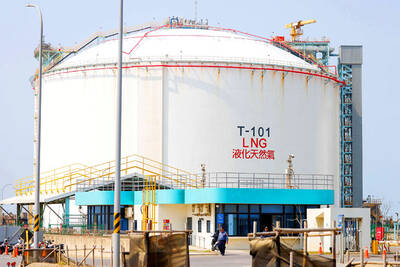
Taiwan’s natural gas supply remains stable through the end of May, despite rising concerns about potential disruptions to Qatari liquefied natural gas (LNG) supplies due to escalating conflicts in the Middle East, the Ministry of Economic Affairs said yesterday. The ministry in a statement said that Taiwan has completed preparations for natural gas supply and shipping schedules through the end of May. It has also made plans to increase natural gas imports from regions outside the Middle East in June to ensure a stable supply, it added. Taiwan sources natural gas from 14 countries and is not solely dependent on the Middle East,

China is clamping down on fertilizer exports to protect its domestic market, industry sources said, putting an additional strain on global markets that were already grappling with shortages caused by the US-Israeli war on Iran. China is among the largest fertilizer exporters — shipping more than US$13 billion of it last year — and it has a history of controlling exports to keep prices low for farmers. Shipments through the war-blocked Strait of Hormuz account for about one-third of the sea-borne supply. This month, Beijing banned exports of nitrogen-potassium fertilizer blends and certain phosphate varieties, sources said. The ban, which has not

Grab Holdings Ltd agreed to buy Delivery Hero SE’s Foodpanda operations in Taiwan for US$600 million, a deal that marks its first foray outside of its Southeast Asian base. The cash acquisition will allow Grab to expand into 21 cities across Taiwan, the Singapore-based ride-hailing and delivery company said in a statement yesterday. Grab expects the transaction to be completed in the second half, subject to regulatory approvals. The purchase will give Grab a presence on the island of about 23 million people, helping it to expand beyond its intensely competitive home market. Grab has seen growth slow dramatically as it takes


 RSS
RSS