


Europe’s common currency yesterday edged closer toward parity with the US dollar as energy concerns and the risk of recession weighed on the outlook for the eurozone, while risk aversion fueled a broad rally in the greenback.
The euro dropped as much as 1.3 percent to US$1.0005, eclipsing its low from last week. The last time it was this low was in 2002.
The Bloomberg Dollar Spot Index has jumped as much as 1.2 percent so far this week.
The euro’s downward spiral has been swift and brutal, given it was trading around US$1.15 in February. A string of increasingly large US Federal Reserve interest-rate hikes has supercharged the greenback, while Russia’s invasion of Ukraine has worsened the outlook for growth in the eurozone and pushed up the cost of the region’s energy imports.
“The logic prevailing in the FX market and across assets remains the same: The Fed is still perceived as having more room to hike rates going forward, also on the back of the strong US jobs report for June,” Unicredit analysts wrote in a note. “On the other hand, other central banks, such as the ECB [European Central Bank] and the BoE [Bank of England], might be forced to become more prudent, given the more direct exposure their respective economies have to the gas and energy crisis.”
A weak euro has exposed a key constraint facing the ECB in that the organization must address the risk that raising rates might push yields on periphery eurozone bonds much higher, according to Jennifer McKeown, the head of global economics service at Capital Economics.
Because of this, market focus is on whether the central bank can keep peripheral bond spreads narrow using a new anti-fragmentation tool, and allow it to continue raising interest rates in response to high inflation.
“Often people would look at a weaker euro and say that’s good for exports,” McKeown said. “But at the moment, it’s viewed as more of a negative. It adds to inflation pressure in terms of imported inflation, which is something the ECB really doesn’t want.”
Shorts on the common currency were one of the most popular trades among foreign-exchange professionals last week.
The euro position saw the biggest weekly change compared with other major currencies, with accounts adding US$769 million to net short bets totaling US$2.2 billion, the most since November last year, Bank of Nova Scotia strategists Shaun Osborne and Juan Manuel Herrera Betancourt wrote in a report on Monday.
George Saravelos, global head of FX research for Deutsche Bank AG, told Bloomberg Surveillance that he could see the euro moving under parity, especially in the scenario of a “complete gas shutoff” from the Nord Stream 1 pipeline.
The bank is pricing the euro to move in between a range of 0.95 to parity against the US dollar, he said.
“I really wouldn’t say 0.95 would be unreasonable,” Saravelos said. “Even if this gas returns in terms of full flow after the maintenance period, the [risk] premium is unlikely to go away. And I think that’s a critical thing that’s changed over the past few weeks.”
Citigroup Inc analyst Tom Fitzpatrick said he was “going all-in” on shorting the euro versus the greenback, pricing a put on the euro-dollar pair at 0.95.
Still, some strategists were less sanguine about the US dollar and the euro’s near-term trajectory.
“It’s hard to argue against owning the USD with such an aggressive Fed posture and the myriad of issues in Europe,” said Brad Bechtel, foreign-exchange strategist at Jefferies LLC.
“Having said that it feels like EUR/USD is oversold on many technical measures and parity was such a target for so many people in the market that it wouldn’t surprise if we see a lot of profit-taking down here and a short-term bounce,” Bechtel said.
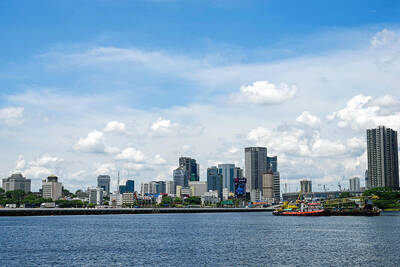
Vincent Wei led fellow Singaporean farmers around an empty Malaysian plot, laying out plans for a greenhouse and rows of leafy vegetables. What he pitched was not just space for crops, but a lifeline for growers struggling to make ends meet in a city-state with high prices and little vacant land. The future agriculture hub is part of a joint special economic zone launched last year by the two neighbors, expected to cost US$123 million and produce 10,000 tonnes of fresh produce annually. It is attracting Singaporean farmers with promises of cheaper land, labor and energy just over the border.
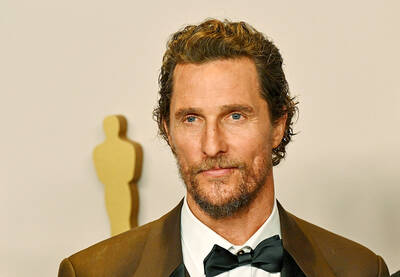
US actor Matthew McConaughey has filed recordings of his image and voice with US patent authorities to protect them from unauthorized usage by artificial intelligence (AI) platforms, a representative said earlier this week. Several video clips and audio recordings were registered by the commercial arm of the Just Keep Livin’ Foundation, a non-profit created by the Oscar-winning actor and his wife, Camila, according to the US Patent and Trademark Office database. Many artists are increasingly concerned about the uncontrolled use of their image via generative AI since the rollout of ChatGPT and other AI-powered tools. Several US states have adopted

KEEPING UP: The acquisition of a cleanroom in Taiwan would enable Micron to increase production in a market where demand continues to outpace supply, a Micron official said Micron Technology Inc has signed a letter of intent to buy a fabrication site in Taiwan from Powerchip Semiconductor Manufacturing Corp (力積電) for US$1.8 billion to expand its production of memory chips. Micron would take control of the P5 site in Miaoli County’s Tongluo Township (銅鑼) and plans to ramp up DRAM production in phases after the transaction closes in the second quarter, the company said in a statement on Saturday. The acquisition includes an existing 12 inch fab cleanroom of 27,871m2 and would further position Micron to address growing global demand for memory solutions, the company said. Micron expects the transaction to
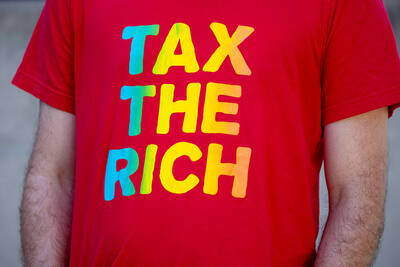
A proposed billionaires’ tax in California has ignited a political uproar in Silicon Valley, with tech titans threatening to leave the state while California Governor Gavin Newsom of the Democratic Party maneuvers to defeat a levy that he fears would lead to an exodus of wealth. A technology mecca, California has more billionaires than any other US state — a few hundred, by some estimates. About half its personal income tax revenue, a financial backbone in the nearly US$350 billion budget, comes from the top 1 percent of earners. A large healthcare union is attempting to place a proposal before


 RSS
RSS