


Interconnect solutions provider BizLink Holding Inc (貿聯控股) has pledged NT$3.2 billion (US$107.6 million) to launch new manufacturing facilities at the Tainan Technology Industrial Park (台南科技工業區), the Ministry of Economic Affairs said yesterday.
The InvesTaiwan Service Center yesterday approved the Silicon Valley-based company’s application to participate in the government’s incentive program, the ministry said.
The announcement came as BizLink’s customers seek to adjust their global deployment strategies and diversity risks, it said.
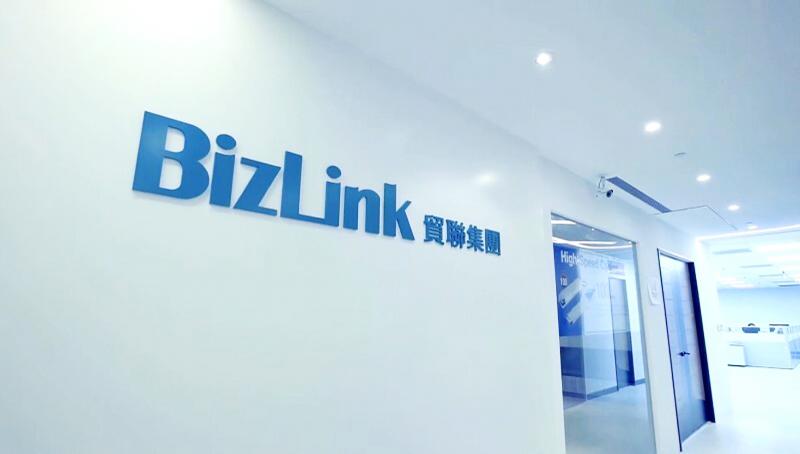
Photo courtesy of BizLink Holding Inc
Founded in 1996, BizLink supplies cable assemblies, wire harnesses and high-speed transmission lines for use in vehicles, information technology products, electrical appliances and industrial devices, as well as medical, solar and telecom equipment. It is the sole supplier of wiring harnesses for battery management systems in Tesla Inc’s Model 3 electric vehicles.
The company plans to establish production lines for high-end automotive and medical products at the Tainan plant, and the investment is expected to create 836 job opportunities, the ministry said.
In addition to meeting environmental building standards at the new plant, BizLink plans to install a solar power generation system on the roof and adopt high-efficiency energy-saving equipment for its manufacturing facilities, it said.
BizLink operates 17 production sites around the world and had about 12,316 employees as of October last year, company data showed.
InvesTaiwan also approved plans by three other companies to establish or expand their manufacturing facilities in the nation. They are Rising Chemical Co (立新化工), Ziolite Precision Corp (兆磊精密) and Taiwan Head Brewers Brewing Co (臺灣比爾文化), the ministry said.
The four companies are to invest a combined NT$4 billion, it added.
Rising Chemical, the only listed coating company in the nation, mainly produces nano-scale pigment dispersions for LCD photoresists, nano-color pastes and functional inks.
To diversify its product line and meet environmental safety regulations, the company plans to invest NT$300 million to build a new plant and warehouse at the Southern Taiwan Science Park’s (南部科學工業園) branch campus in Kaohsiung’s Lujhu District (路竹), the ministry said.
Ziolite Precision, a supplier of components for CNC milling machines and mechanical structure covers for industrial equipment, plans to invest NT$200 million to build new factories in Miaoli County’s Jhunan Township (竹南), while Taiwan Head Brewers, which makes craft beer, plans to launch new production lines in New Taipei City’s Sanchong District (三重), it said.
The “Invest in Taiwan” initiative has to date attracted 1,207 companies to invest more than NT$1.7 trillion in Taiwan, with 20 applications pending review, it said.

Netherlands-based semiconductor equipment supplier ASML Holding NV yesterday said that it is planning to hire an additional 1,000 people in Taiwan this year in response to growing demand from clients. ASML had previously planned to recruit 600 people this year, but that the plan has been adjusted upward, ASML vice president and ASML Taiwan general manager Grace Wang (汪佳慧) told reporters. ASML has a workforce of more than 4,500 in Taiwan, accounting for about 10 percent of its global total, Wang said. This year’s recruitment campaign would focus on adding people in the customer support, manufacturing and supply chain domains to assist ASML

UNDER MICROSCOPE: Taiwan detained three people who allegedly conspired to buy servers in Taiwan and export them using fraudulent documentation, prosecutors said Nvidia Corp chief executive officer Jensen Huang (黃仁勳) on Saturday urged Super Micro Computer Inc to tighten up on compliance after Taiwan detained three people this week for allegedly making fraudulent declarations about artificial intelligence (AI) servers made by its US partner. The development marked the nation’s first crackdown on semiconductor smuggling, which grew after the US slapped restrictions on exports of high-end chips such as Nvidia AI accelerators to China. Nvidia is “rigorous” in explaining regulations to all of its partners, Huang told reporters after arriving in Taipei. “Ultimately Super Micro has to run their own company,” he said in response to

Nvidia Corp yesterday announced that CEO Jensen Huang (黃仁勳) would attend an employee meeting in Taipei tomorrow to celebrate the launch of the company’s Taiwan headquarters project. Huang would attend a gathering at the site of Nvidia’s planned headquarters in Beitou Shilin Technology Park (北投士林科技園區), the company said in a statement. After arriving in Taiwan on Saturday last week, Huang told reporters that he plans to meet with Quanta Computer Inc (廣達) chairman Barry Lam (林百里) and Taiwan Semiconductor Manufacturing Co (TSMC, 台積電) chairman C.C. Wei (魏哲家), and would attend the groundbreaking ceremony for Nvidia’s Taiwan headquarters tomorrow. Nvidia has not yet applied

Huawei Technologies Co (華為) said it has come up with a new pathway to shorten its gap with industry leader Taiwan Semiconductor Manufacturing Co (TSMC, 台積電), potentially achieving a breakthrough in making advanced semiconductors without cutting-edge equipment. Right now there is about a five-year gap between what TSMC is capable of and what Huawei, together with its manufacturing partner Semiconductor Manufacturing International Corp (中芯), can produce. Huawei is to start making 1.4-nanometer chips by 2031 with its own “LogicFolding” technology, Huawei semiconductor chief He Tingbo (何庭波) said in a rare public appearance during a chip conference yesterday, while TSMC has


 RSS
RSS