


India is considering restricting imports of refrigerators to promote local manufacturing, two industry sources said yesterday, potentially freezing out shipments from Samsung Electronics Co and LG Electronics Inc in the US$5 billion market.
The sources, who declined to be named as the talks were private, said the government was considering mandating that importers seek a license from the authorities, replacing the existing free-import regime.
That could be followed by a ban on imports of refrigerators with refrigerant already added, to create opportunities for value-added operations in India, said one of the sources, who has direct knowledge of the government’s discussions.
The source said a decision could come within a month, adding: “The thrust is to support all those who are manufacturing in India rather than those bringing them into India.”
The Indian Ministry of Commerce and Industry did not immediately respond to requests for comment. Spokespeople for Samsung and LG also did not respond immediately.
A licensing regime would raise the compliance burden and risk delaying imports, the other source said.
The government estimates India’s refrigerator market at more than US$5 billion, with foreign companies such as Samsung and LG competing with major domestic makers, including Tata conglomerate’s Voltas Ltd.
The first source said India’s annual fridge-making capacity was about 24 million units, but demand was only about 15 million, a part of which is met by imports.
The government does not release figures for refrigerator imports, although the second source said companies such as Samsung and LG import thousands of high-end refrigerators annually.
A third industry source said sales of large, high-end refrigerators, many of which are imported, have been growing rapidly, especially during the COVID-19 pandemic as people stayed indoors. Those imports account for about 5 to 6 percent of total Indian sales.
The move is in line with Indian Prime Minister Narendra Modi’s “Make in India” program to boost local manufacturing and discourage imports.
India in 2020 banned the import of air-conditioners with refrigerant already added. That same year it also placed restrictions on television imports, affecting Samsung and other global manufacturers.
India imports refrigerators from countries with which it holds a free-trade agreement, including Bangladesh, Thailand, Indonesia and South Korea.
Local manufacturers that could stand to benefit from import restrictions include Voltas, Godrej Appliances and Havells India Ltd.
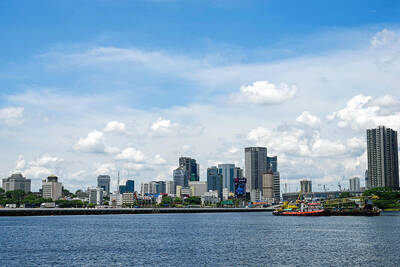
Vincent Wei led fellow Singaporean farmers around an empty Malaysian plot, laying out plans for a greenhouse and rows of leafy vegetables. What he pitched was not just space for crops, but a lifeline for growers struggling to make ends meet in a city-state with high prices and little vacant land. The future agriculture hub is part of a joint special economic zone launched last year by the two neighbors, expected to cost US$123 million and produce 10,000 tonnes of fresh produce annually. It is attracting Singaporean farmers with promises of cheaper land, labor and energy just over the border.

US actor Matthew McConaughey has filed recordings of his image and voice with US patent authorities to protect them from unauthorized usage by artificial intelligence (AI) platforms, a representative said earlier this week. Several video clips and audio recordings were registered by the commercial arm of the Just Keep Livin’ Foundation, a non-profit created by the Oscar-winning actor and his wife, Camila, according to the US Patent and Trademark Office database. Many artists are increasingly concerned about the uncontrolled use of their image via generative AI since the rollout of ChatGPT and other AI-powered tools. Several US states have adopted

KEEPING UP: The acquisition of a cleanroom in Taiwan would enable Micron to increase production in a market where demand continues to outpace supply, a Micron official said Micron Technology Inc has signed a letter of intent to buy a fabrication site in Taiwan from Powerchip Semiconductor Manufacturing Corp (力積電) for US$1.8 billion to expand its production of memory chips. Micron would take control of the P5 site in Miaoli County’s Tongluo Township (銅鑼) and plans to ramp up DRAM production in phases after the transaction closes in the second quarter, the company said in a statement on Saturday. The acquisition includes an existing 12 inch fab cleanroom of 27,871m2 and would further position Micron to address growing global demand for memory solutions, the company said. Micron expects the transaction to

A proposed billionaires’ tax in California has ignited a political uproar in Silicon Valley, with tech titans threatening to leave the state while California Governor Gavin Newsom of the Democratic Party maneuvers to defeat a levy that he fears would lead to an exodus of wealth. A technology mecca, California has more billionaires than any other US state — a few hundred, by some estimates. About half its personal income tax revenue, a financial backbone in the nearly US$350 billion budget, comes from the top 1 percent of earners. A large healthcare union is attempting to place a proposal before


 RSS
RSS