


Japan’s economy shrank slightly in the first quarter of this year, official data showed yesterday, hit by COVID-19 restrictions and higher prices.
The world’s third-largest economy shrank 0.2 percent quarter-on-quarter in the January-to-March period, slightly less than market expectations of a 0.4 percent contraction.
It followed a modest rebound of 0.9 percent in the final three months of last year that proved short-lived after Japan put COVID-19 restrictions in place as an outbreak fueled by the Omicron variant of SARS-CoV-2 took hold in January.

Photo: Bloomberg
Growth was also hit by the rising cost of imports, with energy prices surging and the yen falling to its lowest level against the US dollar in 20 years.
Economists expect the economy to recover again in the April-to-June quarter now that virus restrictions have been lifted, but caution that there are some caveats.
“We see three headwinds to this expected recovery,” UBS economists Masamichi Adachi and Go Kurihara said in a note ahead of the GDP data release.
First is a rise in food and energy prices, second is a drag from the lockdown in China and third is the risk of a potential resurgence in virus infections, they said.
Others point to ongoing uncertainties linked to “tensions in international relations and military conflicts,” a survey among economists conducted by the Japan Center for Economic Research showed.
In the second quarter, major Japanese firms such as Sony Group Corp and Nissan Motor Co have offered cautious forecasts due to the uncertainty, particularly over supply chain disruptions and the effect of COVID-19 lockdowns in China.
The yen has also slumped against the US dollar, with a widening gap between Japan’s ultra-loose monetary policy and tightening in the US, as the US Federal Reserve attempts to combat inflation.
Rising energy prices and other hikes are squeezing Japanese consumers and businesses, with household spending dipping 2.3 percent in March from a year earlier.
Analysts have said that the pace of nominal wage increases in Japan is unlikely to track rising prices, dampening spending appetites.
Last month, the government unveiled a ¥6.2 trillion (US$48 billion) economic package that included handouts for low-income families to help cushion the effects of rising prices and energy costs.
Looking ahead, “net trade will boost growth over the coming months as supply shortages ease, and the weak yen boosts exports and softens demand for imports,” Capital Economics economist Tom Learmouth said in a note. “With coronavirus cases continuing to fall and nearly 60 percent of the population triple-jabbed, another round of restrictions looks unlikely for now.”
“However, we expect GDP growth to disappoint across 2022 due to the hit to household income from higher inflation and signs that elderly consumers remain wary of catching the virus,” he added.
Taiwan Semiconductor Manufacturing Co (TSMC, 台積電) yesterday reported record revenue of NT$416.975 billion (US$13.17 billion) for last month, putting the world’s largest contract chipmaker on track to set a record for quarterly revenue. Last month’s figure surpassed March’s record NT$415.19 billion and represented increases of 1.5 percent from April and 30.1 percent from a year earlier. For the first five months of the year, TSMC generated NT$1.96 trillion in revenue, up 30 percent year-on-year, it said in a statement. TSMC has forecast second-quarter revenue of between US$39 billion and US$40.2 billion, representing sequential growth of about 10 percent and year-on-year growth of about

Infineon Technologies AG is preparing to open its largest single investment, a 5 billion euro (US$5.8 billion) semiconductor factory built with the help of EU subsidies, as the bloc seeks to boost chip production. The power chip fab, which is an extension of the German company’s Dresden campus, is scheduled to open on July 2, Infineon chief operating officer Alexander Gorski said this week at the site. The project is a major recipient of EU Chips Act funds, receiving about 1 billion euros in subsidies. The new plant represents a rare success for the bloc’s flagship semiconductor law, which was drawn up during
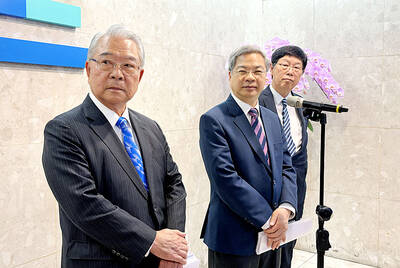
PATENT PROBE: US lawmakers called for a ban on imports of chips made by TSMC if they are found to infringe on US patents, with a preliminary ruling expected soon Minister of Economic Affairs Kung Ming-hsin (龔明鑫) yesterday expressed confidence in Taiwan Semiconductor Manufacturing Co’s (TSMC, 台積電) compliance with patent regulations after reports linked the company to a patent infringement lawsuit in the US. US Representative Ryan Zinke, and US senators Tim Sheehy, Roger Marshall and Bernie Moreno urged the US International Trade Commission in a May 22 letter to ban imports of chips made by TSMC if they are found to infringe on US patents, Axios reported on Wednesday. An administrative law judge is expected to issue a preliminary ruling this month, with the commission potentially making a final decision in
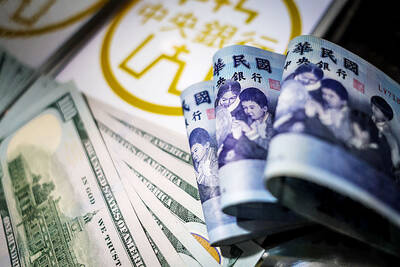
Taiwan remained the sixth-largest net creditor nation in the world last year, despite a fall of more than 10 percent in its net international investment position (NIIP) over the year, the central bank said yesterday. The NIIP is the difference between a country’s external financial assets and its external financial liabilities. Taiwan’s external financial assets hit US$3.27 trillion at the end of last year, up US$275.75 billion or 9.2 percent from a year earlier, the central bank said in its annual NIIP report. The growth largely reflected an increase in holdings of overseas marketable securities by residents in Taiwan, as well as a


 RSS
RSS