


Presale and new housing projects might decline by 20 percent to NT$1.45 trillion (US$52.18 billion) next year as developers turn conservative after the central bank tightened terms for land financing, Shining Building Business Co (鄉林建設) chairman Lai Cheng-i (賴正鎰) said yesterday.
However, Lai, who owns luxury hotel brand The Lalu (涵碧樓), said that housing prices are likely to rise another 10 percent on the back of higher land, labor and building material costs.
“Developers will slow the pace of buying land after the central bank last week cut the loan-to-value ratio for land financing from 60 percent to 50 percent, and required the speedy submission of development details,” Lai said.
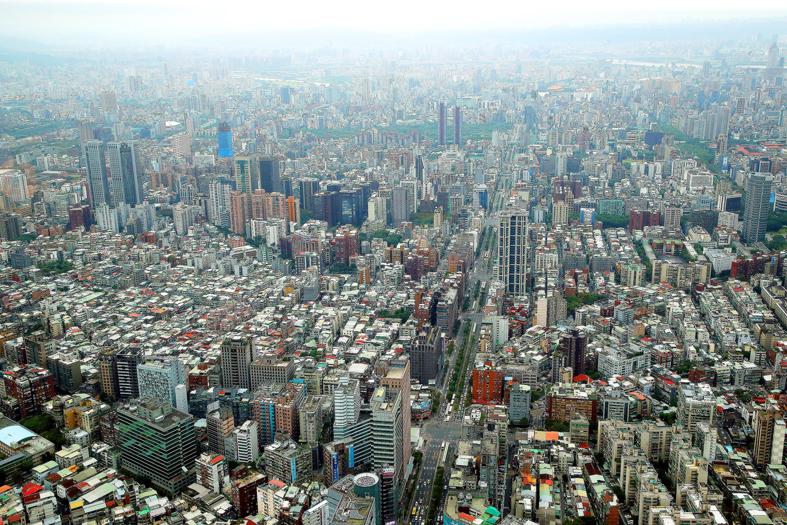
Photo: CNA
The restrictions seek to keep developers from hoarding land as companies returning from abroad have reported difficulty finding land on which to build factories and expand capacity, central bank Governor Yang Chin-long (楊金龍) said last week.
RETREAT LIKELY?
The anticipated retreat would come after presale and new housing projects have this year increased 11 percent to NT$1.83 trillion, rising for a fifth straight year and bucking Lai’s previous forecast of a decline.
The property market has proven robust, and unfazed by unfavorable property tax terms and selective credit controls, Lai said, attributing the impressive showing to excess liquidity, low interest rates and rising concern over inflation.
A survey by Evertrust Rehouse Co (永慶房屋) found that respondents expected housing prices to continue to climb higher and believed that people should buy before properties become even more expensive.
Lai added that housing prices increased steeply in Tainan and Kaohsiung after Taiwan Semiconductor Manufacturing Co (台積電) and other tech firms disclosed plans to build new plants there.
PROPERTY FEVER
Taichung has also benefited from property fever thanks to its improved transportation system and its central location, he said.
Prices are unlikely to decline, as ports remain congested amid new COVID-19 outbreaks and lockdowns, which would in turn push up freight rates and create supply-chain bottlenecks, Lai said.
The tightened measures are unlikely to affect real demand, he said, adding that property investors would simply postpone cash-out schedules.
Yesterday, Teco Group (東元集團) chairman Theodore Huang (黃茂雄) made similar comments, saying that land financing restrictions would have “very little impact.”
Huang, who also owns Century Development Co (世康開發), said that it remains profitable to take out loans and develop properties, thanks to low interest rates.
Century Development is looking for new plots of land on which to build biotechnology parks, Huang added.

The domestic unit of the Chinese-owned, Dutch-headquartered chipmaker Nexperia BV will soon be able to produce semiconductors locally within China, according to two company sources. Nexperia is at the center of a global tug-of-war over critical semiconductor technology, with a Dutch court in February ordering a probe into alleged mismanagement at the company. The geopolitical tussle has disrupted supply chains, with some carmakers reportedly forced to cut production due to chip shortages. Local production would allow Nexperia’s domestic arm, Nexperia Semiconductors (China) Ltd (安世半導體中國), to bypass restrictions in place since October on the supply of silicon wafers — etched with tiny components to

Singapore-based ride-hailing and delivery giant Grab Holdings Ltd has applied for regulatory approval to acquire the Taiwan operations of Germany-based Delivery Hero SE's Foodpanda in a deal valued at about US$600 million. Grab submitted the filing to the Fair Trade Commission on Friday last week, with the transaction subject to regulatory review and approval, the company said in a statement yesterday. Its independent governance structure would help foster a healthy and competitive market in Taiwan if the deal is approved, Grab said. Grab, which is listed on the NASDAQ, said in the filing that US-based Uber Technologies Inc holds about 13 percent of
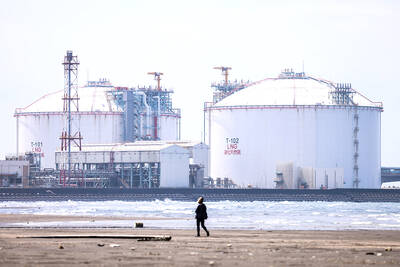
Taiwan is open to joining a global liquefied natural gas (LNG) program if one is created, but on the condition that countries provide delivery even in a scenario where there is a conflict with China, an energy department official said yesterday. While Taiwan’s priority is to have enough LNG at home, the nation is open to exploring potential strategic reserves in other countries such as Japan or South Korea, Energy Administration Deputy Director-General Chen Chung-hsien (陳崇憲) said. While the LNG market does not have a global reserve for emergencies like that of oil, the concept has been raised a few times —

Taiwan Semiconductor Manufacturing Co (TSMC, 台積電) yesterday received government approval to deploy its advanced 3-nanometer (3nm) process at its second fab currently under construction in Japan, the Ministry of Economic Affairs said in a news release. The ministry green-lit the plan for the facility in Kumamoto, which is scheduled to start installing equipment and come online in 2028 with a monthly production capacity of 15,000 12-inch wafers, the ministry said. The Department of Investment Review in June 2024 authorized a US$5.26 billion investment for the facility, slated to manufacture 6- to 12nm chips, significantly less advanced than 3nm process. At a meeting with


 RSS
RSS