


US coffee chain Starbucks Corp yesterday said it had shut two outlets in China and was conducting an investigation after a state-backed newspaper reported that they used expired ingredients to make drinks, contravening food safety rules.
The Beijing News newspaper, in what it described as an undercover investigation, said the incidents occurred at two stores in the eastern Chinese city of Wuxi.
“We take what was reported by local media very seriously, and have immediately closed the two stores in question to conduct a thorough investigation,” a Starbucks spokesperson said.
“Since entering the Chinese mainland market 22 years ago, we have been committed to implementing strict food safety standards and adopt a ‘zero tolerance’ policy towards food safety issues. We welcome the continued supervision of members of the media and the public,” the spokesperson said.
The company did not comment on the specifics of the report.
The incident became a trending topic on Weibo after the report was published.
Chinese consumers and media have become more aggressive about protecting customer rights and monitoring the behavior of big brands, especially from overseas.
China is the largest market for Starbucks outside the US with 5,360 stores as of Oct. 3, the firm’s latest earnings report showed.
The Beijing News report said one of the Starbucks stores used expired matcha liquid to make lattes, while another had put pastries up for sale that were meant to be thrown away.
As of yesterday afternoon, the topic of Starbucks’ response to the report had received more than 50 million views on Weibo.
Commenters expressed disappointment and worries over more widespread problems.
“If Starbucks is like this, the other shops really worry me,” one Weibo user named Revario said. “They suffer the scrutiny because it is a foreign brand.”

Cairo’s new monorail slices across the city skyline, running above the familiar chaos of blaring horns and aging buses’ exhaust fumes that mark rush hour below. The US$4.5 billion monorail, opened this month, is among Egypt’s most prominent new transport projects, part of a debt-funded infrastructure drive criticized for sapping state finances while bringing limited benefits to most of the country’s 109 million people. “It feels like you’re in a different country,” said Ramy Sayed, a restaurant manager, aboard a driverless Innovia 300 train. “No noise, no traffic, we’re not used to this.” The eastern line runs 56km from the bustling middle-class
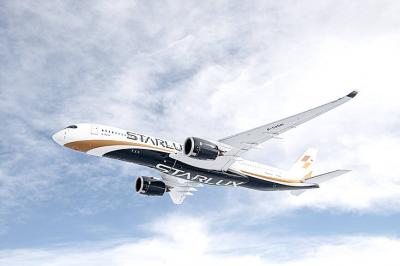
Starlux Airlines Co (星宇航空) today unveiled a long-haul network expansion plan at a shareholders’ meeting in Taipei, including direct flights to Barcelona, Spain, and Zurich, Switzerland, as well as a service connecting Taipei, Sydney and New Zealand. Starlux is to become the first Taiwanese carrier to offer non-stop services to the two European cities, while the inaugural oceanic route is expected to expand transit opportunities within the Australia-New Zealand market, Starlux said. Flight services to Chicago, Dallas, Washington and New York are under evaluation, the airline added. Prior to the shareholders’ meeting, the airline earlier this year announced that it would be

Taiwanese firms have increased investment in the Philippines in recent years as Manila’s ties with Washington deepen and global supply chains continue to shift away from China, an expert at the Chung-Hua Institution for Economic Research (CIER, 中華經濟研究院) said yesterday. The Philippines had not been among Taiwanese investors’ top choices in Southeast Asia, CIER Taiwan ASEAN Studies Center director Kristy Hsu (徐遵慈) said at a seminar in Taipei. However, Taiwan’s investment in the country has grown significantly since the COVID-19 pandemic, reaching US $257 million last year, a high in recent years, she said. Although Taiwan’s total investment in the Philippines still lags
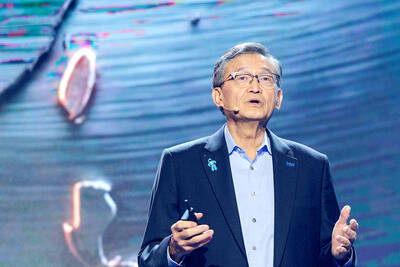
Intel Corp regards Taiwan Semiconductor Manufacturing Co (TSMC, 台積電) as a longstanding partner, as the US chipmaker would continue outsourcing production of advanced chips to TSMC, Intel chief executive officer Lip-Bu Tan (陳立武) said yesterday. “I don’t look at people as competitors. I look at the collaboration... Nvidia is also, you know, a good friend,” Tan told a news conference following his keynote speech at the Computex trade show in Taipei. “It’s a very trusted partnership for us... We are a big, top customer for them, and we’re going to continue doing that,” he said, referring to TSMC, the world’s largest foundry


 RSS
RSS