


US antitrust officials sued to block chipmaker Nvidia Corp’s proposed US$40 billion takeover of Arm Ltd, saying the deal would hobble innovation in semiconductors and undermine Nvidia’s rivals.
The US Federal Trade Commission (FTC) said in a release on Thursday that the acquisition would deliver Nvidia vast sway over the market by giving the company control over chip designs used by the world’s biggest technology companies, including makers of smartphones, factory equipment and cars.
“The FTC is suing to block the largest semiconductor chip merger in history to prevent a chip conglomerate from stifling the innovation pipeline for next-generation technologies,” FTC Bureau of Competition Director Holly Vedova said in the statement.
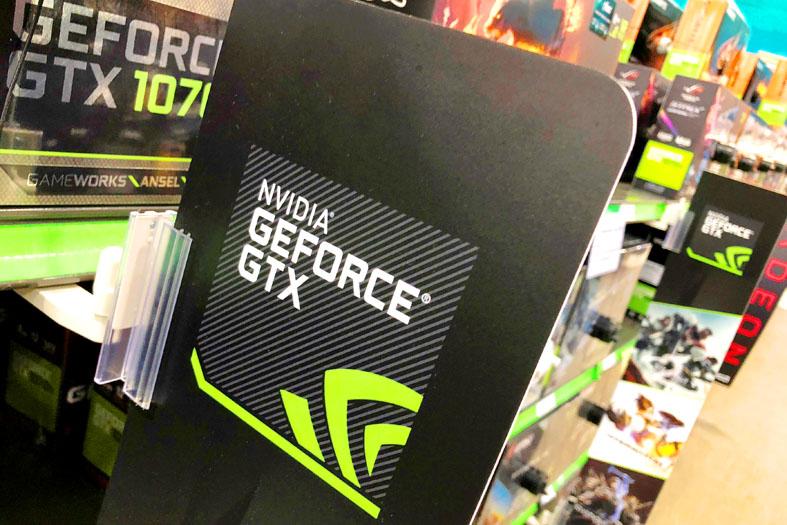
Photo: Reuters
Arm, owned by Softbank Group Corp, is known as the Switzerland of the semiconductor industry. It licenses its technology to hundreds of companies, while competing with none of them. All major chipmakers are Arm customers and many of these companies, including Qualcomm Inc, Intel Corp and Advanced Micro Devices Inc, sell chips that compete directly with products from Nvidia.
That reach has made ownership of Arm such a contentious issue because of the advantage it might give a new owner, if that acquirer is a chipmaker. Under CEO and founder Jensen Huang (黃仁勳), Nvidia has become the world’s most valuable publicly traded semiconductor maker as investors have bought the stock, backing his expansion into new markets outside of graphics chips.
Nvidia, based in Santa Clara, California, held most of its gains for the day after the news to close up 2.2 percent at US$321.26 in New York. That drove the stock up 146 percent this year, blowing past rallies for broad US indices and making the stock-based transaction even more attractive for Softbank.
Nvidia said in a statement that the Arm acquisition would benefit the industry and promote competition.
“Nvidia will invest in Arm’s R&D, accelerate its roadmaps, and expand its offerings in ways that boost competition, create more opportunities for all Arm licensees and expand the Arm ecosystem,” the company said.
Nvidia agreed to buy Arm from Softbank in September last year for about US$40 billion, setting a record for a chip-industry takeover. And an increase in the value of Nvidia stock — the main component of the sale price — sent the value of the transaction even higher.
The complaint comes as US President Joe Biden’s administration and members of Congress are debating ways to bolster semiconductor production amid a global shortage and to make the US more competitive with China.
The US, which still leads the world in chip design, has lost a significant share of global chip manufacturing capacity over the past 30 years, falling to 12 percent from 37 percent in 1990, according to the Semiconductor Industry Association.
Qualcomm is among companies that raised competition concerns about the deal, which is also facing a national security review in the UK, where Arm is based. Bloomberg Intelligence said in a note after the complaint was filed that the deal is likely to face challenges from other investigating authorities, including the European Commission, the UK’s Competition and Markets Authority and Chinese regulators.?
Arm’s technology is dominant in smartphones, where it is used by Apple Inc and Samsung Electronics Co, as well as by Qualcomm, whose chips are the basis of most of the industry’s premier models.
Arm has also made inroads into computing, including Apple’s M series processors, and data centers, with Amazon.com Inc’s in-house designs using the technology in server chips.
Taiwan Semiconductor Manufacturing Co (TSMC, 台積電) has approved a capital budget of US$31.28 billion for production expansion to meet long-term development needs during the artificial intelligence (AI) boom. The company’s board meeting yesterday approved the capital appropriation plan for purposes such as the installation of advanced technology capacity and fab construction, the world’s largest contract chipmaker said in a statement. At an earnings conference last month, TSMC forecast that its capital expenditure for this year would be at the higher end of the US$52 billion to US$56 billion range it forecast in January in response to robust demand for 5G, AI and
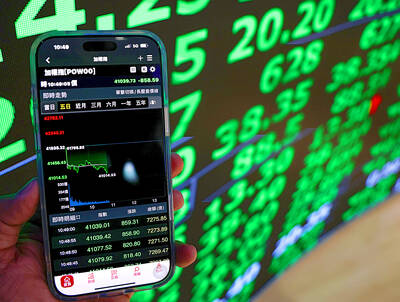
PORTFOLIO REBALANCING: The adjustments in three global equity indices reflect rising investor appetite for semiconductor and artificial intelligence-related stocks Taiwan’s weighting in major global equity indices compiled by MSCI Inc is to rise modestly following the latest quarterly review, underscoring the market’s expanding role in emerging-market portfolios, as global investors continue to favor the nation’s technology sector. Taiwan’s weighting in the MSCI Emerging Markets Index is to increase by 0.30 percentage points to 23.76 percent, after the changes take effect at the close of the May 29 session. Its weighting in the MSCI All-Country Asia ex-Japan Index is to rise 0.37 percentage points to 27.16 percent, while that in the MSCI All Country World Index is to edge up slightly to

NEW MARKET: The partnership opens up India to the Dutch company, which already has a strong hold in the semiconductor market of South Korea, Taiwan and China ASML Holding NV entered into a partnership agreement with Tata Electronics Pvt Ltd aimed at ramping up India’s goal to develop domestic chip-manufacturing capabilities. The Dutch company’s technology would help power Tata Electronics’ planned 300 millimeter (mm) semiconductor foundry in Gujarat, according to a joint statement from the two companies on Saturday. The signing of a memorandum of understanding coincides with a visit by Indian Prime Minister Narendra Modi to the Netherlands, which is looking to deepen bilateral relations with New Delhi. ASML, whose top customers include Taiwan Semiconductor Manufacturing Co (台積電) and Samsung Electronics Co, makes lithography machines that can print
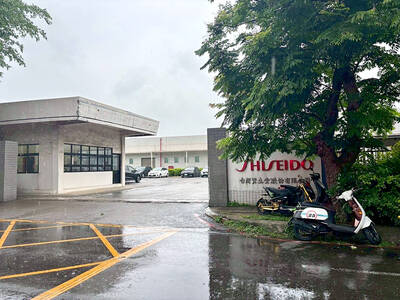
The Hsinchu County Government’s Labor Affairs Department yesterday said that it has received a plan from cosmetics brand Taiwan Shiseido Co (台灣資生堂) detailing mass layoffs at its plant in Hukou Township (湖口). While the labor authorities did not disclose the number of employees to be laid off, Japanese news media earlier in the day reported that the closure of the company’s factory in Hukou would result in 170 employees losing their jobs. Shiseido followed the law by reporting its layoff plan, the department said, adding that authorities would closely monitor negotiations between the management and affected employees and step in if any


 RSS
RSS