


Ginko International Co (金可國際), the nation’s biggest maker of contact lenses, yesterday said that its board of directors approved a takeover bid of NT$27.18 billion (US$976.43 million) by Glamor Vision Ltd and its subsidiary Glamor International Ltd.
The Glamor offer was to buy all 97.07 million Ginko shares for NT$280 each, Ginko said in statement submitted to the Taiwan Stock Exchange.
That represents a premium of 38.61 percent compared with Ginko’s closing price of NT$202 on Thursday.
After the transaction, Ginko would become a private company, with all shares delisted from Taipei Exchange, the statement said.
The firm’s global headquarters in Taichung and its China headquarters in Shanghai would continue to operate as usual, it said.
All factories, product development and distribution networks would remain unchanged, it said.
The deal is expected to be completed on May 26, it said.
The sale is to enhance Ginko’s operating efficiency and competitiveness, the statement said.
The deal with Glamor would give Ginko greater flexibility to form its development strategies and expand its global footprint, Ginko said, adding that it would allow it to leverage Glamor Vision owner Baring Private Equity Asia’s (霸菱亞洲投資) strength in global expansion experience and expertise.
Ginko sells contact lenses under the Deesse, Timido, Kukka, Eye Secret and Syreni brands, along with the Hydron (海昌) and Horien (海儷恩) brands.
It is the biggest contact lens supplier in Taiwan and China, with a 22 percent share in China last year.
Ginko’s parent, Formosa Optical Technology Co (寶島科), yesterday said it would swap the 18.39 percent stake of Ginko owned by its subsidiary New Path International Co for Glamor shares.
Ginko’s net profit expanded 24.81 percent annually to NT$787.75 million in the first three quarters of this year, compared with NT$631.15 million in the same period last year.
Earnings per share climbed to NT$8.11 from NT$6.5. Revenue surged about 30 percent year-on-year to NT$6.43 billion in the first three quarters, from NT$4.95 billion in the same period last year.

Mercuries Life Insurance Co (三商美邦人壽) shares surged to a seven-month high this week after local media reported that E.Sun Financial Holding Co (玉山金控) had outbid CTBC Financial Holding Co (中信金控) in the financially strained insurer’s ongoing sale process. Shares of the mid-sized life insurer climbed 5.8 percent this week to NT$6.72, extending a nearly 18 percent rally over the past month, as investors bet on the likelihood of an impending takeover. The final round of bidding closed on Thursday, marking a critical step in the 32-year-old insurer’s search for a buyer after years of struggling to meet capital adequacy requirements. Local media reports

US sports leagues rushed to get in on the multi-billion US dollar bonanza of legalized betting, but the arrest of an National Basketball Association (NBA) coach and player in two sprawling US federal investigations show the potential cost of partnering with the gambling industry. Portland Trail Blazers coach Chauncey Billups, a former Detroit Pistons star and an NBA Hall of Famer, was arrested for his alleged role in rigged illegal poker games that prosecutors say were tied to Mafia crime families. Miami Heat guard Terry Rozier was charged with manipulating his play for the benefit of bettors and former NBA player and

The DBS Foundation yesterday announced the launch of two flagship programs, “Silver Motion” and “Happier Caregiver, Healthier Seniors,” in partnership with CCILU Ltd, Hondao Senior Citizens’ Welfare Foundation and the Garden of Hope Foundation to help Taiwan face the challenges of a rapidly aging population. The foundation said it would invest S$4.91 million (US$3.8 million) over three years to foster inclusion and resilience in an aging society. “Aging may bring challenges, but it also brings opportunities. With many Asian markets rapidly becoming super-aged, the DBS Foundation is working with a regional ecosystem of like-minded partners across the private, public and people sectors
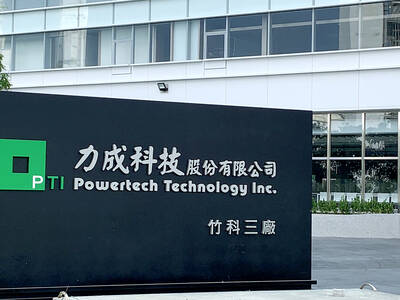
BREAKTHROUGH TECH: Powertech expects its fan-out PLP system to become mainstream, saying it can offer three-times greater production throughput Chip packaging service provider Powertech Technology Inc (力成科技) plans to more than double its capital expenditures next year to more than NT$40 billion (US$1.31 billion) as demand for its new panel-level packaging (PLP) technology, primarily used in chips for artificial intelligence (AI) applications, has greatly exceeded what it can supply. A significant portion of the budget, about US$1 billion, would be earmarked for fan-out PLP technology, Powertech told investors yesterday. Its heavy investment in fan-out PLP technology over the past 10 years is expected to bear fruit in 2027 after the technology enters volume production, it said, adding that the tech would


 RSS
RSS