


High-tech home appliance maker Dyson Ltd cut ties with supplier ATA IMS Bhd following an audit of the Malaysian company’s labor practices and allegations by a whistle-blower, it said yesterday.
ATA, which is already being investigated by the US over forced labor allegations, confirmed Dyson terminated its contracts and that it has been in talks with its customer over the audit findings.
ATA makes parts for Dyson’s vacuum cleaners and air purifiers. ATA said that Dyson accounts for almost 80 percent of its revenue.
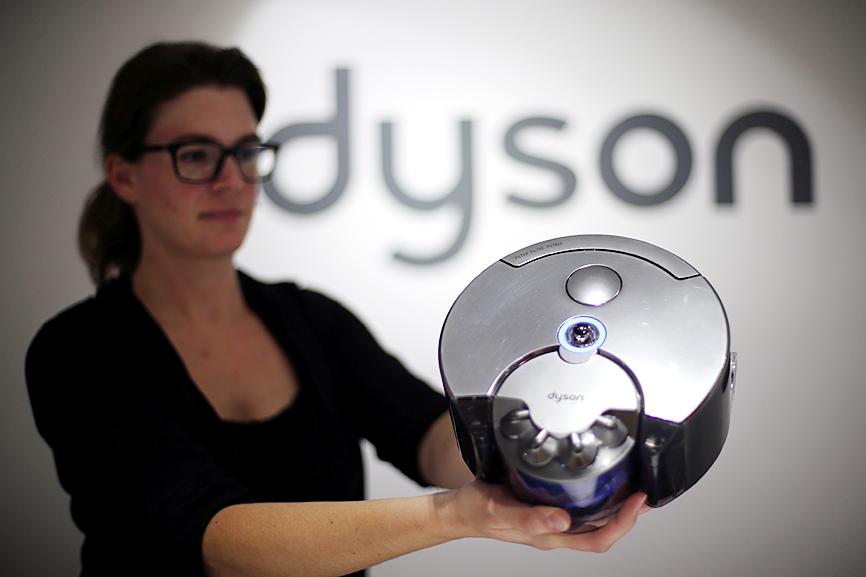
Photo: Reuters
The termination is also a significant blow for Malaysia, a major electronics manufacturing hub that has faced scrutiny this year over claims migrant workers are being subjected to abusive working and living conditions.
Dyson, privately owned by British billionaire James Dyson, said it received the results of an audit of working conditions at ATA in early last month. It said it had learned in September about allegations from a whistle-blower at an ATA factory and had commissioned a law firm to investigate those claims.
“Despite intense engagement over the past six weeks, we have not seen sufficient progress and have already removed some production lines,” Singapore-headquartered Dyson said in response to questions.
“We have now terminated our relationship with six months’ of contractual notice. We hope this gives ATA the impetus to improve, and enables an orderly withdrawal in the interests of the workers that they employ,” it said.
ATA, in a statement to the national stock exchange, said it would continue to manufacture and supply for Dyson until June 1 next year, and that its board was looking into the validity of Dyson’s termination notice.
ATA also said it had taken immediate steps to engage Dyson and advisers after it was notified of the summary of the labor audit. It added that it would continue to actively look into the findings.
ATA in May denied allegations of forced labor at its factories after a prominent rights activist said US authorities were going to scrutinize the company’s work practices.
The activist, Andy Hall, shared a letter the US Customs and Border Protection had sent him informing him that it had agreed to investigate an ATA unit after he flagged complaints received from workers.
The agency has banned six Malaysian firms in the past two years from selling their products to the US after finding evidence of forced labor.
In July, the US Department of State put Malaysia on a list with more than a dozen countries including China and North Korea, saying it had not made progress in eliminating trafficking of workers.
More than half of ATA’s 8,032 employees are foreigners, according to the firm’s latest annual report.
Hall said that Dyson’s decision to terminate the relationship would have huge implications for the thousands of workers employed at ATA, and Dyson should remediate ATA workers.
The Malaysian government must also bear some responsibility, Hall said, adding that he had made multiple complaints in the past year to the government about ATA.
Malaysia’s labor department did not immediately respond to a request for comment.
Social audits — the main form of due diligence conducted by the world’s biggest brands — are meant to monitor labor and other ethical standards in the supply chain. Critics say some companies have turned them into a perfunctory tick-boxing exercise.
Dyson said that the audit findings it received last month were from a “comprehensive” review that interviewed more than 2,000 ATA staff members.
It did not disclose the findings of the audit.
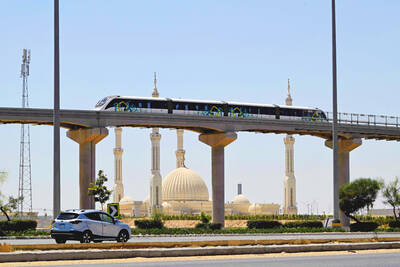
Cairo’s new monorail slices across the city skyline, running above the familiar chaos of blaring horns and aging buses’ exhaust fumes that mark rush hour below. The US$4.5 billion monorail, opened this month, is among Egypt’s most prominent new transport projects, part of a debt-funded infrastructure drive criticized for sapping state finances while bringing limited benefits to most of the country’s 109 million people. “It feels like you’re in a different country,” said Ramy Sayed, a restaurant manager, aboard a driverless Innovia 300 train. “No noise, no traffic, we’re not used to this.” The eastern line runs 56km from the bustling middle-class
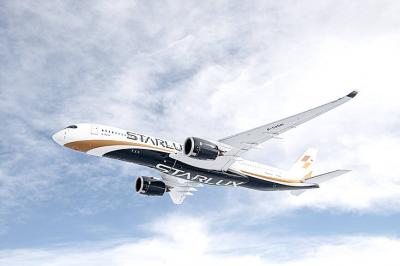
Starlux Airlines Co (星宇航空) today unveiled a long-haul network expansion plan at a shareholders’ meeting in Taipei, including direct flights to Barcelona, Spain, and Zurich, Switzerland, as well as a service connecting Taipei, Sydney and New Zealand. Starlux is to become the first Taiwanese carrier to offer non-stop services to the two European cities, while the inaugural oceanic route is expected to expand transit opportunities within the Australia-New Zealand market, Starlux said. Flight services to Chicago, Dallas, Washington and New York are under evaluation, the airline added. Prior to the shareholders’ meeting, the airline earlier this year announced that it would be

Taiwanese firms have increased investment in the Philippines in recent years as Manila’s ties with Washington deepen and global supply chains continue to shift away from China, an expert at the Chung-Hua Institution for Economic Research (CIER, 中華經濟研究院) said yesterday. The Philippines had not been among Taiwanese investors’ top choices in Southeast Asia, CIER Taiwan ASEAN Studies Center director Kristy Hsu (徐遵慈) said at a seminar in Taipei. However, Taiwan’s investment in the country has grown significantly since the COVID-19 pandemic, reaching US $257 million last year, a high in recent years, she said. Although Taiwan’s total investment in the Philippines still lags
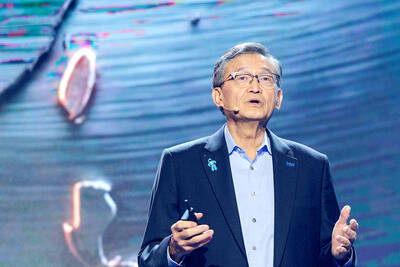
Intel Corp regards Taiwan Semiconductor Manufacturing Co (TSMC, 台積電) as a longstanding partner, as the US chipmaker would continue outsourcing production of advanced chips to TSMC, Intel chief executive officer Lip-Bu Tan (陳立武) said yesterday. “I don’t look at people as competitors. I look at the collaboration... Nvidia is also, you know, a good friend,” Tan told a news conference following his keynote speech at the Computex trade show in Taipei. “It’s a very trusted partnership for us... We are a big, top customer for them, and we’re going to continue doing that,” he said, referring to TSMC, the world’s largest foundry


 RSS
RSS