


Taipei-based developer Radium Life Tech Co (日勝生) expects to return to profitability this quarter from booking profit from two newly completed residential projects in Taipei and Taoyuan.
Radium, known for its MRT joint development projects, reported net losses of NT$168.77 million (US$6.07 million) in the first three quarters of the year, or losses of NT$0.19 per share, as rental income took a hard hit from a local COVID-19 outbreak, company spokesperson Christine Chen (陳婷婷) said yesterday.
The company reported net losses of NT$72.94 million in the third quarter, compared with a net profit of NT$215.01 million a year earlier, as consolidated revenue fell to NT$1.17 billion from NT$2.14 billion over the same period.
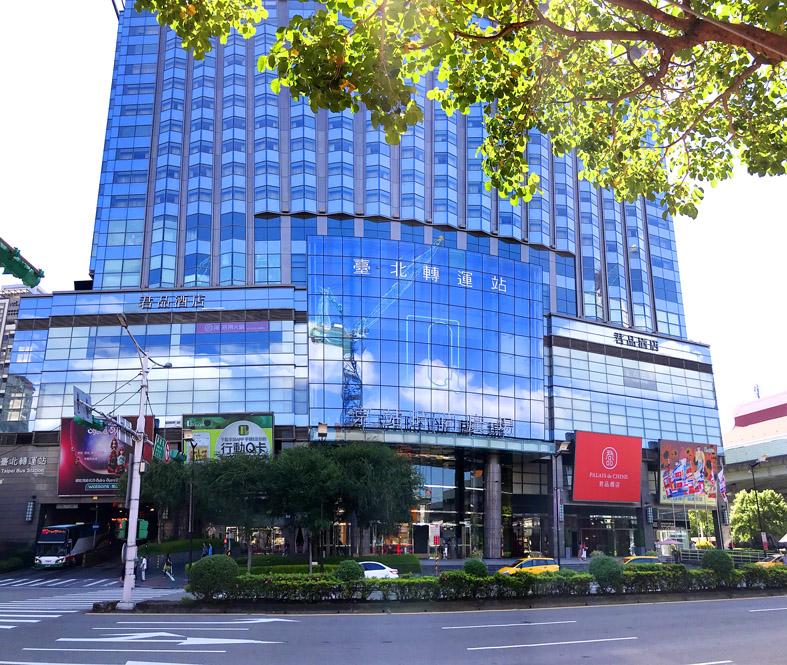
Photo: Wang Kuan-jen, Taipei Times
Radium is the landlord of a mixed-use complex that houses department store Qsquare (京站時尚廣場), five-star hotel Palais de Chine (君品酒店) and Taipei Bus Station.
The company has to lower rent significantly, as all three tenants saw their business slump when the government imposed a nationwide level 3 COVID-19 alert, Chen said, adding that the situation has improved after locally transmitted infections dropped to zero and authorities started to encourage consumer activity.
The developer is waiting for regulatory approval to turn over ownership of two residential complexes in Taipei and Taoyuan by the end of this year so it can book revenue and profit from the projects, Chen said.
At issue are the joint development projects above Taipei’s Da-qiaotou MRT Station (大橋頭站) and at Taoyuan’s fast-growing Cingpu District (青埔), which could generate NT$4 billion and NT$1.7 billion in sales respectively, Chen said.
Radium has sold out its share of apartments at Cingpu and sold 90 percent of units available at Daqiaotou, she said.
“That is why we are upbeat about the company’s financial performance this quarter and beyond,” Chen said.
Radium plans to raise selling prices for all projects under way to reflect spikes in labor and building material costs, she added.
Radium is developing a massive complex for retirees in New Taipei City’s Sanjhih District (三芝) and has sold 50 percent, or 200 units, at more than NT$300,000 per ping (3.3m2), much higher than local housing rates, Chen said.
Buying interest is strong as Taiwan’s population is aging rapidly, she said.
The retirement complex is expected to generate NT$3.5 billion to NT$4 billion in sales, she said.
Furthermore, Radium plans to spend NT$3 billion on three MRT joint development projects in Taichung and has won a contract to build an upscale office building on Taipei’s Guanqian Road near Taipei Railway Station, Chen said.
The company is to pour NT$8.5 billion into an urban renewal project near Kaohsiung Railway Station and is planning a retirement community in the southern port city’s Cishan District (旗山), she said.
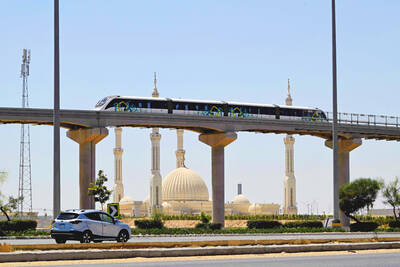
Cairo’s new monorail slices across the city skyline, running above the familiar chaos of blaring horns and aging buses’ exhaust fumes that mark rush hour below. The US$4.5 billion monorail, opened this month, is among Egypt’s most prominent new transport projects, part of a debt-funded infrastructure drive criticized for sapping state finances while bringing limited benefits to most of the country’s 109 million people. “It feels like you’re in a different country,” said Ramy Sayed, a restaurant manager, aboard a driverless Innovia 300 train. “No noise, no traffic, we’re not used to this.” The eastern line runs 56km from the bustling middle-class

Taiwanese firms have increased investment in the Philippines in recent years as Manila’s ties with Washington deepen and global supply chains continue to shift away from China, an expert at the Chung-Hua Institution for Economic Research (CIER, 中華經濟研究院) said yesterday. The Philippines had not been among Taiwanese investors’ top choices in Southeast Asia, CIER Taiwan ASEAN Studies Center director Kristy Hsu (徐遵慈) said at a seminar in Taipei. However, Taiwan’s investment in the country has grown significantly since the COVID-19 pandemic, reaching US $257 million last year, a high in recent years, she said. Although Taiwan’s total investment in the Philippines still lags
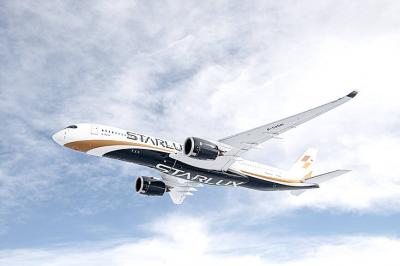
Starlux Airlines Co (星宇航空) today unveiled a long-haul network expansion plan at a shareholders’ meeting in Taipei, including direct flights to Barcelona, Spain, and Zurich, Switzerland, as well as a service connecting Taipei, Sydney and New Zealand. Starlux is to become the first Taiwanese carrier to offer non-stop services to the two European cities, while the inaugural oceanic route is expected to expand transit opportunities within the Australia-New Zealand market, Starlux said. Flight services to Chicago, Dallas, Washington and New York are under evaluation, the airline added. Prior to the shareholders’ meeting, the airline earlier this year announced that it would be

Intel Corp regards Taiwan Semiconductor Manufacturing Co (TSMC, 台積電) as a longstanding partner, as the US chipmaker would continue outsourcing production of advanced chips to TSMC, Intel chief executive officer Lip-Bu Tan (陳立武) said yesterday. “I don’t look at people as competitors. I look at the collaboration... Nvidia is also, you know, a good friend,” Tan told a news conference following his keynote speech at the Computex trade show in Taipei. “It’s a very trusted partnership for us... We are a big, top customer for them, and we’re going to continue doing that,” he said, referring to TSMC, the world’s largest foundry


 RSS
RSS