


HannStar Display Corp (瀚宇彩晶) is planning to expand its investment at the Southern Taiwan Science Park (南部科學園區) in response to higher production capacity needs, the Ministry of Economic Affairs said on Friday as it approved a NT$20 billion (US$716.8 million) investment application by the LCD panel maker.
HannStar has a fifth-generation (5G) LCD plant and a touch sensor and module plant at the science park in Tainan. The company was granted ministry permission in 2019 to invest NT$7.91 billion at the park to boost display capacity for wearable devices, vehicles, home appliances and touch screens.
To install more equipment for panel manufacturing and increase capacity at the 5G plant, HannStar applied to purchase four existing factories and increase production lines for smart micro-LED and next-generation LCD panels, the ministry said in a statement.

Photo: Chen Mei-ying, Taipei Times
“The company’s new production capacity is mainly focused on small and medium-sized panel applications, which can be used in mobile phones, wearable devices, notebook computers, tablets, industrial control and automotive applications,” the ministry said.
“The company’s total investment at the park stands as high as NT$27.9 billion, and its new production capacity is expected to increase to between 160,000 and 170,000 units per month from the existing 130,000 to 140,000 units.”
The new investment is expected to create 607 jobs in Taiwan, the ministry added.
HannStar reported revenue of NT$22.07 billion in the first nine months of this year, an increase of 76.38 percent from the same period last year.
The company secured net profit of NT$5.78 billion for the first half of the year, compared with a net loss of NT$572.25 million a year earlier, while earnings per share were NT$1.91, improving from losses per share of NT$0.18 one year ago.
HannStar was one of nine local companies that the ministry last week approved to join the government’s three major investment incentive programs.
As of Friday, the ministry had approved applications from 1,031 companies, with pledged investments totaling NT$1.39 trillion, and an expected 115,135 jobs to be created.

Taichung reported the steepest fall in completed home prices among the six special municipalities in the first quarter of this year, data compiled by Taiwan Realty Co (台灣房屋) showed yesterday. From January through last month, the average transaction price for completed homes in Taichung fell 8 percent from a year earlier to NT$299,000 (US$9,483) per ping (3.3m²), said Taiwan Realty, which compiled the data based on the government’s price registration platform. The decline could be attributed to many home buyers choosing relatively affordable used homes to live in themselves, instead of newly built homes in the city’s prime property market, Taiwan Realty
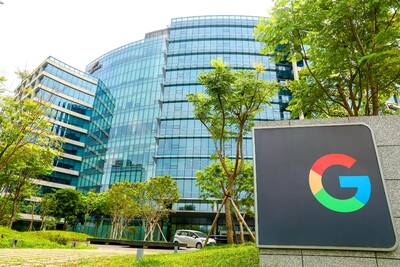
The government yesterday approved applications by Alphabet Inc’s Google to invest NT$27.08 billion (US$859.98 million) in Taiwan, the Ministry of Economic Affairs said in a statement. The Department of Investment Review approved two investments proposed by Google, with much of the funds to be used for data processing and electronic information supply services, as well as inventory procurement businesses in the semiconductor field, the ministry said. It marks the second consecutive year that Google has applied to increase its investment in Taiwan. Google plans to infuse NT$25.34 billion into Charter Investments Ltd (特許投資顧問) through its Singapore-based subsidiary Fructan Holdings Singapore Pte Ltd, and

JET JUICE: The war on Iran’s secondary effects have seen fuel prices skyrocket, knocking flight schedules down to earth in return as airlines struggle with costs Airline passengers should brace for more irritation in the next few months as carriers worldwide cancel flights and ground planes to cope with stratospheric increases in jet-fuel prices. Dutch flag carrier KLM is the latest company to cut its schedule, saying on Thursday that it would scrap 80 return flights at Amsterdam’s Schiphol Airport in the coming month. That puts it in the same league as United Airlines Holdings Inc, Deutsche Lufthansa AG and Cathay Pacific Airways Ltd, which have all pruned itineraries to mitigate costs. Global capacity for next month has been reduced by about 3 percentage points, with all

Micron Technology Inc is a driving force pushing the US Congress to pass legislation that would put new export restrictions on equipment its Chinese competitors use to make their chips, according to people familiar with the matter. A US House of Representatives panel yesterday was to vote on the “MATCH Act,” a bill designed to close gaps in restrictions on chipmaking equipment. It would also pressure foreign companies that sell equipment to Chinese chipmaking facilities to align with export curbs on US companies like Lam Research Corp and Applied Materials Inc. The bill targets facilities operated by China’s ChangXin Memory Technologies Inc


 RSS
RSS