


SWEDEN
PM touts sturdy economy
The economy is robust enough to withstand the effects of the energy crunch that has gripped Europe and filtered into Scandinavia, Prime Minister Stefan Lofven said. “We have a very, very strong economy,” Lofven said in an interview in New York on Sunday. “If we have dramatically higher prices in the long term, that will affect consumption, but I don’t think we’re there.” Sweden’s debt to GDP ratio has held below 40 percent even during the COVID-19 crisis and remains one of the lowest in Europe. That measure is set to fall to about 35 percent, Lofven said.
AIRLINES
Lufthansa to issue shares
Europe’s largest airline group, Deutsche Lufthansa AG, hit hard by the COVID-19 pandemic, said on Sunday that it would seek to raise more than 2 billion euros (US$2.34 billion) with a capital increase. The German company said its executive board had agreed to a share issue from tomorrow and “the gross proceeds are expected to amount to 2.140 billion euros.” The transaction, intended to improve its equity position and help repay state aid provided in the course of the pandemic, was underwritten by a syndicate of 14 banks, Lufthansa said.
ELECTRONICS
Merck to invest 3bn euros
Merck KGaA plans to spend more than 3 billion euros through 2025 on its electronics business to capitalize on rising demand for semiconductor and display panel materials. The German company would expand production capacity, bolster research and development spending and is also considering bolt-on acquisitions, it said in a statement yesterday. The company makes materials and technologies for computer chips and display screens, as well as effect pigments — products that are sold to the automotive, printing and cosmetics industries. A global semiconductor shortage has been devastating vehicle production this year.
BANKING
JPMorgan begins expansion
JPMorgan Chase & Co this week plans to launch a digital retail bank in the UK, the first step in the its strategy to expand its consumer business overseas. The operation, called Chase, is today to start with current accounts, a person familiar with the matter said. The product offering would broaden over time with the bank planning to invest “hundreds of millions” in the venture, Sanoke Viswanathan, head of JPMorgan’s International Consumer division, said in an interview with the Financial Times. The US bank agreed to buy UK digital wealth manager Nutmeg Saving and Investment in June, and Viswanathan told the Financial Times that more acquisitions might be considered.
CRYPTOCURRENCIES
Bitcoin ‘threatens’ the planet
Mining for bitcoin generates substantial electronic waste that “represents a growing threat to the environment,” a study said. The average life cycle of the powerful computers used to unearth the units of the world’s leading cryptocurrency is only 1.3 years, report coauthor Alex de Vries said on Friday. De Vries said that this was “extremely short compared to any” other electronic devices such as iPhones. At 30,700 tonnes, the amount of electronic waste generated by bitcoin mining in the 12 months to May was “comparable to the amount of small IT and telecommunication equipment waste produced by a country like the Netherlands,” the report said.
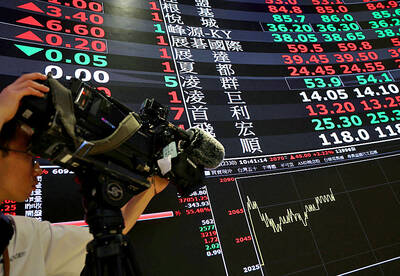
After several years flying high as Asia’s best Nvidia Corp proxy, Taiwan Semiconductor Manufacturing Co (TSMC, 台積電) is increasingly vying with other artificial intelligence (AI) stocks for investor attention. Stock traders are chasing a wider array of beneficiaries as mainstream usage of AI creates demand for hardware beyond the most-advanced chips TSMC makes for Nvidia. Subthemes from the deepening memory crunch to advances in robotics are also luring bids. At the same time, investment caps on single stocks are pushing funds to diversify, while retail investors long familiar with TSMC through its US depositary receipts are being offered a broader set of
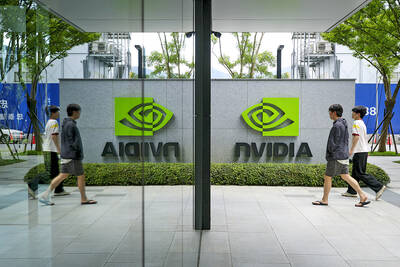
UNDER MICROSCOPE: Taiwan detained three people who allegedly conspired to buy servers in Taiwan and export them using fraudulent documentation, prosecutors said Nvidia Corp chief executive officer Jensen Huang (黃仁勳) on Saturday urged Super Micro Computer Inc to tighten up on compliance after Taiwan detained three people this week for allegedly making fraudulent declarations about artificial intelligence (AI) servers made by its US partner. The development marked the nation’s first crackdown on semiconductor smuggling, which grew after the US slapped restrictions on exports of high-end chips such as Nvidia AI accelerators to China. Nvidia is “rigorous” in explaining regulations to all of its partners, Huang told reporters after arriving in Taipei. “Ultimately Super Micro has to run their own company,” he said in response to
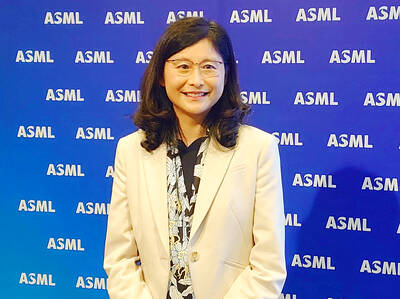
Netherlands-based semiconductor equipment supplier ASML Holding NV yesterday said that it is planning to hire an additional 1,000 people in Taiwan this year in response to growing demand from clients. ASML had previously planned to recruit 600 people this year, but that the plan has been adjusted upward, ASML vice president and ASML Taiwan general manager Grace Wang (汪佳慧) told reporters. ASML has a workforce of more than 4,500 in Taiwan, accounting for about 10 percent of its global total, Wang said. This year’s recruitment campaign would focus on adding people in the customer support, manufacturing and supply chain domains to assist ASML
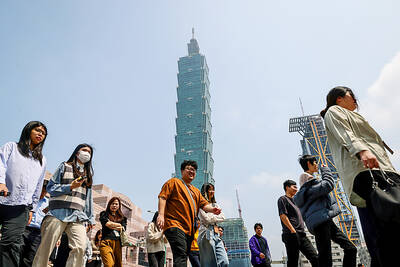
TECH RELIANCE: Growth is increasingly reflecting an unequal K-shaped distribution, where technology sectors outperform and other industries struggle, an expert said Standard Chartered Bank has significantly raised its forecast for Taiwan’s economic growth to 9.5 percent this year, up from 7.6 percent previously, citing surging artificial intelligence (AI) demand driving exports, semiconductor production and investment. The upgrade reflects a sustained AI supercycle that continues to fuel demand for advanced chips and technology infrastructure, which form the backbone of Taiwan’s exports, the bank said in a report this week. “We raise our 2026 growth forecast to reflect a much stronger-than-expected first-quarter GDP figure,” Standard Chartered senior economist for greater China and Asia Tommy Wu (胡東安) said in the report. Driven largely by a 35.3 percent


 RSS
RSS