


Apple Inc on Monday said it patched a security flaw in its Messages app after security researchers determined that Israel-based NSO Group used it to “exploit and infect” the US firm’s latest devices with spyware.
The flaw, disclosed on Monday by Citizen Lab, allowed a hacker using NSO’s Pegasus malware to gain access to a device owned by an unnamed Saudi Arabian rights advocate, security researchers said.
Apple said the flaw could be exploited if a user on a vulnerable device received a “maliciously crafted” PDF file.
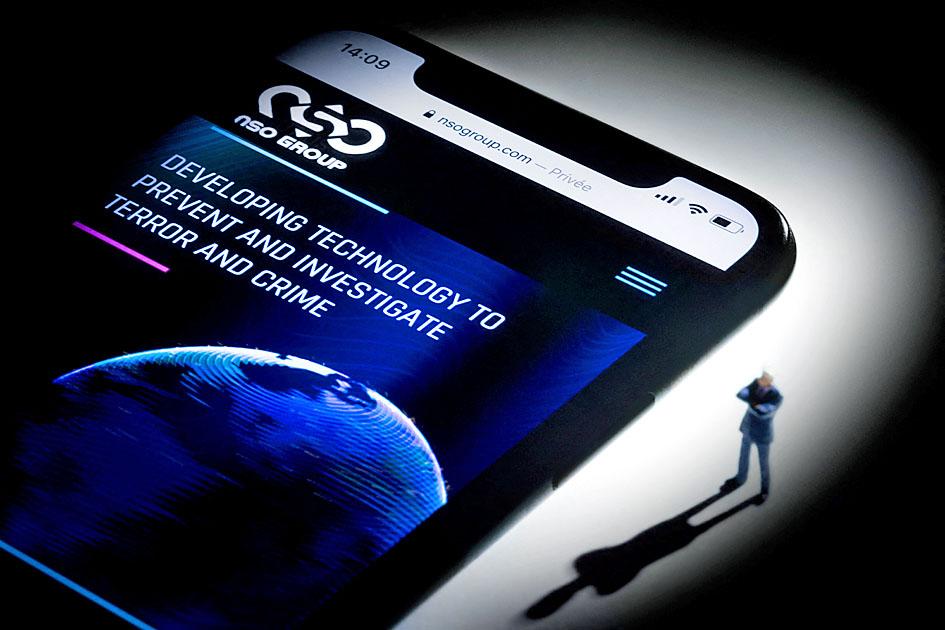
Photo: AFP
The flaw was a “zero-day” vulnerability, a term that refers to recently discovered bugs that hackers can exploit and have not yet been patched.
People did not have to click on the malicious file for it to infect their devices, something known as a “zero-click” exploit, said a report released by Citizen Lab, a cyberresearch unit at the University of Toronto.
“What this highlights is that chat apps are the soft underbelly of device security,” Citizen Lab senior researcher John Scott-Railton wrote in a text message. “They are ubiquitous, which makes them really attractive, so they are an increasingly common target for attackers.”
“They need to be a major priority for security,” Scott-Railton said. “Narrowing the attack surface from chat apps will go a long way toward making all of our devices more secure.”
Apple is patching the bug on the iPhone, iPad, Mac and Apple Watch via iOS 14.8, iPadOS 14.8, macOS 11.6 and watchOS 7.6.2 software updates. The software releases came the day before a highly anticipated Apple product launch event yesterday.
The company was expected to announce the release date for iOS 15, Apple’s next major software update, which is to contain additional security protections.
“After identifying the vulnerability used by this exploit for iMessage, Apple rapidly developed and deployed a fix in iOS 14.8 to protect our users,” Apple head of security engineering and architecture Ivan Krsti said in a statement. “We’d like to commend Citizen Lab for successfully completing the very difficult work of obtaining a sample of this exploit so we could develop this fix quickly.”
Attacks like this one are “highly sophisticated, cost millions of dollars to develop, often have a short shelf life and are used to target specific individuals,” Krsti said. “While that means they are not a threat to the overwhelming majority of our users, we continue to work tirelessly to defend all our customers, and we are constantly adding new protections for their devices and data.”
The NSO Group has been the subject of repeated criticism by Citizen Lab and other organizations after its spyware has been discovered on the phones of rights advocates and journalists critical of repressive regimes.
In its report on Monday, Citizen Lab accused NSO Group of facilitating “despotism-as-a-service for unaccountable government security agencies” and argued that regulation is “desperately needed.”
NSO Group has insisted that the spyware is intended to be used to fight terrorism and crime, not to aid in human rights abuses.
In its own statement, NSO Group said that the company “will continue to provide intelligence and law enforcement agencies around the world with life-saving technologies.”
In June, the company published its first Transparency and Responsibility Report, which defended its technology and efforts to curb misuse by customers.
The White House has raised concerns about NSO Group with senior Israeli officials, the Washington Post reported.

Taiwanese suppliers to Taiwan Semiconductor Manufacturing Co. (TSMC, 台積電) are expected to follow the contract chipmaker’s step to invest in the US, but their relocation may be seven to eight years away, Minister of Economic Affairs J.W. Kuo (郭智輝) said yesterday. When asked by opposition Chinese Nationalist Party (KMT) Legislator Niu Hsu-ting (牛煦庭) in the legislature about growing concerns that TSMC’s huge investments in the US will prompt its suppliers to follow suit, Kuo said based on the chipmaker’s current limited production volume, it is unlikely to lead its supply chain to go there for now. “Unless TSMC completes its planned six

Intel Corp has named Tasha Chuang (莊蓓瑜) to lead Intel Taiwan in a bid to reinforce relations between the company and its Taiwanese partners. The appointment of Chuang as general manager for Intel Taiwan takes effect on Thursday, the firm said in a statement yesterday. Chuang is to lead her team in Taiwan to pursue product development and sales growth in an effort to reinforce the company’s ties with its partners and clients, Intel said. Chuang was previously in charge of managing Intel’s ties with leading Taiwanese PC brand Asustek Computer Inc (華碩), which included helping Asustek strengthen its global businesses, the company

Power supply and electronic components maker Delta Electronics Inc (台達電) yesterday said second-quarter revenue is expected to surpass the first quarter, which rose 30 percent year-on-year to NT$118.92 billion (US$3.71 billion). Revenue this quarter is likely to grow, as US clients have front-loaded orders ahead of US President Donald Trump’s planned tariffs on Taiwanese goods, Delta chairman Ping Cheng (鄭平) said at an earnings conference in Taipei, referring to the 90-day pause in tariff implementation Trump announced on April 9. While situations in the third and fourth quarters remain unclear, “We will not halt our long-term deployments and do not plan to
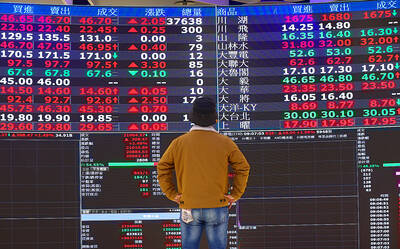
The New Taiwan dollar and Taiwanese stocks surged on signs that trade tensions between the world’s top two economies might start easing and as US tech earnings boosted the outlook of the nation’s semiconductor exports. The NT dollar strengthened as much as 3.8 percent versus the US dollar to 30.815, the biggest intraday gain since January 2011, closing at NT$31.064. The benchmark TAIEX jumped 2.73 percent to outperform the region’s equity gauges. Outlook for global trade improved after China said it is assessing possible trade talks with the US, providing a boost for the nation’s currency and shares. As the NT dollar


 RSS
RSS