


The exposure of Taiwanese financial institutions to troubled Chinese property giant Evergrande Group (恆大集團) totaled NT$2.21 billion (US$79.75 million) as of the end of July, the Financial Supervisory Commission (FSC) said yesterday.
The amount constituted banks’ loan exposure of NT$500 million and NT$1.71 billion in Evergrande shares invested through domestic or offshore funds, the commission said.
While two local banks had exposure to Evergrande, they had set aside provisions for bad debts, Banking Bureau Chief Secretary Phil Tong (童政彰) told a news conference in New Taipei City.
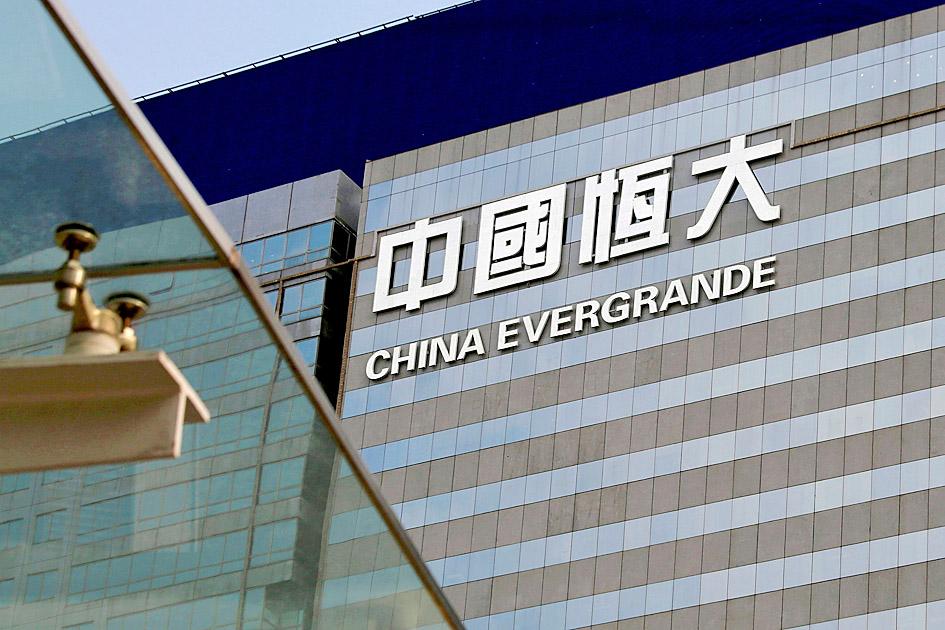
Photo: Reuters
No Taiwanese insurer or securities firm had invested in Evergrande, Insurance Bureau Deputy Director-General Chang Yu-hui (張玉煇) said.
Securities and Futures Bureau Deputy Director Kuo Chia-chun (郭佳君) said that securities brokerages also had no direct exposure to Evergrande, but investment trust firms did through their fund products.
As of the end of July, 44 domestic funds had invested a combined NT$1.26 billion in Evergrande, which was 0.64 percent of their total investment of domestic funds, the commission said.
Forty-one offshore funds had invested a combined NT$451 million in Evergrande as of July 31, 0.39 percent of their total investment of offshore funds, it said.
The Chinese government is assembling a group of accounting and legal experts to examine the finances of Evergrande, a potential precursor to a restructuring of the world’s most indebted developer, Bloomberg reported yesterday.
The report came after the Hong Kong-listed firm said in an exchange filing yesterday that it faces “tremendous” liquidity strains.
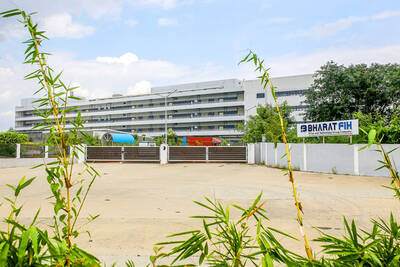
SETBACK: Apple’s India iPhone push has been disrupted after Foxconn recalled hundreds of Chinese engineers, amid Beijing’s attempts to curb tech transfers Apple Inc assembly partner Hon Hai Precision Industry Co (鴻海精密), also known internationally as Foxconn Technology Group (富士康科技集團), has recalled about 300 Chinese engineers from a factory in India, the latest setback for the iPhone maker’s push to rapidly expand in the country. The extraction of Chinese workers from the factory of Yuzhan Technology (India) Private Ltd, a Hon Hai component unit, in southern Tamil Nadu state, is the second such move in a few months. The company has started flying in Taiwanese engineers to replace staff leaving, people familiar with the matter said, asking not to be named, as the
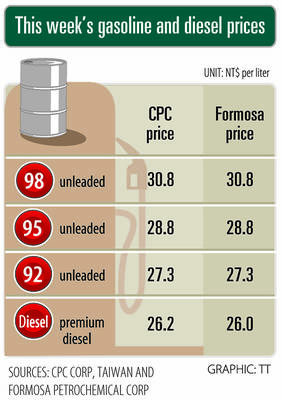
The prices of gasoline and diesel at domestic fuel stations are to rise NT$0.1 and NT$0.4 per liter this week respectively, after international crude oil prices rose last week, CPC Corp, Taiwan (台灣中油) and Formosa Petrochemical Corp (台塑石化) announced yesterday. Effective today, gasoline prices at CPC and Formosa stations are to rise to NT$27.3, NT$28.8 and NT$30.8 per liter for 92, 95 and 98-octane unleaded gasoline respectively, the companies said in separate statements. The price of premium diesel is to rise to NT$26.2 per liter at CPC stations and NT$26 at Formosa pumps, they said. The announcements came after international crude oil prices
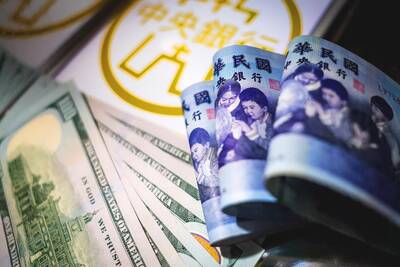
DOLLAR SIGNS: The central bank rejected claims that the NT dollar had appreciated 10 percentage points more than the yen or the won against the greenback The New Taiwan dollar yesterday fell for a sixth day to its weakest level in three months, driven by equity-related outflows and reactions to an economics official’s exchange rate remarks. The NT dollar slid NT$0.197, or 0.65 percent, to close at NT$30.505 per US dollar, central bank data showed. The local currency has depreciated 1.97 percent so far this month, ranking as the weakest performer among Asian currencies. Dealers attributed the retreat to foreign investors wiring capital gains and dividends abroad after taking profit in local shares. They also pointed to reports that Washington might consider taking equity stakes in chipmakers, including Taiwan Semiconductor
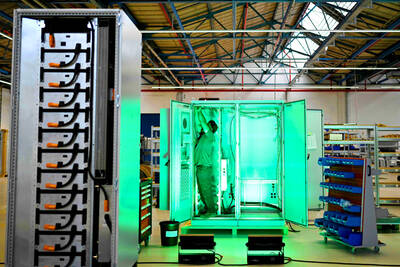
A German company is putting used electric vehicle batteries to new use by stacking them into fridge-size units that homes and businesses can use to store their excess solar and wind energy. This week, the company Voltfang — which means “catching volts” — opened its first industrial site in Aachen, Germany, near the Belgian and Dutch borders. With about 100 staff, Voltfang says it is the biggest facility of its kind in Europe in the budding sector of refurbishing lithium-ion batteries. Its CEO David Oudsandji hopes it would help Europe’s biggest economy ween itself off fossil fuels and increasingly rely on climate-friendly renewables. While


 RSS
RSS