


China Development Financial Holding Co (中華開發金控) on Thursday said that it is seeking to complete the takeover of China Life Insurance Co (中國人壽) by the end of this year by acquiring all remaining shares of the firm via a share swap.
The companies’ boards of directors approved the proposed share swap, in which one common share of China Life would be exchanged for 0.8 common shares of China Development, plus 0.73 preferred shares of China Development and a cash bonus of NT$11.5 per share, they said.
China Development would issue 2.07 billion new common shares and 1.89 billion new preferred shares that would be exchanged for China Life’s common shares, they said.
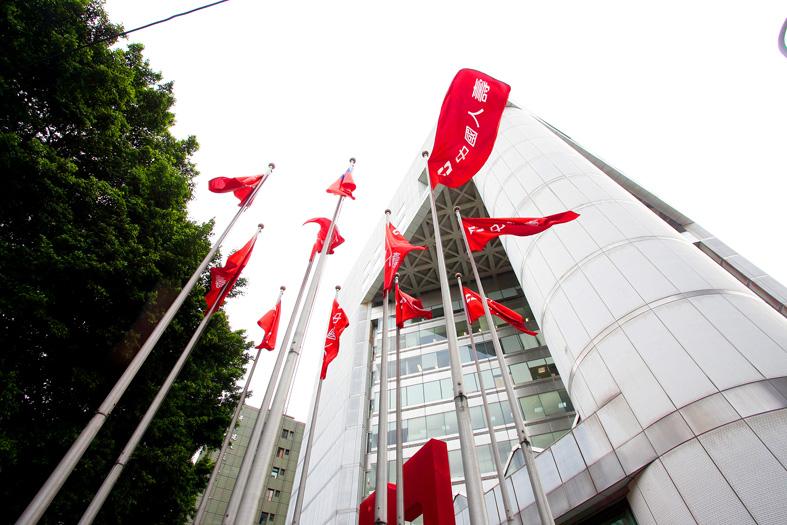
Photo courtesy of China Life Insurance Co
China Development said it would consider several options, including issuing corporate bonds, to fund the deal.
Through two tender offers completed in September 2017 and in February this year, China Development boosted its stake in China Life to 55.95 percent.
The company expects to complete the acquisition of the remaining 44.05 percent in the life insurer, if shareholders approve the deal in a meeting on Oct. 1, it said.
“The takeover, although including the issuance of new shares, would not necessarily weaken our earnings per share, as it would give us full ownership of China Life and allow us to benefit from the insurer’s profit, which should contribute a lot,” China Development spokesman Richard Chang (張立荃) told the Taipei Times by telephone on Friday.
Based on China Life’s closing share price of NT$26.9 and China Development’s share price of NT$13.85 on Thursday, China Development has offered a premium of 17.3 percent for China Life shares, Chang said.
The deal is unusual as China Development would not only immediately offer cash to China Life’s shareholders, but also give them access to its own preferred shares with an annual dividend yield of 3.55 percent, he said.
After fully acquiring China Life, China Development would seek to strengthen its insurance operations, as well as its banking and securities businesses, the company said, adding that it would boost its overall growth.
China Development said that it would intensify efforts to accelerate the integration of its three major businesses — banking, insurance and securities.
Both companies plan to swap shares by the end of this year, pending Financial Supervisory Commission approval, Chang said.
China Life would be delisted from the Taiwan Stock Exchange after the acquisition, Chang said.
Additional reporting by CNA
Shares of contract chipmaker Taiwan Semiconductor Manufacturing Co (TSMC, 台積電) came under pressure yesterday after a report that Apple Inc is looking to shift some orders from the Taiwanese company to Intel Corp. TSMC shares fell NT$55, or 2.4 percent, to close at NT$2,235 on the local main board, Taiwan Stock Exchange data showed. Despite the losses, TSMC is expected to continue to benefit from sound fundamentals, as it maintains a lead over its peers in high-end process development, analysts said. “The selling was a knee-jerk reaction to an Intel-Apple report over the weekend,” Mega International Investment Services Corp (兆豐國際投顧) analyst Alex Huang
Taiwan Semiconductor Manufacturing Co (TSMC, 台積電) is expected to remain Apple Inc’s primary chip manufacturing partner despite reports that Apple could shift some orders to Intel Corp, industry experts said yesterday. The comments came after The Wall Street Journal reported on Friday that Apple and Intel had reached a preliminary agreement following more than a year of negotiations for Intel to manufacture some chips for Apple devices. Taiwan Institute of Economic Research (台灣經濟研究院) economist Arisa Liu (劉佩真) said TSMC’s advanced packaging technologies, including integrated fan-out and chip-on-wafer-on-substrate, remain critical to the performance of Apple’s A-series and M-series chips. She said Intel and Samsung
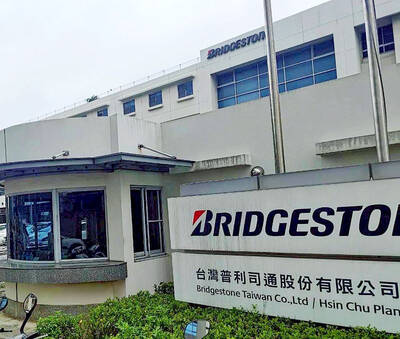
TRANSITION: With the closure, the company would reorganize its Taiwanese unit to a sales and service-focused model, Bridgestone said Bridgestone Corp yesterday announced it would cease manufacturing operations at its tire plant in Hsinchu County’s Hukou Township (湖口), affecting more than 500 workers. Bridgestone Taiwan Co (台灣普利司通) said in a statement that the decision was based on the Tokyo-based tire maker’s adjustments to its global operational strategy and long-term market development considerations. The Taiwanese unit would be reorganized as part of the closure, effective yesterday, and all related production activities would be concluded, the statement said. Under the plan, Bridgestone would continue to deepen its presence in the Taiwanese market, while transitioning to a sales and service-focused business model, it added. The Hsinchu
Taiwan Semiconductor Manufacturing Co (TSMC, 台積電) has approved a capital budget of US$31.28 billion for production expansion to meet long-term development needs during the artificial intelligence (AI) boom. The company’s board meeting yesterday approved the capital appropriation plan for purposes such as the installation of advanced technology capacity and fab construction, the world’s largest contract chipmaker said in a statement. At an earnings conference last month, TSMC forecast that its capital expenditure for this year would be at the higher end of the US$52 billion to US$56 billion range it forecast in January in response to robust demand for 5G, AI and


 RSS
RSS