


China’s banking and insurance watchdog is stepping up scrutiny of the nation’s insurance technology platforms, widening a regulatory dragnet that has roiled global investors.
The regulator has ordered companies and local agencies to curb improper marketing and pricing practices, and step up user privacy protection, according to a notice.
It encouraged companies to address these issues voluntarily and said those that failed to comply would face “severe punishment.”
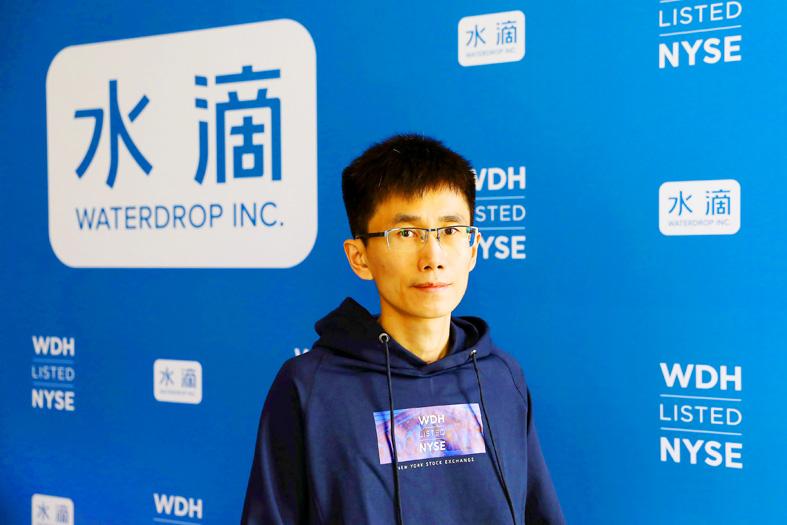
Photo: Reuters
The sweeping order goes beyond the targeted action that has hit a few listed online platforms including Waterdrop Inc (水滴籌) and operations backed by Ping An Insurance Group Co (平安保險) in the months since China began a broad crackdown on its financial technology sector this year. It has also moved to rein in some of its biggest technology companies, as well as education technology, ride-hailing and short video platforms.
The latest move would stymie growth in an industry that had been expected to grow to 2.5 trillion yuan (US$386 billion) in a decade.
The China Banking and Insurance Regulatory Commission did not immediately respond to a request seeking comment.
“In recent years, online insurance has moved into a fast lane. At the same time, transgressions have been rampant,” according to the notice, which cited offenses including some Internet platforms illegally operating in insurance, mispricing risks or illicitly using client information. It called for “immediate rectification and regulation.”
Shares of US-listed insurance platform Huize Holding Ltd (慧擇保險) fell 5 percent, the most in two weeks, after the notice was reported. Insurance agency and platform Fanhua Inc (泛華金融) dropped nearly 6 percent. Ride-hailing service Didi Global Inc (滴滴), which operates a fledgling financial services business, declined 3.7 percent. Shares of ZhongAn Online P&C Insurance Co (眾安保險) slid 8.7 percent at 9:38am in Hong Kong.
Just a year ago, insurance seemed ripe for disruption as start-ups vowed to transform traditional practices with technology. Regulators have since moved to shutter some operations, including mutual aid healthcare platforms operated by Waterdrop and Ant Group Co (螞蟻集團). A draft circular in January might potentially bar companies from selling certain insurance products if enacted.
The overhang presents multiple challenges for Waterdrop, which was one of a few Chinese fintechs to have pulled off an initial public offering this year. The company has warned it “may not be able to achieve or maintain profitability or positive cash flow in the future” after incurring net losses and negative cash flow each year since its inception in 2016. It lost US$101 million last year after generating operating revenue of US$464 million.
Investors and companies have poured an estimated 45 billion yuan into insurance technology, according to estimates from online consultant iResearch.
By the end of last year, more than 140 insurance companies in China had started online insurance businesses, with total premiums of 298 billion yuan for the year, or 6 percent of the industry total, a commission official said in a speech in May.

Cairo’s new monorail slices across the city skyline, running above the familiar chaos of blaring horns and aging buses’ exhaust fumes that mark rush hour below. The US$4.5 billion monorail, opened this month, is among Egypt’s most prominent new transport projects, part of a debt-funded infrastructure drive criticized for sapping state finances while bringing limited benefits to most of the country’s 109 million people. “It feels like you’re in a different country,” said Ramy Sayed, a restaurant manager, aboard a driverless Innovia 300 train. “No noise, no traffic, we’re not used to this.” The eastern line runs 56km from the bustling middle-class
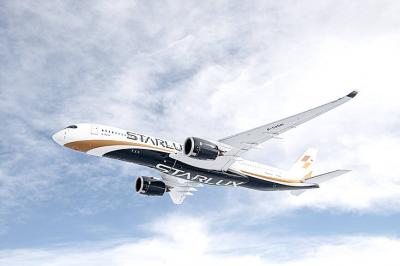
Starlux Airlines Co (星宇航空) today unveiled a long-haul network expansion plan at a shareholders’ meeting in Taipei, including direct flights to Barcelona, Spain, and Zurich, Switzerland, as well as a service connecting Taipei, Sydney and New Zealand. Starlux is to become the first Taiwanese carrier to offer non-stop services to the two European cities, while the inaugural oceanic route is expected to expand transit opportunities within the Australia-New Zealand market, Starlux said. Flight services to Chicago, Dallas, Washington and New York are under evaluation, the airline added. Prior to the shareholders’ meeting, the airline earlier this year announced that it would be

Taiwanese firms have increased investment in the Philippines in recent years as Manila’s ties with Washington deepen and global supply chains continue to shift away from China, an expert at the Chung-Hua Institution for Economic Research (CIER, 中華經濟研究院) said yesterday. The Philippines had not been among Taiwanese investors’ top choices in Southeast Asia, CIER Taiwan ASEAN Studies Center director Kristy Hsu (徐遵慈) said at a seminar in Taipei. However, Taiwan’s investment in the country has grown significantly since the COVID-19 pandemic, reaching US $257 million last year, a high in recent years, she said. Although Taiwan’s total investment in the Philippines still lags

Intel Corp regards Taiwan Semiconductor Manufacturing Co (TSMC, 台積電) as a longstanding partner, as the US chipmaker would continue outsourcing production of advanced chips to TSMC, Intel chief executive officer Lip-Bu Tan (陳立武) said yesterday. “I don’t look at people as competitors. I look at the collaboration... Nvidia is also, you know, a good friend,” Tan told a news conference following his keynote speech at the Computex trade show in Taipei. “It’s a very trusted partnership for us... We are a big, top customer for them, and we’re going to continue doing that,” he said, referring to TSMC, the world’s largest foundry


 RSS
RSS