


Revenue at restaurant chains last month shrank drastically as people stayed at home to avoid virus infection after the government on May 19 issued a nationwide level 3 COVID-19 alert.
The dining sector in the first half of last month enjoyed high sales thanks to Mother’s Day celebrations, but suffered a sudden business freeze after the number of domestic infections escalated in the middle of the month.
Hi-Lai Foods Co (漢來美食) — which operates Hi-Lai Vegetarian Restaurant (漢來蔬食), Cantonese Jade Garden Restaurant (翠園), buffet restaurant Harbour Restaurant (漢來海港) and luxury Chinese restaurant Celebrity Cuisine (名人坊) — reported revenue of NT$171 million (US$6.19 million) for last month, a slump of 20.39 percent from a year earlier.
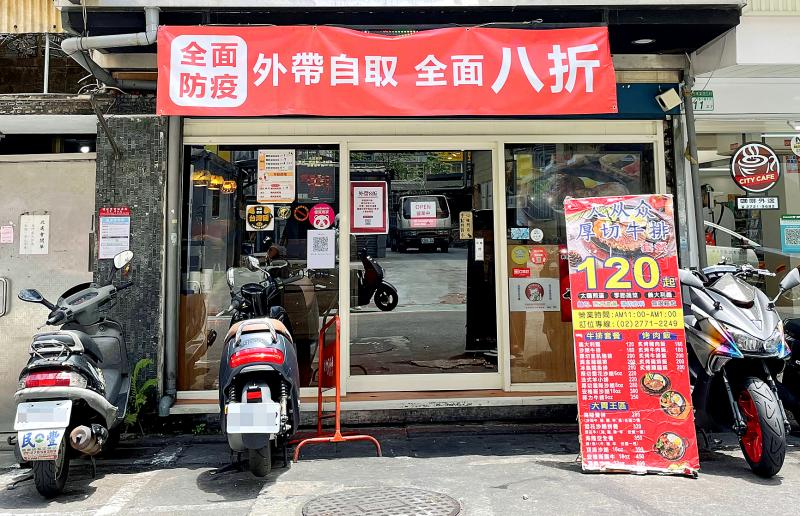
Photo: CNA
The restaurant chain said it has temporarily halted operations at some outlets and has been offering only takeout services at most of its properties to maintain some cash flow and keep workers on the payroll.
Tofu Restaurant Co (豆府) — which owns Korean restaurant chains under the Dubu House Korea (涓豆腐), Hanok Tofu (北村豆腐家), Han Jeong Sig (韓姜熙小廚房) and Pho Tau Bay (越南飛機河粉) brands — posted sales of NT$79 million for last month, a 50.57 percent retreat from the same period last year, it said.
Restaurants had since May last year been allowed to offer dine-in services as long as they maintained safe hygiene practices, including installing plastic screens between tables, to reduce infection risk.
Tai Tong Food & Beverage Group (瓦城泰統集團), which operates six restaurant chains — Thai Town Cuisine (瓦城泰式料理), Very Thai Restaurant (非常泰), 1010 Hunan Cuisine (1010湘), Very Thai Noodles (大心新泰式麵食), Ten Ten Hunan Bistro (十食湘) and Shann Rice Bar (時時香) — reported a 24.5 percent decrease in revenue to NT$303 million last month.
Tai Tong operates 129 stores in Taiwan and 11 in China, and overseas operations provided some buffer amid the harsh operating environment in Taiwan, it said.
DIVERSIFICATION
The strategy of diversified investment allowed Wowprime Corp (王品), whose brands include the Wang Steak (王品台塑牛排), Tasty (西堤) restaurant chains, Japanese eatery Tokiya (陶板屋) and hotpot restaurant chain 12 Sabu (石二鍋), to post a mild 5.38 percent decline in revenue to NT$1.32 billion last month, the company said.
Wowprime said its business in China surged 42.3 percent year-on-year to a high of NT$620 million, as the vast market is emerging from the negative effects of the pandemic.
Likewise, La Kaffa International Co (六角國際) and Yummy Town Holdings Corp (雅茗集團), both of which operate restaurant and beverage store chains at home and abroad, reported that sales grew 14.19 percent and 12.48 percent to NT$300 million and NT$127 million respectively, as business abroad gained momentum.
Sales at companies that rely heavily on the domestic market are likely to deteriorate this month, as the government has further tightened movement restrictions.
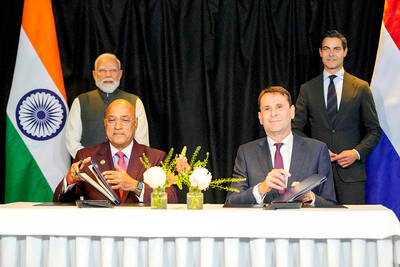
NEW MARKET: The partnership opens up India to the Dutch company, which already has a strong hold in the semiconductor market of South Korea, Taiwan and China ASML Holding NV entered into a partnership agreement with Tata Electronics Pvt Ltd aimed at ramping up India’s goal to develop domestic chip-manufacturing capabilities. The Dutch company’s technology would help power Tata Electronics’ planned 300 millimeter (mm) semiconductor foundry in Gujarat, according to a joint statement from the two companies on Saturday. The signing of a memorandum of understanding coincides with a visit by Indian Prime Minister Narendra Modi to the Netherlands, which is looking to deepen bilateral relations with New Delhi. ASML, whose top customers include Taiwan Semiconductor Manufacturing Co (台積電) and Samsung Electronics Co, makes lithography machines that can print
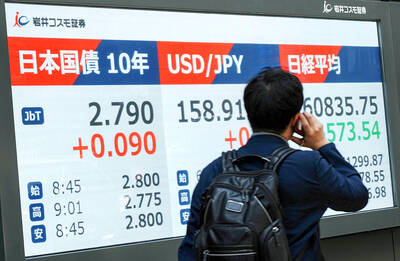
ROUGH RECORDS: Bonds in Japan, as well is in New Zealand, Australia and the US, are seeing the effects of a nervy market as stock exchanges across Asia edge down A deepening slump in Japanese government bonds added fuel to the selloff in global debt markets as rising oil prices stoked inflation fears and pushed yields to multi-decade highs. Japan’s 30-year yield yesterday surged as much as 20 basis points to the highest level since the tenor’s debut in 1999, before paring some of the move. Shorter-maturity Japanese debt was also under pressure, underscored by weak demand at a sale of five-year notes that offered a record-high coupon of 2 percent. Concerns over inflation and government spending rippling through markets including the US, Australia and New Zealand are being amplified in Japan,
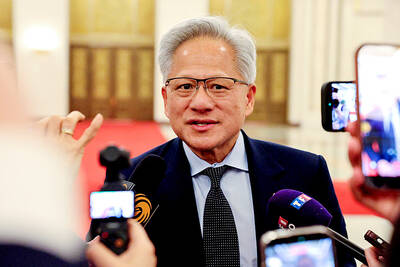
The US has cleared about 10 Chinese firms to buy Nvidia Corp’s second-most powerful artificial intelligence (AI) chip, the H200, but not a single delivery has been made so far, three people familiar with the matter said, leaving a major technology deal in limbo as chief executive officer Jensen Huang (黃仁勳) seeks a breakthrough in China this week. Huang, who was not initially listed in a White House delegation to Beijing, joined the trip after an invitation from US President Donald Trump, a source said. Trump picked him up in Alaska en route to a summit with Chinese President Xi Jinping

Wall Street is licking its chops over an unprecedented slate of massive initial public offerings (IPOs) set to arrive in the coming months, beginning with Elon Musk’s Space Exploration Technologies Corp (SpaceX) next month. That is expected to be followed by artificial intelligence (AI) rivals OpenAI and Anthropic PBC. The trio of mega listings, each eyeing valuations around US$1 trillion or more, constitutes a heady period of elevated risk and reward. SpaceX is targeting an IPO that would raise up to US$80 billion — about double the funds generated from all IPOs last year. OpenAI and Anthropic are eyeing IPOs raising US$60 billion. “We’re


 RSS
RSS