


Chip tester and packager Greatek Electronics Inc’s (超豐電子) shares tumbled more than 3 percent yesterday, as it said it expected output to drop by about 10 percent this month because it has shut some production lines to test all employees for COVID-19 after reporting eight confirmed cases.
A Philippine worker contracted COVID-19 on Tuesday last week, and eight other migrant workers — the first worker’s roommates — were confirmed to have the virus the next day, the firm said in a statement.
Greatek was one of five electronics companies in Miaoli County’s Jhunan Township (竹南) that reported COVID-19 infections among migrant workers.
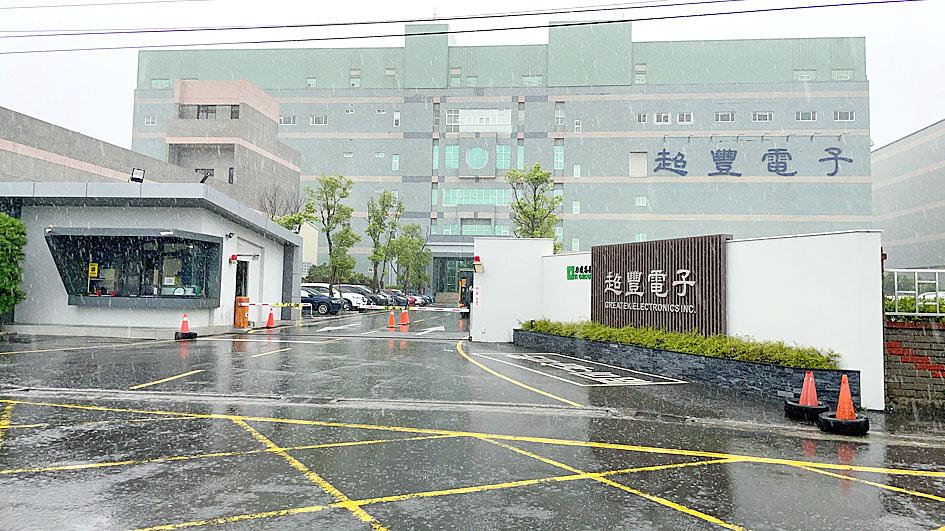
Photo: Tsai Cheng-min, Taipei Times
To prevent the virus from spreading, Greatek decided to test all of its 4,264 employees, including Taiwanese employees, and test 208 high-risk workers using polymerase chain reaction tests, it said.
It took three days through Monday to complete the tests, resulting in the partial shutdown of production lines, the company said, adding that four more employees tested positive for COVID-19.
“The company has suspended production partially due to the rapid screening tests. The workforce has been reduced as some employees were isolated,” the statement said. “That will cut output by about 10 percent in June.”
The company aims to boost production and enhance operational efficiency to recover the output loss later this year after the COVID-19 outbreak is brought under control, it said.
Shares of Greatek dropped 3.13 percent to NT$71.2 yesterday, underperforming the TAIEX’s loss of 0.64 percent.
To prevent further infections among migrant workers from crippling production of local technology firms and to protect people living in the surrounding areas, the Ministry of Science and Technology has launched rapid screening test centers at the nation’s three major science parks.
Two new rapid screening test centers were yesterday launched at the Southern Taiwan Science Park’s (南部科學園區) two campuses in Tainan and Kaohsiung.
The rapid screening test centers can so far test a combined 1,000 people a day, the Southern Taiwan Science Park Administration said in a statement yesterday.
Firms at the Southern Taiwan Science Park employ 7,865 blue-collar migrant workers and 160 foreign employees in managerial positions, the administration said.
Rapid screening test centers were launched at the Hsinchu Science Park (新竹科學園區) and the Central Taiwan Science Park (中部科學園區) on Sunday and Tuesday respectively.
Networking equipment maker Accton Technology Corp (智邦科技) is to test more than 1,740 employees from Jhunan Township, the company said in a statement.
As of Tuesday, 13 of its employees had tested positive for COVID-19, Accton said.

SECOND-RATE: Models distilled from US products do not perform the same as the original and undo measures that ensure the systems are neutral, the US’ cable said The US Department of State has ordered a global push to bring attention to what it said are widespread efforts by Chinese companies, including artificial intelligence (AI) start-up DeepSeek (深度求索), to steal intellectual property from US AI labs, according to a diplomatic cable. The cable, dated Friday and sent to diplomatic and consular posts around the world, instructs diplomatic staff to speak to their foreign counterparts about “concerns over adversaries’ extraction and distillation of US AI models.” Distillation is the process of training smaller AI models using output from larger, more expensive ones to lower the costs of training a powerful new
Shares of Taiwan Semiconductor Manufacturing Co (TSMC, 台積電) have repeatedly hit new highs, but an equity analyst said the stock’s valuation remains within a reasonable range and any pullback would likely be technical. The contract chipmaker’s historical price-to-earnings (P/E) ratio has ranged between 20 and 30, Cathay Futures Consultant Co (國泰證期) analyst Tsai Ming-han (蔡明翰) told Central News Agency. With market consensus projecting that TSMC would post earnings per share of about NT$100 (US$3.17) this year, supported by strong global demand for artificial intelligence (AI) applications, and the stock currently trading at a P/E ratio of below 25, Tsai said the valuation
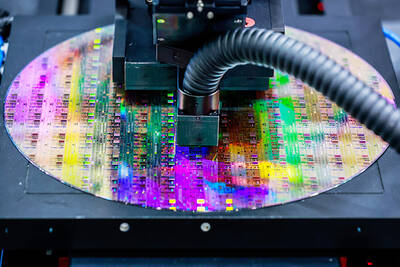
The artificial intelligence (AI) boom has triggered a seismic reshuffling of global equity markets, with Taiwan and South Korea muscling past European nations one by one. With its stock market now valued at nearly US$4.3 trillion, Taiwan surpassed the UK, Europe’s biggest market, earlier this month, data compiled by Bloomberg showed. South Korea is about US$140 billion away from doing the same. The tech-heavy Asian markets have shot past Germany and France in the past seven months. The shift is largely down to massive gains in shares of three companies that provide essential hardware for AI: Taiwan Semiconductor Manufacturing Co (TSMC, 台積電),
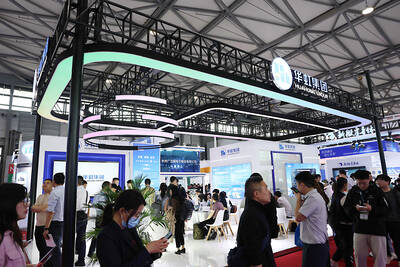
The US Department of Commerce last week ordered multiple chip equipment companies to halt shipments of certain tools to China’s second-largest chipmaker, Hua Hong Semiconductor Ltd (華虹半導體), its latest action to slow the country’s development of advanced chips, two people familiar with the matter said. The department sent letters to at least a handful of companies informing them of restrictions on tools and other materials destined for two Hua Hong facilities US officials believe make China’s most sophisticated chips, the people said. Top US chip equipment companies Lam Research Corp, Applied Materials Inc and KLA Corp, each of which has significant


 RSS
RSS