


Asia Pacific Telecom Co (亞太電信) is looking to have 20 percent of its subscribers on 5G by the end of the year to catch up to its peers, it said yesterday.
“Most local telecoms aim to shift 20 percent of their users to 5G this year,” company president Huang Nan-ren (黃南仁) told a media briefing after the company’s extraordinary shareholders’ meeting.
“We have set a very high target internally to match our rivals’ pace. Asia Pacific rolled out 5G services in October last year, lagging behind peers,” Huang said, adding that “it takes time to see an uptake.”
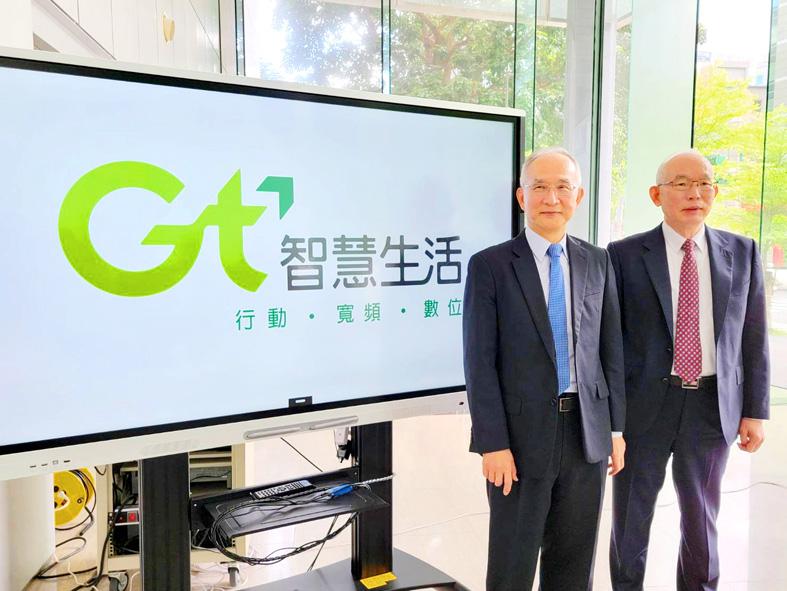
Photo: CNA
By the end of this year, the company plans to have about 400,000 of its 2 million users on 5G.
Since its 5G launch, Asia Pacific, the telecom arm of Foxconn Technology Group (富士康科技集團), has attracted new subscribers, mostly for 5G, Huang said.
This is different from what the big three telecoms have seen, as most of their 5G users were existing subscribers, he added.
As much as 60 percent of Asia Pacific’s 5G users signed up for packages with monthly fees of NT$999, which has helped lift the company’s average revenue per user, he said.
Asia Pacific offers 5G on bandwidth leased from Far EasTone Telecommunications Co (遠傳電信), serving as a mobile virtual network operator. To make sure it can build a stronghold in the market, Asia Pacific is moving to share and cobuild 5G networks with Far EasTone through a strategic partnership.
To boost 5G coverage, Asia Pacific is making a multi-operator core network that it hopes to launch in the third quarter, as soon as regulators approve the 5G sharing project, Asia Pacific chairman Lu Fang-ming (呂芳銘) said.
Company shareholders approved a new offering of 750 million common shares, with 500 million shares designated for Far EasTone through a private placement. Far EasTone would become Asia Pacific’s second-biggest shareholder after obtaining the shares, giving it an 11.58 percent stake.
Far EasTone has deployed 6,000 5G base stations, giving it a coverage rate of 70 percent of its network.
Asia Pacific’s losses widened to NT$5.83 billion (US$207.17 million) last year, compared with losses of NT$5.2 billion in 2019, which it attributed to stiff price competition and heavy equipment depreciation totaling NT$4.28 billion last year.
“Our company has not reached economic scale yet,” Lu said.
Revenue fell at annual rate of 4.63 percent to NT$13.59 billion last year, from NT$14.25 billion in the previous year.

POWERING UP: PSUs for AI servers made up about 50% of Delta’s total server PSU revenue during the first three quarters of last year, the company said Power supply and electronic components maker Delta Electronics Inc (台達電) reported record-high revenue of NT$161.61 billion (US$5.11 billion) for last quarter and said it remains positive about this quarter. Last quarter’s figure was up 7.6 percent from the previous quarter and 41.51 percent higher than a year earlier, and largely in line with Yuanta Securities Investment Consulting Co’s (元大投顧) forecast of NT$160 billion. Delta’s annual revenue last year rose 31.76 percent year-on-year to NT$554.89 billion, also a record high for the company. Its strong performance reflected continued demand for high-performance power solutions and advanced liquid-cooling products used in artificial intelligence (AI) data centers,

SIZE MATTERS: TSMC started phasing out 8-inch wafer production last year, while Samsung is more aggressively retiring 8-inch capacity, TrendForce said Chipmakers are expected to raise prices of 8-inch wafers by up to 20 percent this year on concern over supply constraints as major contract chipmakers Taiwan Semiconductor Manufacturing Co (TSMC, 台積電) and Samsung Electronics Co gradually retire less advanced wafer capacity, TrendForce Corp (集邦科技) said yesterday. It is the first significant across-the-board price hike since a global semiconductor correction in 2023, the Taipei-based market researcher said in a report. Global 8-inch wafer capacity slid 0.3 percent year-on-year last year, although 8-inch wafer prices still hovered at relatively stable levels throughout the year, TrendForce said. The downward trend is expected to continue this year,
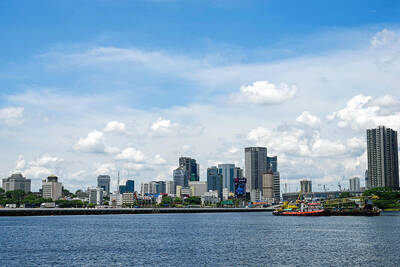
Vincent Wei led fellow Singaporean farmers around an empty Malaysian plot, laying out plans for a greenhouse and rows of leafy vegetables. What he pitched was not just space for crops, but a lifeline for growers struggling to make ends meet in a city-state with high prices and little vacant land. The future agriculture hub is part of a joint special economic zone launched last year by the two neighbors, expected to cost US$123 million and produce 10,000 tonnes of fresh produce annually. It is attracting Singaporean farmers with promises of cheaper land, labor and energy just over the border.

US actor Matthew McConaughey has filed recordings of his image and voice with US patent authorities to protect them from unauthorized usage by artificial intelligence (AI) platforms, a representative said earlier this week. Several video clips and audio recordings were registered by the commercial arm of the Just Keep Livin’ Foundation, a non-profit created by the Oscar-winning actor and his wife, Camila, according to the US Patent and Trademark Office database. Many artists are increasingly concerned about the uncontrolled use of their image via generative AI since the rollout of ChatGPT and other AI-powered tools. Several US states have adopted


 RSS
RSS