


Foxconn Technology Group (富士康科技集團), the world’s largest electronics maker, has reached a new deal with reduced tax breaks for its scaled-back manufacturing facility in southeast Wisconsin, Governor Tony Evers and the company announced on Monday.
Details of the new deal were not immediately released.
The deal was scheduled to be approved yesterday at a meeting of the Wisconsin Economic Development Corp, the state’s top jobs agency, which had negotiated the initial deal with Foxconn, known as Hon Hai Precision Industry Co (鴻海精密) in Taiwan.
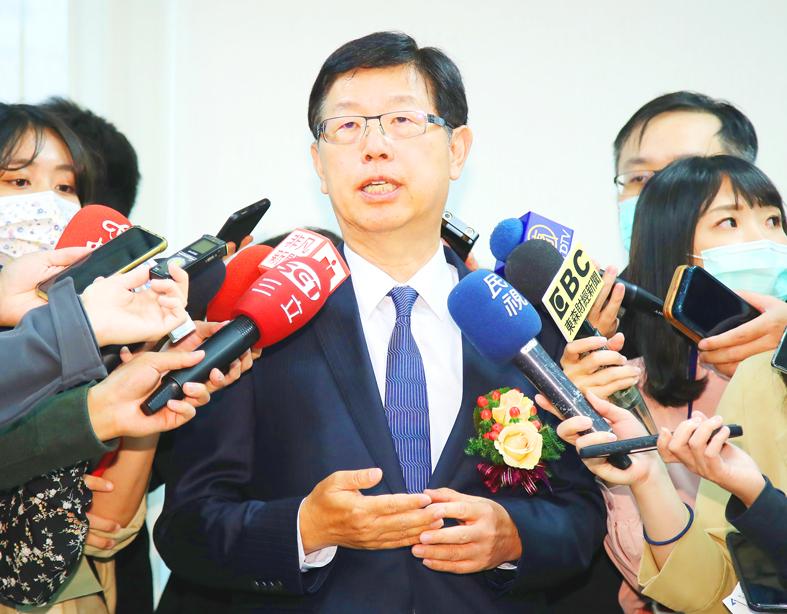
Photo: CNA
The new deal would reduce the potential tax breaks by billions of dollars, but still offer potential tax breaks of more than US$10 million to the company, a person with knowledge of the new contract who was not authorized to speak publicly about the deal said on Monday.
The original contract with nearly US$4 billion in state and local tax incentives was struck in 2017 by then-Wisconsin governor Scott Walker. It was based on the Taiwanese company’s promise to build a massive US$10 billion facility for manufacturing flat-panel displays that would employ up to 13,000 people.
Then-US president Donald Trump heralded the original deal as a sign of a revitalized US manufacturing economy, calling the envisioned plant “transformational” and the “eighth wonder of the world.” He traveled to Wisconsin in 2018 for the groundbreaking ceremony.
However, Foxconn, best known for making Apple Inc’s iPhones, has continually scaled back its plans for the site and missed employment targets that would trigger state tax credits.
Last year, the state told Foxconn that it would not award it tax credits because the company had made substantial changes in its manufacturing plans and was out of compliance with the tax credit agreement.
The Foxconn facility employed 281 people in 2019, Wisconsin Economic Development Corp said.
Development agency spokesman David Callender said that the agency does not comment on its discussions with companies “unless and until action has been taken by the board.”
One of the agency’s board members, Wisconsin Assembly Minority Leader Gordon Hintz, said that he was encouraged that the two sides had agreed to a deal, but that he still had questions about the contract that he would be voting on at the meeting yesterday.
“All of us want more transparency and clarity on what’s happening,” Hintz said. “That’s something the company has been dishonest, deceptive and failed on.”
Evers, a Democrat who ran as a critic of the project in 2018 and defeated Walker, a Republican, said in a statement that the new deal “works for everyone.”
“I’ve said all along that my goal as governor would be to find an agreement that works for Wisconsin taxpayers, while providing the support Foxconn needs to be successful here in our state,” Evers said.
Foxconn vice chairman Jay Lee (李傑) said that the firm approved the new deal with a desire to lower taxpayer liability in exchange for the flexibility to pursue business opportunities the meet market demand.”
Foxconn was grateful that a solution could be found, he added.
After the original deal was signed, Foxconn said that it was downsizing the factory on the 1,012 hectares plot from what is known as a Generation 10.5 plant to a Generation 6 plant, which makes smaller thin-film transistor liquid crystal display screens for cellphones and other devices, rather than the larger screens that were first proposed.
Foxconn announced and quickly ended other projects for the site, including “a cutting-edge, cloud-based, robotic retail platform” for caffeine sales and ventilators to help the state respond to COVID-19.
Last month, Foxconn chairman Young Liu (劉揚偉) said that the company is considering making electric vehicles at the facility.
The company’s changing plans led Evers to call for its contract to be rewritten.
Foxconn also made promises about basing its North American headquarters in Milwaukee and hiring 500 employees, but that has not happened.
It also promised to open “innovation centers” in Green Bay, Eau Claire, Racine and Madison that would employ up to 200 people each. Buildings were purchased, but the company did not move forward with its plans.
In 2018, Foxconn said that it planned to invest US$100 million in engineering and innovation research at the University of Wisconsin-Madison.
Since then, a research center and an off-campus location have not been established.
The company did sponsor a US$700,000 research project at the university and school officials said last month that talks were ongoing.

Taichung reported the steepest fall in completed home prices among the six special municipalities in the first quarter of this year, data compiled by Taiwan Realty Co (台灣房屋) showed yesterday. From January through last month, the average transaction price for completed homes in Taichung fell 8 percent from a year earlier to NT$299,000 (US$9,483) per ping (3.3m²), said Taiwan Realty, which compiled the data based on the government’s price registration platform. The decline could be attributed to many home buyers choosing relatively affordable used homes to live in themselves, instead of newly built homes in the city’s prime property market, Taiwan Realty
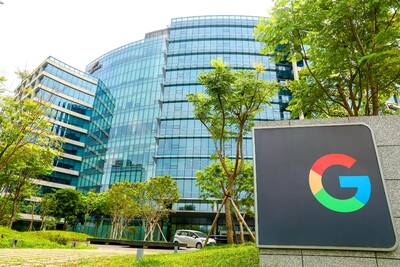
The government yesterday approved applications by Alphabet Inc’s Google to invest NT$27.08 billion (US$859.98 million) in Taiwan, the Ministry of Economic Affairs said in a statement. The Department of Investment Review approved two investments proposed by Google, with much of the funds to be used for data processing and electronic information supply services, as well as inventory procurement businesses in the semiconductor field, the ministry said. It marks the second consecutive year that Google has applied to increase its investment in Taiwan. Google plans to infuse NT$25.34 billion into Charter Investments Ltd (特許投資顧問) through its Singapore-based subsidiary Fructan Holdings Singapore Pte Ltd, and

Micron Technology Inc is a driving force pushing the US Congress to pass legislation that would put new export restrictions on equipment its Chinese competitors use to make their chips, according to people familiar with the matter. A US House of Representatives panel yesterday was to vote on the “MATCH Act,” a bill designed to close gaps in restrictions on chipmaking equipment. It would also pressure foreign companies that sell equipment to Chinese chipmaking facilities to align with export curbs on US companies like Lam Research Corp and Applied Materials Inc. The bill targets facilities operated by China’s ChangXin Memory Technologies Inc

Singapore-based ride-hailing and delivery giant Grab Holdings’ planned acquisition of Foodpanda’s Taiwan operations has yet to enter the formal review stage, as regulators await supplementary documents, the Fair Trade Commission (FTC) said yesterday. Acting FTC Chairman Chen Chih-min (陳志民) told the legislature’s Economics Committee that although Grab submitted its application on March 27, the case has not been officially accepted because required materials remain incomplete. Once the filing is finalized, the FTC would launch a formal probe into the deal, focusing on issues such as cross-shareholding and potential restrictions on market competition, Chen told lawmakers. Grab last month announced that it would acquire


 RSS
RSS