


Evergreen Marine Corp (長榮海運) on Friday dismissed a foreign news report that it was being sued by the Japanese owners of the Ever Given container ship, saying that Evergreen is just “an involved party” listed in the lawsuit.
Evergreen chartered the Panama-flagged vessel from Japan’s Shoei Risen Kaisha Ltd.
The 400m-long ship last month blocked the Suez Canal for six days after it ran aground 6 nautical miles (11km) from the southern end of the estuary.
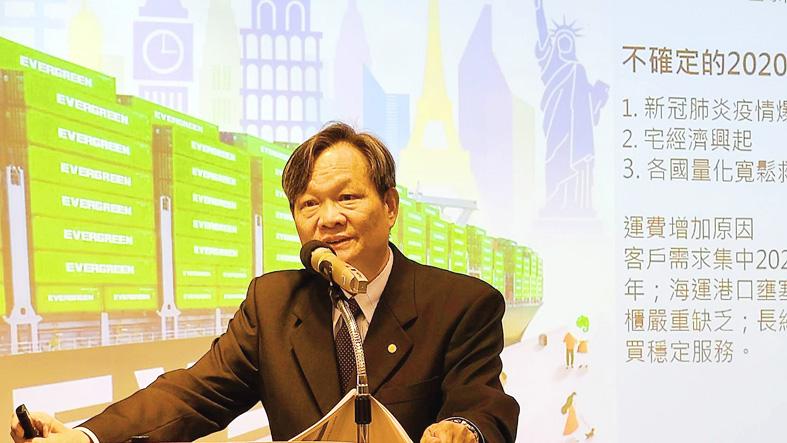
Photo: Wang Yi-hung, Taipei Times
The Web site Business Insider India on Friday reported that Higaki Sangyo Kaisha Ltd and Luster Maritime SA filed a lawsuit against Evergreen at the High Court in London.
Luster Maritime is a unit of Shoei Risen Kaisha.
The lawsuit listed two defendants in the case — Evergreen Marine and all other persons claiming or being entitled to claim damages — the Indian news outlet reported.
Evergreen said it was on Thursday notified by the shipowners’ lawyers that they would apply to the British court for the limitation of liability based on the Convention on Limitation of Liability for Maritime Claims, which was signed in London in 1976.
“Although the shipowners listed Evergreen as a defendant in a form in the lawsuit, they did not sue us. We were listed as a relevant party in the case,” Evergreen said in a statement.
That is the company’s understanding after talking with lawyers, a company official said.
“It would not make sense if the shipowners sued us. We rented the vessel, but we do not operate it. We pay the shipowners to operate the vessel, and even the crew were assigned by the owners,” the official said by telephone.
Evergreen has not decided whether it would seek compensation from the shipowners, as the cause of the incident is not yet clear, the company said.
Evergreen Marine president Eric Hsieh (謝惠全) told an investors’ conference in Taipei on Thursday that the company is not responsible for Ever Given blocking the Suez Canal, as its responsibility is to ensure the safety of the goods onboard.
“There is almost no chance that we will be sought to pay compensation,” he said.

The domestic unit of the Chinese-owned, Dutch-headquartered chipmaker Nexperia BV will soon be able to produce semiconductors locally within China, according to two company sources. Nexperia is at the center of a global tug-of-war over critical semiconductor technology, with a Dutch court in February ordering a probe into alleged mismanagement at the company. The geopolitical tussle has disrupted supply chains, with some carmakers reportedly forced to cut production due to chip shortages. Local production would allow Nexperia’s domestic arm, Nexperia Semiconductors (China) Ltd (安世半導體中國), to bypass restrictions in place since October on the supply of silicon wafers — etched with tiny components to

Singapore-based ride-hailing and delivery giant Grab Holdings Ltd has applied for regulatory approval to acquire the Taiwan operations of Germany-based Delivery Hero SE's Foodpanda in a deal valued at about US$600 million. Grab submitted the filing to the Fair Trade Commission on Friday last week, with the transaction subject to regulatory review and approval, the company said in a statement yesterday. Its independent governance structure would help foster a healthy and competitive market in Taiwan if the deal is approved, Grab said. Grab, which is listed on the NASDAQ, said in the filing that US-based Uber Technologies Inc holds about 13 percent of

Taiwan Semiconductor Manufacturing Co (TSMC, 台積電) yesterday received government approval to deploy its advanced 3-nanometer (3nm) process at its second fab currently under construction in Japan, the Ministry of Economic Affairs said in a news release. The ministry green-lit the plan for the facility in Kumamoto, which is scheduled to start installing equipment and come online in 2028 with a monthly production capacity of 15,000 12-inch wafers, the ministry said. The Department of Investment Review in June 2024 authorized a US$5.26 billion investment for the facility, slated to manufacture 6- to 12nm chips, significantly less advanced than 3nm process. At a meeting with
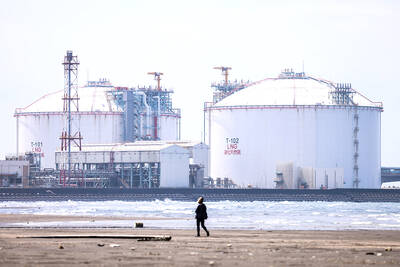
Taiwan is open to joining a global liquefied natural gas (LNG) program if one is created, but on the condition that countries provide delivery even in a scenario where there is a conflict with China, an energy department official said yesterday. While Taiwan’s priority is to have enough LNG at home, the nation is open to exploring potential strategic reserves in other countries such as Japan or South Korea, Energy Administration Deputy Director-General Chen Chung-hsien (陳崇憲) said. While the LNG market does not have a global reserve for emergencies like that of oil, the concept has been raised a few times —


 RSS
RSS