


The shipment of the last batch of 120 unused fuel rods from the mothballed Fourth Nuclear Power Plant to the US early on Sunday morning has no bearing on the plant’s future, Taiwan Power Co (Taipower, 台電) said yesterday.
The certification on the fuel rods had expired, necessitating their return to Global Nuclear Fuel Americas LLC regardless of whether a referendum to start the power plant in New Taipei City’s Gongliao District (貢寮) passes in August, Taipower manager Chang Ting-shu (張廷抒) said by telephone.
“The removal of the fuel rods is a totally separate question from the referendum; the fuel rods could not have been used as is,” Chang said.
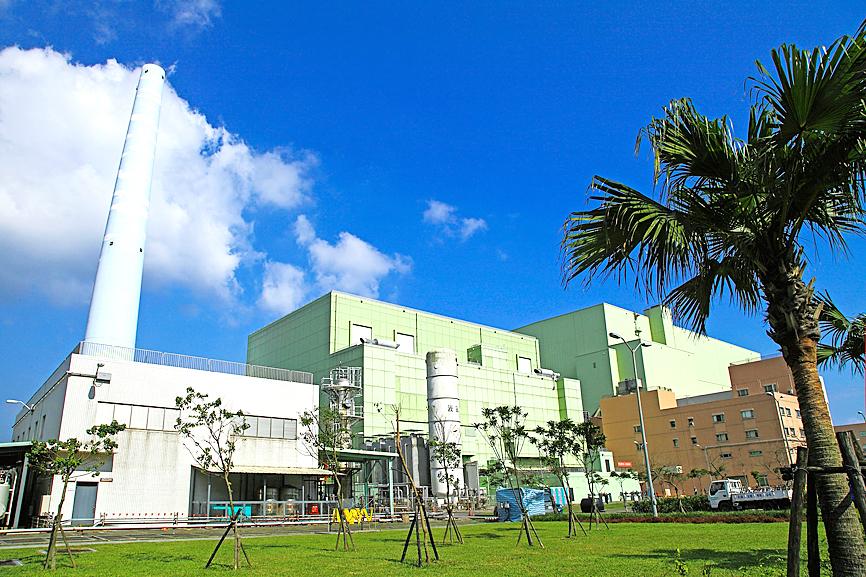
Photo courtesy of Taiwan Power Co
Nuclear power advocate Huang Shih-hsiu (黃士修) condemned removing the fuel rods ahead of the referendum.
“The government is running roughshod over the will of the people by accelerating the return of the fuel rods,” Huang told the Chinese-language China Times. “They’re robbing the people of their ability to have a choice.”
However, opponents of nuclear power cheered the removal of the last batch of rods as “dooming” the prospect of starting the power plant.
Chang refused to comment on what it would take to start the power plant, but said that the removal of the fuel rods would not be a critical issue.
“There will be more hearings ahead of August’s referendum to explore this complex topic, but if we do decide to restart the Fourth Nuclear Power Plant, we would simply have more fuel rods shipped,” he said.
Construction of the plant began in 1999, but the project was plagued by controversies and delays. It was mothballed numerous times, most recently in 2015 after the Fukushima Dai-ichi nuclear power plant disaster in 2011 turned many people against nuclear power.
Nuclear Science and Technology Association (NuSTA) chairman Chen Pu-tsan (陳布燦) said that the inspection of unused fuel rods is a safety issue.
“If I recall correctly, they have been sitting in storage for 13 years,” said Chen, who was a Taipower vice president in charge of nuclear power until his retirement. “They needed to go back to the manufacturers to be inspected for damage and recertified.”
Taiwan also needs to address its spent fuel rod issue, as the wet storage pools at the Jinshan and Guosheng nuclear power plants are full or almost full, he said.
Even though the Jinshan Nuclear Power Plant in New Taipei City’s Shihmen District (石門) was decommissioned in 2019, spent fuel rods remain in the reactor due to a lack of storage space.
“A good solution would be to send the spent fuel to be reprocessed in France, as that would make the remaining waste much easier to deal with,” Chen said.
During reprocessing, unused plutonium and uranium are stripped from the spent fuel, leaving radioactive waste that cannot be utilized for nuclear weapons, he said, adding that the remaining waste is less than 10 percent the volume of the original spent fuel.
“The remaining amount of radioactive waste can then be stored on site more safely at the nuclear power plants until a final location is found,” he said.

The domestic unit of the Chinese-owned, Dutch-headquartered chipmaker Nexperia BV will soon be able to produce semiconductors locally within China, according to two company sources. Nexperia is at the center of a global tug-of-war over critical semiconductor technology, with a Dutch court in February ordering a probe into alleged mismanagement at the company. The geopolitical tussle has disrupted supply chains, with some carmakers reportedly forced to cut production due to chip shortages. Local production would allow Nexperia’s domestic arm, Nexperia Semiconductors (China) Ltd (安世半導體中國), to bypass restrictions in place since October on the supply of silicon wafers — etched with tiny components to

Singapore-based ride-hailing and delivery giant Grab Holdings Ltd has applied for regulatory approval to acquire the Taiwan operations of Germany-based Delivery Hero SE's Foodpanda in a deal valued at about US$600 million. Grab submitted the filing to the Fair Trade Commission on Friday last week, with the transaction subject to regulatory review and approval, the company said in a statement yesterday. Its independent governance structure would help foster a healthy and competitive market in Taiwan if the deal is approved, Grab said. Grab, which is listed on the NASDAQ, said in the filing that US-based Uber Technologies Inc holds about 13 percent of

Taiwan Semiconductor Manufacturing Co (TSMC, 台積電) yesterday received government approval to deploy its advanced 3-nanometer (3nm) process at its second fab currently under construction in Japan, the Ministry of Economic Affairs said in a news release. The ministry green-lit the plan for the facility in Kumamoto, which is scheduled to start installing equipment and come online in 2028 with a monthly production capacity of 15,000 12-inch wafers, the ministry said. The Department of Investment Review in June 2024 authorized a US$5.26 billion investment for the facility, slated to manufacture 6- to 12nm chips, significantly less advanced than 3nm process. At a meeting with
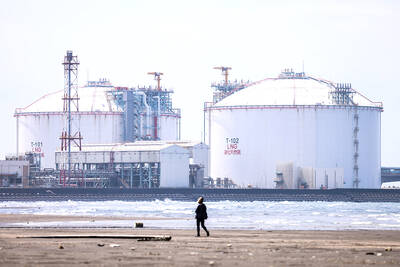
Taiwan is open to joining a global liquefied natural gas (LNG) program if one is created, but on the condition that countries provide delivery even in a scenario where there is a conflict with China, an energy department official said yesterday. While Taiwan’s priority is to have enough LNG at home, the nation is open to exploring potential strategic reserves in other countries such as Japan or South Korea, Energy Administration Deputy Director-General Chen Chung-hsien (陳崇憲) said. While the LNG market does not have a global reserve for emergencies like that of oil, the concept has been raised a few times —


 RSS
RSS