


Citigroup Inc chief executive officer Jane Fraser on Monday last week became the first woman to helm a major financial institution on Wall Street.
Her appointment brought a new change to Citigroup in its more than 200 years of operations, which the company said was a testament to its commitment to gender equality that has set a standard for the industry.
Citi encourages diversity and inclusion. Its recruitment, career development and promotion process are driven solely by a person’s ability and performance, not by race, gender, age or religion, it said.
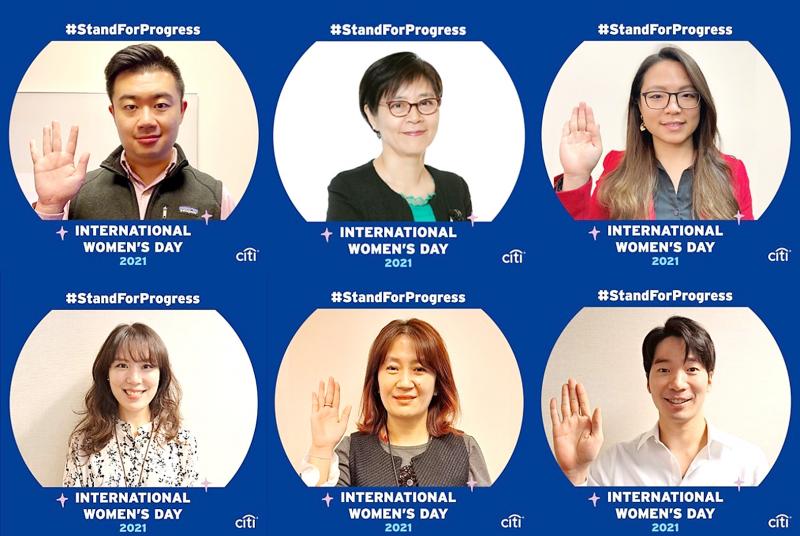
Photo courtesy of Citibank Taiwan Ltd
The company was one of the first to reveal its global gender pay gap. Its efforts to ensure equal pay for women who work the same job as men have paid off, as last year’s raw wage-gap analysis showed that the median pay for its female employees globally was better than 74 percent of the median for male workers, up from 73 percent in 2019 and 71 percent in 2018.
Meanwhile, Citi made a rare personnel promotion in Taiwan’s foreign banking industry, its first in more than 10 years, when it appointed Citibank Taiwan Ltd (台灣花旗) president Christie Chang (張聖心) in April last year as chairwoman of its Asia-Pacific corporate banking unit.
Moreover, the number of women in senior roles at Citi Taiwan far exceeds that of its peers.
According to a Financial Supervisory Commission report, Citi boasts the highest ratio of female executives among all financial institutions in Taiwan, as 63 percent of its top-ranking executives are women, and it is the only firm that surpasses the 60 percent mark.
Citi Taiwan has also tailored numerous employee benefits to committing to gender equality, as it strives to help all employees reach their potential, while supporting every stage of an employee’s life and career development.
The policies include 16 weeks of maternity leave, four weeks of paternity leave and four weeks of adoption leave — exceeding the numbers stipulated by local labor laws. Citi Taiwan also offers the most days of paternity leave in the local banking industry, as it further complies with gender-equality goals outlined in the UN’s Sustainable Development Goals.
Citi Taiwan employee club Citi Women’s Network organized a series of activities to celebrate International Women’s Day on Monday, including a forum where outstanding women and Citi’s executives shared how they pursued self-recognition and values, while juggling career and family lives.
The company also purchased handicrafts made by nonprofit organizations for its employees, as it fulfills its corporate social responsibility by working with charities.
Citigroup has also encouraged its employees to take part in the International Women’s Day campaign “Choose to Challenge” by posting pictures raising their hand on social media with the hashtags #IWD2021, #Citi and #StandForProgress, showing their support for gender equality and the betterment of society.

Cairo’s new monorail slices across the city skyline, running above the familiar chaos of blaring horns and aging buses’ exhaust fumes that mark rush hour below. The US$4.5 billion monorail, opened this month, is among Egypt’s most prominent new transport projects, part of a debt-funded infrastructure drive criticized for sapping state finances while bringing limited benefits to most of the country’s 109 million people. “It feels like you’re in a different country,” said Ramy Sayed, a restaurant manager, aboard a driverless Innovia 300 train. “No noise, no traffic, we’re not used to this.” The eastern line runs 56km from the bustling middle-class

Taiwanese firms have increased investment in the Philippines in recent years as Manila’s ties with Washington deepen and global supply chains continue to shift away from China, an expert at the Chung-Hua Institution for Economic Research (CIER, 中華經濟研究院) said yesterday. The Philippines had not been among Taiwanese investors’ top choices in Southeast Asia, CIER Taiwan ASEAN Studies Center director Kristy Hsu (徐遵慈) said at a seminar in Taipei. However, Taiwan’s investment in the country has grown significantly since the COVID-19 pandemic, reaching US $257 million last year, a high in recent years, she said. Although Taiwan’s total investment in the Philippines still lags

Intel Corp regards Taiwan Semiconductor Manufacturing Co (TSMC, 台積電) as a longstanding partner, as the US chipmaker would continue outsourcing production of advanced chips to TSMC, Intel chief executive officer Lip-Bu Tan (陳立武) said yesterday. “I don’t look at people as competitors. I look at the collaboration... Nvidia is also, you know, a good friend,” Tan told a news conference following his keynote speech at the Computex trade show in Taipei. “It’s a very trusted partnership for us... We are a big, top customer for them, and we’re going to continue doing that,” he said, referring to TSMC, the world’s largest foundry
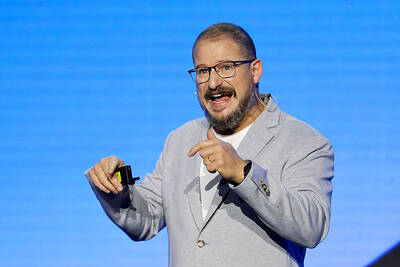
Artificial intelligence (AI) agents would supplant smartphones as the center of people’s digital lives, fundamentally reshaping personal devices and driving a major computing upgrade cycle, Qualcomm Inc CEO Cristiano Amon said yesterday. In his keynote speech for this year’s Computex trade show in Taipei, Amon said that the rise of "agentic AI" — AI systems capable of reasoning, planning and carrying out tasks autonomously — would transform how people interact with technology across phones, PCs, vehicles and wearable devices. Describing the technology as the next major evolution in computing, Amon said that "2026 is the year of agents.” For decades, smartphones have sat


 RSS
RSS