


The Financial Supervisory Commission (FSC) yesterday fined Citibank Taiwan Ltd (台灣花旗) NT$6 million (US$211,364) for inaccurately reporting consumer data to the Joint Credit Information Center (金融聯合徵信中心), which might cause some of its clients to be charged excessive interest rates on credit card borrowing at other banks.
Citibank Taiwan had wrongly labeled some of its clients who had applied for interest-free installment plans for specific purchases as having applied to pay their bills in installments, the commission said.
The bank has sent the incorrect data to the center since December 2010, it said, adding that 180,281 clients were affected.
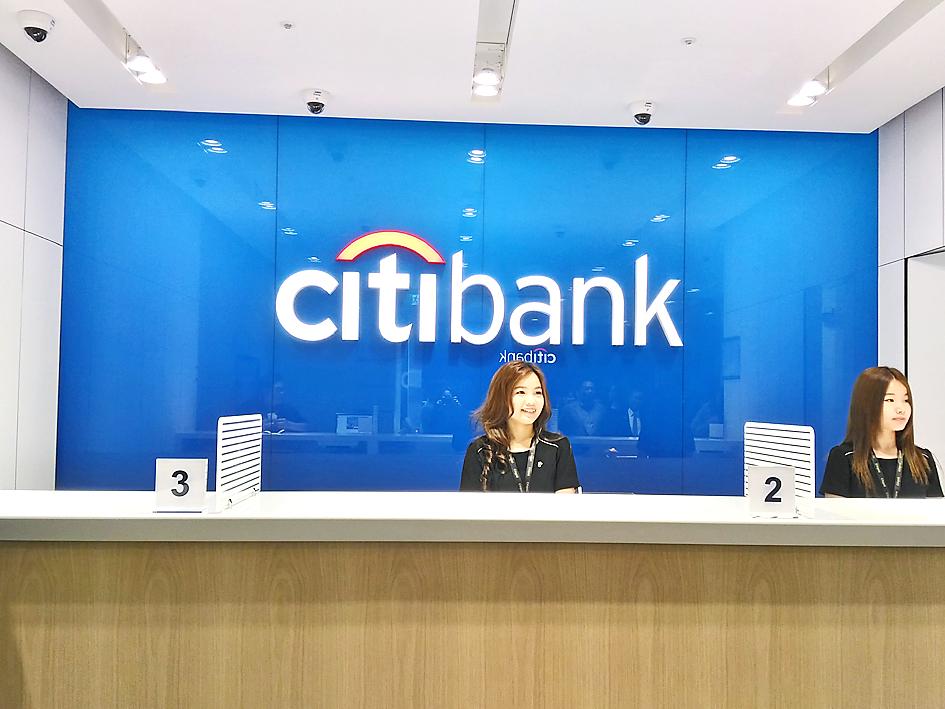
Photo: Lee Chin-hui, Taipei Times
As the center assesses credit scores by analyzing financial behavior — for example, whether credit card bills are paid on time or payments are made in installments — the bank’s mistakes might have negatively affected some clients, FSC Banking Bureau Deputy Director-General Huang Kuang-hsi (黃光熙) told a news conference in New Taipei City.
If the 180,281 clients applied for new credit cards at other banks, they might have been charged higher interest rates, as banks usually rate as riskier consumers who pay bills in installments, Huang said.
Banks do not view people who apply for interest-free installment plans for specific purchases as a higher risk of non-payment, as it is normal commercial behavior, he said.
Citibank Taiwan did not charge the 180,281 clients more interest than it should have, Huang said.
However, if people discover that they are one of the 180,281 clients, they can file a complaint with Citibank Taiwan and ask it to resolve any issues, he said.
The bank’s mistake did not affect the center’s overall credit scores for individuals or the agency’s calculation of consumers’ non-collateral debt, Huang said.
Citibank Taiwan did not comment on the data, only saying that it respects the regulator’s decision and has taken immediate action to correct the error and ensure all credit card information is accurate.
The bank said that it is informing all of the clients who were affected and would update them with the latest information.

UNPRECEDENTED PACE: Micron Technology has announced plans to expand manufacturing capabilities with the acquisition of a new chip plant in Miaoli Micron Technology Inc unveiled a newly acquired chip plant in Miaoli County yesterday, as the company expands capacity to meet growing demand for advanced DRAM chips, including high-bandwidth memory chips amid the artificial intelligence boom. The plant in Miaoli County’s Tongluo Township (銅鑼), which Micron acquired from Powerchip Semiconductor Manufacturing Corp (力積電) for US$1.8 billion, is expected to make a sizeable capacity contribution to the company from fiscal 2028, the company said in a statement. It would be an extended production site of Micron’s large-scale manufacturing hub in Taichung, the company said. As the global semiconductor industry is racing to reach US$1 trillion

Singapore-based ride-hailing and delivery giant Grab Holdings Ltd has applied for regulatory approval to acquire the Taiwan operations of Germany-based Delivery Hero SE's Foodpanda in a deal valued at about US$600 million. Grab submitted the filing to the Fair Trade Commission on Friday last week, with the transaction subject to regulatory review and approval, the company said in a statement yesterday. Its independent governance structure would help foster a healthy and competitive market in Taiwan if the deal is approved, Grab said. Grab, which is listed on the NASDAQ, said in the filing that US-based Uber Technologies Inc holds about 13 percent of

ABOVE LEGAL REQUIREMENT: The Ministry of Economic Affairs is prepared if LNG supply is disrupted, with more than the legal requirement of 11 days of inventory Taiwan has largely secured liquefied natural gas (LNG) supplies through May and arranged about half of June’s supply, Minister of Economic Affairs Kung Ming-hsin (龔明鑫) said yesterday. Since the Middle East conflict began on Feb. 28, Taiwan’s LNG inventories have remained more than 12 days, exceeding the legal requirement of 11 days, indicating no major supply concerns for domestic gas and electricity, Kung said at a meeting of the legislature’s Economics Committee in Taipei. The ministry aims to increase the figure to 14 days by the end of next year, he said. While one or two LNG or crude oil shipments for May

Taiwan’s food delivery market could undergo a major shift if Singapore-based Grab Holdings Ltd completes its planned acquisition of Delivery Hero SE’s Foodpanda business in Taiwan, industry experts said. Grab on Monday last week announced it would acquire Foodpanda’s Taiwan operations for US$600 million. The deal is expected to be finalized in the second half of this year, with Grab aiming to complete user migration to its platform by the first half of next year. A duopoly between Uber Eats and Foodpanda dominates Taiwan’s delivery market, a structure that has remained intact since the Fair Trade Commission (FTC) blocked Uber Technologies Inc’s


 RSS
RSS