


Oil rose for a fifth straight week with support from an OPEC+ deal and hopes for another round of US stimulus.
Futures in New York and London on Friday closed at fresh nine-month highs, with signs that momentum is building toward a US fiscal stimulus plan that could provide an immediate demand boost, before a vaccine is widely available.
West Texas Intermediate for December delivery rose 1.36 percent to US$46.09 a barrel, up 1.23 percent from a week earlier.
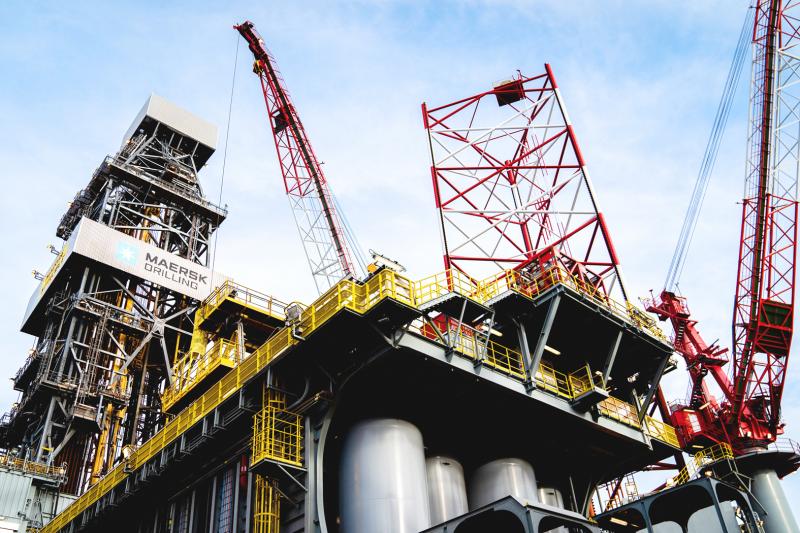
Photo: EPA-EFE
Brent crude for December delivery increased 1.11 percent to US$49.25 a barrel, up 2.22 percent on the week.
Prices had already been rising after OPEC+ reached a compromise agreement that offers something for members concerned about the fragility of the market, as well as nations that want to pump more to take advantage of higher prices.
The agreement involves adding 500,000 barrels a day of production to the market next month, and then holding monthly meetings to decide on subsequent moves.
“At the beginning of the week, there was a sense that there would be no stimulus, and now it looks like there will at least be some limited aid and enough to make a difference in the US,” Strategic Energy & Economic Research president Michael Lynch said.
Meanwhile, “OPEC+ members seem to be sticking to the idea of keeping production down,” even if the decision was not what had widely been expected, he said.
Oil has recently reached the highest levels since March amid optimism over an impending COVID-19 vaccine lifting demand next year.
Alongside the rally in headline crude prices, the oil futures curve is signaling tighter supply as demand in Asia booms and the key North Sea market strengthens.
The prompt timespread for Brent crude moved back into backwardation this week, while the nearest December contract is trading at a higher level than the same contract for December 2022.
“The fact that Asian countries have been coming out of this situation for several months, that’s been the one bright spot,” said Josh Graves, senior market strategist at RJ O’Brien & Associates LLC.
While Democrats and Republicans have been at an impasse for months over another round of US fiscal stimulus, signs of progress have led broader markets to rally heading into the weekend.
US House of Representatives Speaker Nancy Pelosi said that she and US Senate Majority Leader Mitch McConnell have discussed attaching the relief measures to an omnibus spending bill that the parties are working on separately to keep the government funded beyond Dec. 11 into next year.
Meanwhile, the rally in headline crude prices is not a welcome sign for every corner of the market. Europe’s beleaguered oil refineries are struggling to pass on the higher cost to buyers as they face weak fuel demand due to the pandemic.
In the US, the combined refining margin for gasoline and diesel remains near US$9 a barrel at its lowest in about a decade for this time of year.

Among the rows of vibrators, rubber torsos and leather harnesses at a Chinese sex toys exhibition in Shanghai this weekend, the beginnings of an artificial intelligence (AI)-driven shift in the industry quietly pulsed. China manufactures about 70 percent of the world’s sex toys, most of it the “hardware” on display at the fair — whether that be technicolor tentacled dildos or hyper-realistic personalized silicone dolls. Yet smart toys have been rising in popularity for some time. Many major European and US brands already offer tech-enhanced products that can enable long-distance love, monitor well-being and even bring people one step closer to

Malaysia’s leader yesterday announced plans to build a massive semiconductor design park, aiming to boost the Southeast Asian nation’s role in the global chip industry. A prominent player in the semiconductor industry for decades, Malaysia accounts for an estimated 13 percent of global back-end manufacturing, according to German tech giant Bosch. Now it wants to go beyond production and emerge as a chip design powerhouse too, Malaysian Prime Minister Anwar Ibrahim said. “I am pleased to announce the largest IC (integrated circuit) Design Park in Southeast Asia, that will house world-class anchor tenants and collaborate with global companies such as Arm [Holdings PLC],”

TRANSFORMATION: Taiwan is now home to the largest Google hardware research and development center outside of the US, thanks to the nation’s economic policies President Tsai Ing-wen (蔡英文) yesterday attended an event marking the opening of Google’s second hardware research and development (R&D) office in Taiwan, which was held at New Taipei City’s Banciao District (板橋). This signals Taiwan’s transformation into the world’s largest Google hardware research and development center outside of the US, validating the nation’s economic policy in the past eight years, she said. The “five plus two” innovative industries policy, “six core strategic industries” initiative and infrastructure projects have grown the national industry and established resilient supply chains that withstood the COVID-19 pandemic, Tsai said. Taiwan has improved investment conditions of the domestic economy

MAJOR BENEFICIARY: The company benefits from TSMC’s advanced packaging scarcity, given robust demand for Nvidia AI chips, analysts said ASE Technology Holding Co (ASE, 日月光投控), the world’s biggest chip packaging and testing service provider, yesterday said it is raising its equipment capital expenditure budget by 10 percent this year to expand leading-edge and advanced packing and testing capacity amid strong artificial intelligence (AI) and high-performance computing chip demand. This is on top of the 40 to 50 percent annual increase in its capital spending budget to more than the US$1.7 billion to announced in February. About half of the equipment capital expenditure would be spent on leading-edge and advanced packaging and testing technology, the company said. ASE is considered by analysts


 RSS
RSS