


Taiwan should seek to enhance innovation and promote itself as an international investment destination after effectively controlling the COVID-19 outbreak, the European Chamber of Commerce Taiwan (ECCT) said at a news conference to present its annual position paper.
“Taiwan has a unique opportunity to enhance innovation and promote it as an attractive investment destination, aided by its open society, a good geographical location, a reliable regulatory and legal system, abundant capital resources and a skilled workforce,” ECCT chairman Giuseppe Izzo said.
While Taiwan is less affected by the COVID-19 pandemic, it has to navigate the challenges posed by an aging society, US-China trade and other geopolitical tensions, and the rise of the gig economy, which continues to disrupt traditional employer/employee dynamics and erode social safety nets, Izzo said.
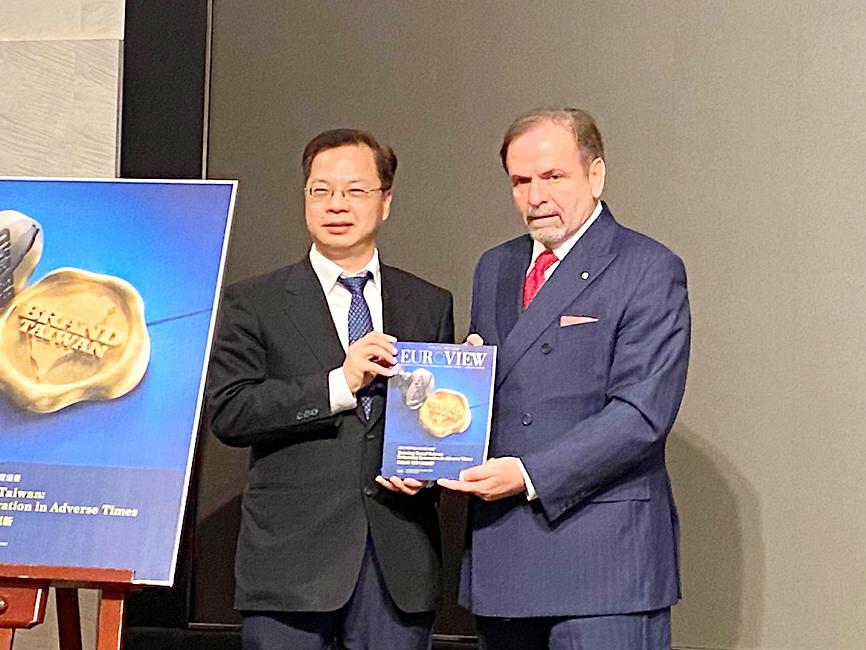
Photo: Wu Chia-ying, Taipei Times
Taiwan should boost its image as a haven for talent because the drive for innovation requires talented individuals and dynamic companies that cultivate and support them, the position paper said.
Taiwan’s successful handling of the pandemic already lends support to its image as a safe place to live and work, the trade group said.
However, more could be done to attract and retain talent in Taiwan, the chamber’s human resources and better living committees said, adding that foreign residents are denied the government-issued Triple Stimulus Vouchers and benefits for people aged 65 or older.
The committees called for equal treatment for foreign nationals and modernization of Taiwan’s labor laws to take into account the complexities of modern workplaces and remote working, which render overtime pay and clocking in irrelevant.
The chamber lauded Taiwan’s commitment to an energy transition away from fossil fuels to sources of renewable energy, and the electrification of the transportation sector.
However, more could be done to speed up decarbonization and work toward creating a circular economy, it said.
“The transition will require a roadmap with annual targets for a nationwide electric vehicle [EV] charging system, subsidies for the electrification of car parking lots at strategic locations and new building codes that give apartment owners the right to install EV charging facilities,” said Christine Herbst-Kubitz, co-chair of the chamber’s electrical engineering and equipment committee.
The government should adopt a stricter approach in dealing with heavy industrial electricity users to promote renewable energy, the chamber said.
Energy storage is a crucial component in energy policy panning given the intermittent nature of renewable energy sources, it said.
ECCT members urged the authorities to develop a policy framework for energy storage that is technology neutral and flexible enough to encourage the development and utilization of technological breakthroughs.
Shares of contract chipmaker Taiwan Semiconductor Manufacturing Co (TSMC, 台積電) came under pressure yesterday after a report that Apple Inc is looking to shift some orders from the Taiwanese company to Intel Corp. TSMC shares fell NT$55, or 2.4 percent, to close at NT$2,235 on the local main board, Taiwan Stock Exchange data showed. Despite the losses, TSMC is expected to continue to benefit from sound fundamentals, as it maintains a lead over its peers in high-end process development, analysts said. “The selling was a knee-jerk reaction to an Intel-Apple report over the weekend,” Mega International Investment Services Corp (兆豐國際投顧) analyst Alex Huang
Taiwan Semiconductor Manufacturing Co (TSMC, 台積電) is expected to remain Apple Inc’s primary chip manufacturing partner despite reports that Apple could shift some orders to Intel Corp, industry experts said yesterday. The comments came after The Wall Street Journal reported on Friday that Apple and Intel had reached a preliminary agreement following more than a year of negotiations for Intel to manufacture some chips for Apple devices. Taiwan Institute of Economic Research (台灣經濟研究院) economist Arisa Liu (劉佩真) said TSMC’s advanced packaging technologies, including integrated fan-out and chip-on-wafer-on-substrate, remain critical to the performance of Apple’s A-series and M-series chips. She said Intel and Samsung
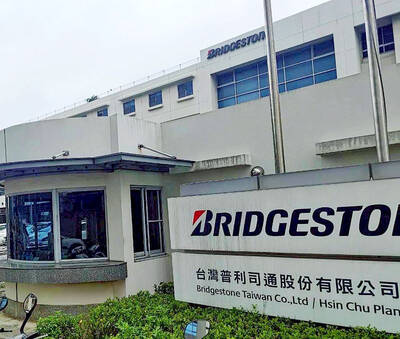
TRANSITION: With the closure, the company would reorganize its Taiwanese unit to a sales and service-focused model, Bridgestone said Bridgestone Corp yesterday announced it would cease manufacturing operations at its tire plant in Hsinchu County’s Hukou Township (湖口), affecting more than 500 workers. Bridgestone Taiwan Co (台灣普利司通) said in a statement that the decision was based on the Tokyo-based tire maker’s adjustments to its global operational strategy and long-term market development considerations. The Taiwanese unit would be reorganized as part of the closure, effective yesterday, and all related production activities would be concluded, the statement said. Under the plan, Bridgestone would continue to deepen its presence in the Taiwanese market, while transitioning to a sales and service-focused business model, it added. The Hsinchu
Taiwan Semiconductor Manufacturing Co (TSMC, 台積電) has approved a capital budget of US$31.28 billion for production expansion to meet long-term development needs during the artificial intelligence (AI) boom. The company’s board meeting yesterday approved the capital appropriation plan for purposes such as the installation of advanced technology capacity and fab construction, the world’s largest contract chipmaker said in a statement. At an earnings conference last month, TSMC forecast that its capital expenditure for this year would be at the higher end of the US$52 billion to US$56 billion range it forecast in January in response to robust demand for 5G, AI and


 RSS
RSS