


Apple Inc is expected to unveil a keenly anticipated iPhone 12 line-up tomorrow, starring models tuned to super-fast 5G networks in an update considered vital to the company’s fortunes.
A streamed event was cryptically teased with the message “Hi, Speed” in an apparent reference to the new wireless networks being introduced in many parts of the world.
Analysts expect Apple to introduce a selection of iPhone 12 models in multiple sizes, with some shipping earlier than others due to the toll the COVID-19 pandemic has taken on the company’s supply chain.
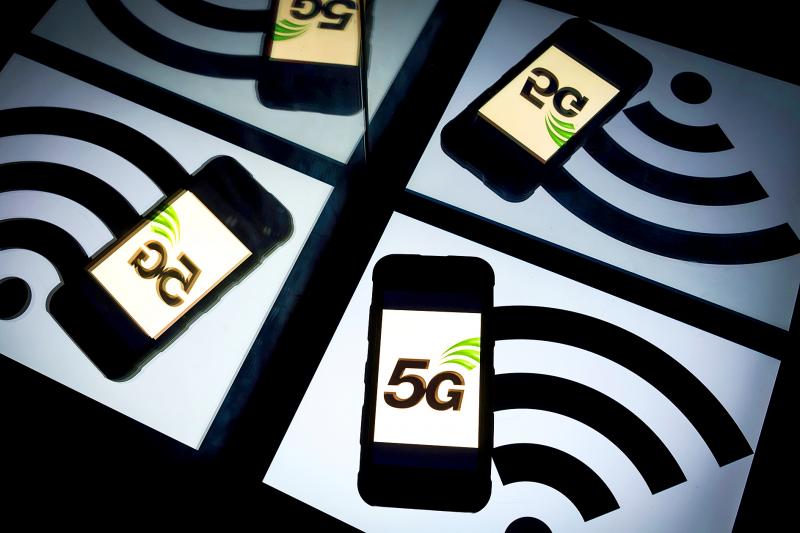
Photo: AFP
“We believe iPhone 12 represents the most significant product cycle for Cook & Co since iPhone 6 in 2014 and will be another defining chapter in the Apple growth story,” Dan Ives, an analyst at Wedbush Securities Inc, said in a note to investors, referring to Apple chief executive Tim Cook.
The time is ripe for Apple to hit the market with an iPhone tailored to the super-fast 5G telecom networks taking root around the world, analysts said.
“Apple absolutely needs 5G right now,” said Avi Greengart, an analyst at Techsponential LLC. “Not for the US, but for China, where 5G is driving purchase decisions.”
Some Apple rivals have already produced 5G models, and China is far ahead of the US when it comes to the new-generation networks.
“5G is happening in China with or without Apple; in fact, more 5G phones than non-5G phones are selling in China,” Moor Insights & Strategy founder Patrick Moorhead said.
New-generation 5G networks have also taken shape in South Korea and in parts of Europe.
Meanwhile, US telecoms are looking at a 5G iPhone as a catalyst for consumer interest that would justify the big investments needed for those networks, analysts said.
“US carriers are waiting for Apple to announce a 5G iPhone to put the pedal to the metal in the US,” Moorhead said.
Apple also needs a 5G iPhone to maintain its premium image, analysts added.
Powerhouses Samsung Electronics Co and Huawei Technologies Co (華為) already have 5G smartphones on the market.
Google earlier this month unveiled two new 5G-ready smartphones under its Pixel brand, which showcases the Android mobile system, but has limited market share.
“Apple got away with not releasing a 5G device last year because the 5G use-cases and network coverage simply wasn’t there,” said Stephen Mears, a research analyst at Futuresource Consulting Ltd. “Apple won’t want to be perceived as being two generations behind on 5G handsets.”
The streamed event comes a month after Apple unveiled new service bundles and smartwatch models tied to the iPhone, which remains at the heart of its money-making ecosystem.
Adding 5G iPhones to its line-up should help Apple drive forward with its lucrative blend of hardware, software, services and digital content, Mears said.
From the health-centric Apple Watch to subscriptions to music and television services, the iPhone is at the center of the user experience, he said
Rumors swirling ahead of the event include that Apple will unveil new iPhones in an array of sizes, from a small model with a 13.7cm screen to one with a 17cm screen, measured diagonally.
Overall, it has been a tough year for the smartphone industry, with the pandemic disrupting economies and supply chains.
“Recovery will be slow, with tough market conditions expected to continue through 2021,” Mears said.
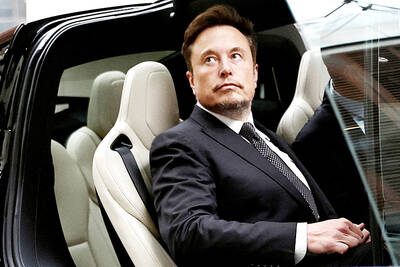
purpose: Tesla’s CEO sought to meet senior Chinese officials to discuss the rollout of its ‘full self-driving’ software in China and approval to transfer data they had collected Tesla Inc CEO Elon Musk arrived in Beijing yesterday on an unannounced visit, where he is expected to meet senior officials to discuss the rollout of "full self-driving" (FSD) software and permission to transfer data overseas, according to a person with knowledge of the matter. Chinese state media reported that he met Premier Li Qiang (李強) in Beijing, during which Li told Musk that Tesla's development in China could be regarded as a successful example of US-China economic and trade cooperation. Musk confirmed his meeting with the premier yesterday with a post on social media platform X. "Honored to meet with Premier Li
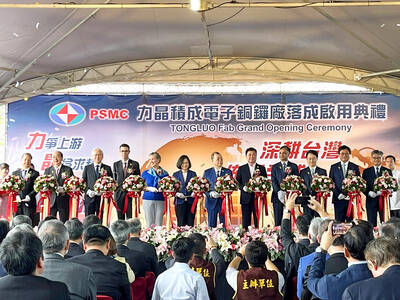
ARTIFICIAL INTELLIGENCE: The chipmaker last month raised its capital spending by 28 percent for this year to NT$32 billion from a previous estimate of NT$25 billion Contract chipmaker Powerchip Semiconductor Manufacturing Corp (力積電子) yesterday launched a new 12-inch fab, tapping into advanced chip-on-wafer-on-substrate (CoWoS) packaging technology to support rising demand for artificial intelligence (AI) devices. Powerchip is to offer interposers, one of three parts in CoWoS packaging technology, with shipments scheduled for the second half of this year, Powerchip chairman Frank Huang (黃崇仁) told reporters on the sidelines of a fab inauguration ceremony in the Tongluo Science Park (銅鑼科學園區) in Miaoli County yesterday. “We are working with customers to supply CoWoS-related business, utilizing part of this new fab’s capacity,” Huang said, adding that Powerchip intended to bridge
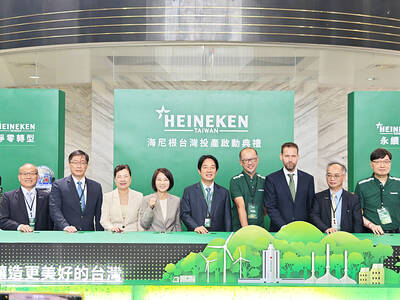
Dutch brewing company Heineken NV on Friday announced an investment of NT$13.5 billion (US$414.62 million) over the next five years in Taiwan. The first multinational brewing company to operate in Taiwan, Heineken made the statement at a ceremony held at its brewery in Pingtung County. It also outlined its efforts to make the brewery “net zero” by 2030. Heineken has been in the Taiwanese market for 20 years, Heineken Taiwan managing director Jeff Wu (吳建甫) said. With strong support from local consumers, the Dutch brewery decided to transition from sales to manufacturing in the country, Wu said. Heineken assumed majority ownership and management rights

Microsoft Corp yesterday said that it would create Thailand’s first data center region to boost cloud and artificial intelligence (AI) infrastructure, promising AI training to more than 100,000 people to develop tech. Bangkok is a key economic player in Southeast Asia, but it has lagged behind Indonesia and Singapore when it comes to the tech industry. Thailand has an “incredible opportunity to build a digital-first, AI-powered future,” Microsoft chairman and chief executive officer Satya Nadella said at an event in Bangkok. Data center regions are physical locations that store computing infrastructure, allowing secure and reliable access to cloud platforms. The global embrace of AI


 RSS
RSS