


Huawei Technologies Co (華為) has built up stakes in Chinese semiconductor companies and other technology businesses as the world’s largest telecoms equipment maker bolsters its supply chain in the face of pressure from the US.
Habo Investment (哈勃科技投資), set up by Huawei in April last year, has closed 17 deals for stakes in Chinese tech companies since August last year, public records show.
The investment arm was established in response to what Guo Ping (郭平), Huawei’s rotating chairman, last week described as “suppression” by the US after escalating restrictions that have cut off Huawei’s supplies of many overseas chips and effectively barred it from making its own.
“Since Huawei is only one company, we use investment and technology to help our supply chain partners become mature,” he said.
Huawei’s investment push also coincides with ramped-up government efforts to boost China’s semiconductor sector, which still lags behind leading chip producers including Taiwan, South Korea, and the US.
While the investments might help Huawei in the future, analysts say that the firm has done little so far to address the supply chain gaps that are undermining its once-booming smartphone business and could eventually threaten its core network equipment operations.
“It will take a long time, but they don’t have many good options, so they must turn to investing outside,” one Chinese chip investor said.
Huawei declined to comment on the investment division’s operations.
Most of Habo Investment’s deals have been in chip-related Chinese start-ups, a few of which have become part of Huawei’s supply chain.
Vertilite Inc (縱慧光電), which was founded in 2015 and received an investment from Huawei this year, makes vertical cavity surface emitting laser sensors that support facial-recognition technology in cameras.
The company did not respond immediately to a request for comment, but one Vertilite investor said that its sensors are used in a number of Huawei handsets.
However, many of the businesses Huawei has backed are at an early stage in their development.
“Most of these companies are small, niche players who are good at what they do, but they are not necessarily globally competitive,” said Ivan Platonov, who tracks China’s chip sector at research company EqualOcean.
Shoulder Electronics Ltd (好達電子), for example, makes radio frequency filters that enable wireless communications, but has yet to achieve compatibility for advanced 5G phones.
A spokesman for the company, which received investment from Habo in January, could not be reached outside business hours on Monday.
3Peak Inc (思瑞浦微電子), which also received investment from Habo this year, makes analogue-to-digital converters used in wireless network base stations.
US players dominate that market segment and 3Peak generated only 300 million yuan (US$43.99 million) in revenue last year, according to a prospectus it issued before listing on Shanghai’s STAR market.
The com[any did not immediately respond to an e-mailed request for comment.
Habo’s portfolio also includes companies outside Huawei’s core telecoms operations. Several investments in chips, raw materials and battery technology companies point to ambitions in self-driving vehicles.
Late last month it also closed an investment in Open Source China, a Shenzhen-based business behind Gitee, a Chinese rival to US coding platform GitHub Inc.
Gitee did not immediately respond to an e-mailed request for comment.
Habo typically acquires stakes of 5 to 10 percent, filings showed, although valuations have not been disclosed.
The recent investments mark a change in pace and tactics for Huawei, ramping up the frequency of such deals and refocusing on domestic businesses rather than overseas companies.
For example, Huawei in 2013 acquired Ghent-based photonics company Calopia. The following year it purchased Neul, a British maker of chips for the Internet of Things sector.
“Huawei likes to do its own [research and development]. So investment or acquisition was done only as a last resort, and that was why it tended to be towards US or European technology companies,” said one former Huawei staffer who helped to scout acquisition targets.
Shares of contract chipmaker Taiwan Semiconductor Manufacturing Co (TSMC, 台積電) came under pressure yesterday after a report that Apple Inc is looking to shift some orders from the Taiwanese company to Intel Corp. TSMC shares fell NT$55, or 2.4 percent, to close at NT$2,235 on the local main board, Taiwan Stock Exchange data showed. Despite the losses, TSMC is expected to continue to benefit from sound fundamentals, as it maintains a lead over its peers in high-end process development, analysts said. “The selling was a knee-jerk reaction to an Intel-Apple report over the weekend,” Mega International Investment Services Corp (兆豐國際投顧) analyst Alex Huang
Taiwan Semiconductor Manufacturing Co (TSMC, 台積電) is expected to remain Apple Inc’s primary chip manufacturing partner despite reports that Apple could shift some orders to Intel Corp, industry experts said yesterday. The comments came after The Wall Street Journal reported on Friday that Apple and Intel had reached a preliminary agreement following more than a year of negotiations for Intel to manufacture some chips for Apple devices. Taiwan Institute of Economic Research (台灣經濟研究院) economist Arisa Liu (劉佩真) said TSMC’s advanced packaging technologies, including integrated fan-out and chip-on-wafer-on-substrate, remain critical to the performance of Apple’s A-series and M-series chips. She said Intel and Samsung
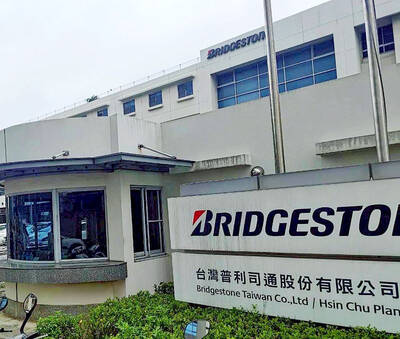
TRANSITION: With the closure, the company would reorganize its Taiwanese unit to a sales and service-focused model, Bridgestone said Bridgestone Corp yesterday announced it would cease manufacturing operations at its tire plant in Hsinchu County’s Hukou Township (湖口), affecting more than 500 workers. Bridgestone Taiwan Co (台灣普利司通) said in a statement that the decision was based on the Tokyo-based tire maker’s adjustments to its global operational strategy and long-term market development considerations. The Taiwanese unit would be reorganized as part of the closure, effective yesterday, and all related production activities would be concluded, the statement said. Under the plan, Bridgestone would continue to deepen its presence in the Taiwanese market, while transitioning to a sales and service-focused business model, it added. The Hsinchu
Taiwan Semiconductor Manufacturing Co (TSMC, 台積電) has approved a capital budget of US$31.28 billion for production expansion to meet long-term development needs during the artificial intelligence (AI) boom. The company’s board meeting yesterday approved the capital appropriation plan for purposes such as the installation of advanced technology capacity and fab construction, the world’s largest contract chipmaker said in a statement. At an earnings conference last month, TSMC forecast that its capital expenditure for this year would be at the higher end of the US$52 billion to US$56 billion range it forecast in January in response to robust demand for 5G, AI and


 RSS
RSS