


Nano-X Imaging Ltd, a start-up founded by Israeli investor Ran Poliakine, is joining forces with South Korean chipmaker SK Hynix Inc to build a machine that could disrupt a century-old X-ray industry.
Valued at about US$2 billion after listing on the NASDAQ last month, Nano-X is seeking to transform a multibillion-dollar industry that has essentially relied on the same technology since Nobel Prize in Physics winner Wilhelm Roentgen discovered X-rays in the late 19th century.
Nano-X’s device uses semiconductors instead of metal filaments to generate X-rays.
The backing of SK Hynix, the world’s second-largest maker of memory chips, is a boost for an eight-year-old outfit that has not quite established its tech bona fides yet. It also reflects growing technology cooperation between Israel and South Korea, two nations that have helped shape the global economy by advancing innovations and taking big risks.
Nano-X stock has more than doubled in the weeks since its listing, even before it has revenue or regulatory approvals.
That speaks to market excitement about the company, but has fanned skepticism among people who have seen companies such as Theranos Inc fall apart when their visions were not fulfilled.
“I realize there are skeptics,” Poliakine said in an interview at the Seoul office of private equity backer The Yozma Group. “This is a promise, but it wouldn’t have been a promise if there were not a huge risk.”
At the heart of that promise is a donut-shaped scanner dubbed Nanox.ARC, which uses semiconductors to digitally calibrate the intensity of beams to capture layers of human organs instantly, without having to reach intense temperatures or rotate like a conventional computerized tomography (CT) scanner, according to the company.
Nano-X says that its devices not only generate less radiation, but are far cheaper to make because they do away with large cooling systems and other bulky components.
It says the devices would be given away if clients agree to a pay-per-scan plan.
If it really can reduce radiation, improve images and provide access for more patients, while saving money for doctors, the machine has the potential to be “very disruptive,” said David Smith, associate professor of clinical radiology at Louisiana State University’s Health Sciences Center and University Medical Center in New Orleans.
“If it fails in any of those things, it may not be disruptive, but it may fill a niche market,” Smith added.
With much of the world lacking access to diagnostic imaging, Nano-X says that it has deals to supply about 4,500 units in more than a dozen countries, and plans mass production with the help of iPhone manufacturer Hon Hai Precision Industry Co Ltd (鴻海精密), known internationally as Foxconn Technology Group (富士康科技集團).
Its success heavily depends on securing regulatory approval from each nation where it operates, including the US Food and Drug Administration (FDA), which this year has been focused on the fight against the COVID-19 pandemic.
The company has submitted applications for FDA approval, a process expected to take months. Poliakine said that he is “very confident” Nano-X would get such clearance.
Another hurdle is operational — the ability to sell and distribute Nano-X units across the world when the company still has only dozens of employees, said Poliakine, who called the expansion process “a big headache.”
Nano-X targets “neighborhood clinics” such as urgent-care centers found across the US, rather than the high-end CT-scan market, he said.
Those smaller facilities cater to patients with broken bones, internal bleeding or other illnesses requiring immediate care, but often cannot afford the kind of scanning devices that bigger hospitals have.
“They don’t have the equipment, money, and there’s not enough data or algorithms to sort out the noise from signals,” Poliakine said.
The clinics would consult with Nano-X radiologists via the cloud.
Images could even be scanned in ambulances or helicopters, but that would require high-speed wireless connections, which SK Telecom Co, South Korea’s biggest carrier, aims to support.
The Seoul-based firm has invested US$23 million in Nano-X and seeks to provide some of the artificial intelligence technology that would analyze medical images and reduce the chance of mis-diagnosis.
Applications could go beyond medicine, helping enable more thorough inspections in South Korea’s manufacturing industries, said Irene Kim, a spokeswoman for SK Telecom.
SK Telecom’s subsidiary, SK Hynix, is supporting Nano-X in enhancing the nano-technology behind the semiconductors.
Poliakine visited South Korea this month to explore a site for a joint chip fabrication plant.


ENERGY ISSUES: The TSIA urged the government to increase natural gas and helium reserves to reduce the impact of the Middle East war on semiconductor supply stability Chip testing and packaging service provider ASE Technology Holding Co (日月光投控) yesterday said it planned to invest more than NT$100 billion (US$3.15 billion) in building a new advanced chip testing facility in Kaohsiung to keep up with customer demand driven by the artificial intelligence (AI) boom. That would be included in the company’s capital expenditure budget next year, ASE said. There is also room to raise this year’s capital spending budget from a record-high US$7 billion estimated three months ago, it added. ASE would have six factories under construction this year, another record-breaking number, ASE chief operating officer Tien Wu

The EU and US are nearing an agreement to coordinate on producing and securing critical minerals, part of a push to break reliance on Chinese supplies. The potential deal would create incentives, such as minimum prices, that could advantage non-Chinese suppliers, according to a draft of an “action plan” seen by Bloomberg. The EU and US would also cooperate on standards, investments and joint projects, as well as coordinate on any supply disruptions by countries like China. The two sides are additionally seeking other “like-minded partners” to join a multicountry accord to help create these new critical mineral supply chains, which feed into

For weeks now, the global tech industry has been waiting for a major artificial intelligence (AI) launch from DeepSeek (深度求索), seen as a benchmark for China’s progress in the fast-moving field. More than a year has passed since the start-up put Chinese AI on the map in early last year with a low-cost chatbot that performed at a similar level to US rivals. However, despite reports and rumors about its imminent release, DeepSeek’s next-generation “V4” model is nowhere in sight. Speculation is also swirling over the geopolitical implications of which computer chips were chosen to train and power the new
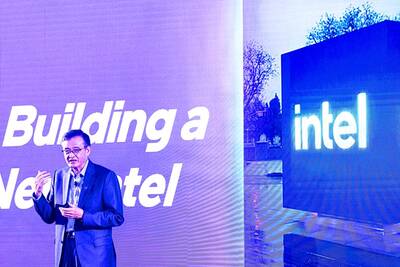
Intel Corp is joining Elon Musk’s long-shot effort to develop semiconductors for Tesla Inc, Space Exploration Technologies Corp and xAI, marking a surprising twist in the chipmaker’s comeback bid. Intel would help the Terafab project “refactor” the technology in a chip factory, the company said on Tuesday in a post on X, Musk’s social media platform. That is a stage in the development process that typically helps make chips more powerful or reliable. The chipmaker’s shares jumped 4.2 percent to US$52.91 in New York trading on Tuesday. The Terafab project is a grand plan by Musk to eventually manufacture his own chips for


 RSS
RSS