


U-Ming Marine Transport Corp’s (裕民航運) shareholders on Tuesday approved a proposal to distribute a cash dividend of NT$1.9 per share, the highest payout in five years.
The dividend represents a payout ratio of 99 percent based on earning per share (EPS) of NT$1.92 last year.
“U-Ming ranks first in terms of cash dividend among the nation’s shipping companies,” U-Ming chairman Douglas Hsu (徐旭東) told shareholders at the bulk shipper’s annual general meeting in Taipei.
Wisdom Marine Lines Co (慧洋海運) said it would pay a cash dividend of NT$1.5, while Wan Hai Lines Ltd (萬海航運) and Taiwan Navigation Co Ltd (台灣航業) each said NT$0.8, and Evergreen Marine Corp (長榮海運) said its would pay NT$0.25.
The steady increase in the number of shareholders over the past few years showed that more retail investors have confidence in the company, Hsu said.
However, along with its peers, U-Ming did not fare well in the first quarter, as the spread of COVID-19 forced many nations to implement lockdowns and adopt border controls, which hurt the industry worldwide.
U-Ming reported a net loss of NT$387 million (US$13.02 million) for the first quarter, or net losses of NT$0.46 per share, compared with a net profit of NT$90 million, or earnings per share of NT$0.11, for the same period last year.
The company attributed the losses to the fall in the valuation of its financial assets following the turmoil in the global financial market in March and falling freight rates, Hsu told reporters on the sidelines of the meeting.
The Baltic Dry Index, which reflects the daily price of shipping dry goods such as coal, iron ore and grains, averaged 591.56 points in the first quarter, compared with last year’s average of 1,353 points, Hsu said.
“Sea freight transport weakened amid the COVID-19 pandemic, which disrupted international trade and slowed down global economy,” he said.
Officials said they expect freight rates to recover next quarter, as lockdown measures are easing, the COVID-19 situation is improving and governments are launching stimulus measures.
“Overall, the second half of the year would be better than the first half,” U-Ming president C.K. Ong (王書吉) said.
U-Ming is confident about its competitiveness, as the average age of its fleet is under six years, compared with the industry’s average of 10.2 years, as it has retired 20 vessels since 2012 and introduced more than 30 energy-efficient vessels, Ong said.
U-Ming would equip some of its vessels with scrubbers to reduce emissions to meet new regulations set by the International Maritime Organization, he added.

Cairo’s new monorail slices across the city skyline, running above the familiar chaos of blaring horns and aging buses’ exhaust fumes that mark rush hour below. The US$4.5 billion monorail, opened this month, is among Egypt’s most prominent new transport projects, part of a debt-funded infrastructure drive criticized for sapping state finances while bringing limited benefits to most of the country’s 109 million people. “It feels like you’re in a different country,” said Ramy Sayed, a restaurant manager, aboard a driverless Innovia 300 train. “No noise, no traffic, we’re not used to this.” The eastern line runs 56km from the bustling middle-class
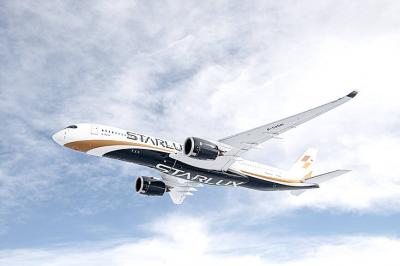
Starlux Airlines Co (星宇航空) today unveiled a long-haul network expansion plan at a shareholders’ meeting in Taipei, including direct flights to Barcelona, Spain, and Zurich, Switzerland, as well as a service connecting Taipei, Sydney and New Zealand. Starlux is to become the first Taiwanese carrier to offer non-stop services to the two European cities, while the inaugural oceanic route is expected to expand transit opportunities within the Australia-New Zealand market, Starlux said. Flight services to Chicago, Dallas, Washington and New York are under evaluation, the airline added. Prior to the shareholders’ meeting, the airline earlier this year announced that it would be

Taiwanese prosecutors suspect that three people successfully smuggled at least one shipment of Nvidia Corp artificial intelligence (AI) chips to China after first exporting them to Japan, people familiar with the matter said. The trio was detained last week by the Keelung District Prosecutors’ Office for allegedly falsifying documents related to exports of Super Micro Computer Inc servers containing advanced Nvidia chips, which the US has barred from sale to China without a license from Washington. The move marked Taiwan’s first public crackdown on AI chip diversion after years of pressure from the US to take a more active role in curtailing
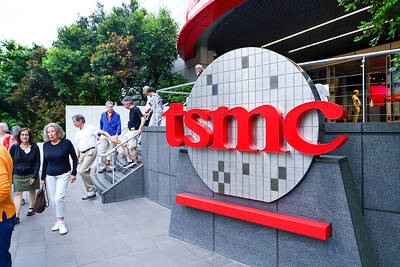
Taiwan Semiconductor Manufacturing Co (TSMC, 台積電) employee bonuses are likely to grow more than 30 percent this year, in line with the past few years as the company’s profits continue to set new records, an anonymous source cited TSMC chairman C.C. Wei (魏哲家) as saying yesterday. TSMC, the world’s largest contract chipmaker, is committed to taking care of its workers, the source said, citing Wei’s meeting with employees yesterday morning. Wei also expressed gratitude to employees for their contribution to the company’s improving bottom line, the source added. Since 2023, TSMC’s employee bonuses have grown at an annual rate of


 RSS
RSS