


Minister of Economic Affairs Shen Jong-chin (沈榮津) yesterday said that previously announced stimulus coupons are still being scrutinized, as the program has received mixed reactions from politicians.
In an interview with journalist Clara Chou (周玉蔻) on Hit FM radio station, Shen denied rumors that the ministry is determined to see the program through in a bid to save face, despite opposing voices.
“We are still gathering different perspectives and we will listen to the public,” Shen said, adding that the issuing of stimulus coupons should not be the main focus, as the COVID-19 pandemic remains a threat to the well-being of local industries.
“Right now we are focusing on helping businesses via wage subsidies, reductions in utility rates, an increase in bank loans and other financial aids... Stimulus measures would come afterward,” Shen said, citing a three-step plan to face the challenges caused by the disease.
“We need to protect our industries first, so that everybody can keep their jobs,” he said.
Meanwhile, the ministry’s schemes aimed at providing assistance to businesses in need might be expanded to include more companies affected by the pandemic.
Companies are required to show proof of a 50 percent annual decline in sales over the past two months to qualify for aid from the government.
Vice Minister of Economic Affairs Wang Mei-hua (王美花) on Monday said that the ministry is considering lowering the threshold to 30 percent for the services and manufacturing sector.
“After reviewing more than 1,400 applications over the weekend, we found that some industries are struggling more than others to meet the official requirements,” Wang told reporters following a visit to a local wedding services provider in Taipei.
She added that the ministry would hold more discussions with industry representatives on the matter.
Separately yesterday, the Intellectual Property Office said that it would help local pharmaceutical companies identify the legal use of existing drugs to counter the spread of the pandemic.
As the race to develop a vaccine for virus continues across the globe, the office said that it would in the meantime retrieve and publish information on old drugs that have been touted as potential COVID-19 treatments.
It would classify the core technologies of a total of 52 drugs according to their existing patents in a bid to help the local pharmaceutical industry, the office said.

Merida Industry Co (美利達) has seen signs of recovery in the US and European markets this year, as customers are gradually depleting their inventories, the bicycle maker told shareholders yesterday. Given robust growth in new orders at its Taiwanese factory, coupled with its subsidiaries’ improving performance, Merida said it remains confident about the bicycle market’s prospects and expects steady growth in its core business this year. CAUTION ON CHINA However, the company must handle the Chinese market with great caution, as sales of road bikes there have declined significantly, affecting its revenue and profitability, Merida said in a statement, adding that it would
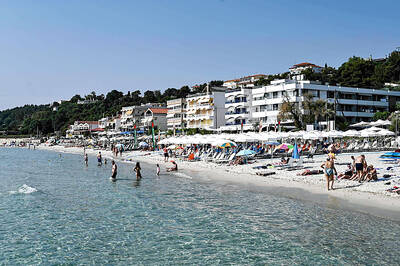
Greek tourism student Katerina quit within a month of starting work at a five-star hotel in Halkidiki, one of the country’s top destinations, because she said conditions were so dire. Beyond the bad pay, the 22-year-old said that her working and living conditions were “miserable and unacceptable.” Millions holiday in Greece every year, but its vital tourism industry is finding it harder and harder to recruit Greeks to look after them. “I was asked to work in any department of the hotel where there was a need, from service to cleaning,” said Katerina, a tourism and marketing student, who would
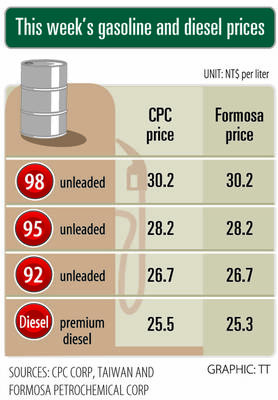
i Gasoline and diesel prices at fuel stations are this week to rise NT$0.1 per liter, as tensions in the Middle East pushed crude oil prices higher last week, CPC Corp, Taiwan (台灣中油) and Formosa Petrochemical Corp (台塑石化) said yesterday. International crude oil prices last week rose for the third consecutive week due to an escalating conflict between Israel and Iran, as the market is concerned that the situation in the Middle East might affect crude oil supply, CPC and Formosa said in separate statements. Front-month Brent crude oil futures — the international oil benchmark — rose 3.75 percent to settle at US$77.01
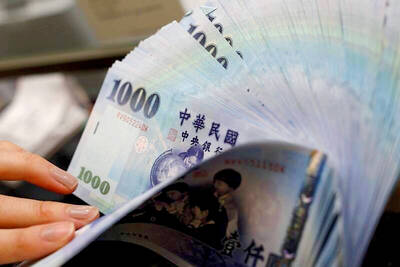
RISING: Strong exports, and life insurance companies’ efforts to manage currency risks indicates the NT dollar would eventually pass the 29 level, an expert said The New Taiwan dollar yesterday rallied to its strongest in three years amid inflows to the nation’s stock market and broad-based weakness in the US dollar. Exporter sales of the US currency and a repatriation of funds from local asset managers also played a role, said two traders, who asked not to be identified as they were not authorized to speak publicly. State-owned banks were seen buying the greenback yesterday, but only at a moderate scale, the traders said. The local currency gained 0.77 percent, outperforming almost all of its Asian peers, to close at NT$29.165 per US dollar in Taipei trading yesterday. The


 RSS
RSS