


Networking chip designer Realtek Semiconductor Corp (瑞昱) yesterday said that a novel coronavirus outbreak in China has yet to affect its orders and it remains positive about the current quarter amid rising demand for its Wi-Fi chips.
However, as many of its Chinese customers would not resume operation until Monday next week because of the outbreak, it is not clear how it might affect the company, Realtek said.
“We saw stable customer demand before the Lunar New Year holiday... We are cautiously optimistic about the first-quarter outlook,” Realtek spokesman Huang Yee-wei (黃依瑋) told investors during a teleconference. “So far, we have not seen any significant changes in orders.”
Realtek is working on several flexible ways to keep major and time-sensitive projects going as planned, Huang said.
“Everything is manageable now,” he said.
Moreover, the company has a broad customer base, including Huawei Technologies Inc (華為), and no single client accounts for a large part of its revenue source, he said.
CHINESE MARKET
“We believe demand from the [Chinese] market would be sustainable,” Huang said. “China is a very big consumer [electronics] market.”
Realtek has 1,000 employees based in China, mostly in Shenzhen and Suzhou, Huang said.
The company expects revenue to continue growing this year, driven primarily by Wi-Fi, Bluetooth chips and those used in switches, Internet-of-Things devices and TVs, Huang said.
Revenue last year jumped 32.6 percent to NT$60.74 billion (US$2.01 billion) from NT$45.81 billion in 2018, after fourth-quarter sales rose 39.7 percent annually, company data showed.
Net income soared 56.1 percent to an all-time high of NT$6.79 billion, compared with NT$4.35 billion in 2018.
Earnings per share rose to NT$13.36 from NT$8.57.
In the fourth quarter alone, net income soared 49.9 percent to NT$1.64 billion, from NT$914 million in the same period a year earlier, but declined 14.5 percent from NT$1.92 billion in the third quarter.
EARBUDS
With “true wireless stereo” (TWS) earbuds becoming a hit after Apple Inc introduced its products last year, investor interest in Realtek’s Bluetooth chips, which are used in the earbuds, has increased, the company said.
Realtek said it is developing new noise-canceling TWS solutions for customers, some of whom are planning to launch them this quarter.
The new single chips used in these earbuds cost more than US$2 each, about 33 percent higher than non-single chips.
Realtek expects worldwide TWS earbud shipments to reach 200 million units this year, with half of them coming from Apple.

Sweeping policy changes under US Secretary of Health and Human Services Robert F. Kennedy Jr are having a chilling effect on vaccine makers as anti-vaccine rhetoric has turned into concrete changes in inoculation schedules and recommendations, investors and executives said. The administration of US President Donald Trump has in the past year upended vaccine recommendations, with the country last month ending its longstanding guidance that all children receive inoculations against flu, hepatitis A and other diseases. The unprecedented changes have led to diminished vaccine usage, hurt the investment case for some biotechs, and created a drag that would likely dent revenues and
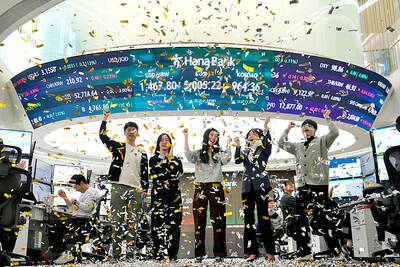
Global semiconductor stocks advanced yesterday, as comments by Nvidia Corp chief executive officer Jensen Huang (黃仁勳) at Davos, Switzerland, helped reinforce investor enthusiasm for artificial intelligence (AI). Samsung Electronics Co gained as much as 5 percent to an all-time high, helping drive South Korea’s benchmark KOSPI above 5,000 for the first time. That came after the Philadelphia Semiconductor Index rose more than 3 percent to a fresh record on Wednesday, with a boost from Nvidia. The gains came amid broad risk-on trade after US President Donald Trump withdrew his threat of tariffs on some European nations over backing for Greenland. Huang further
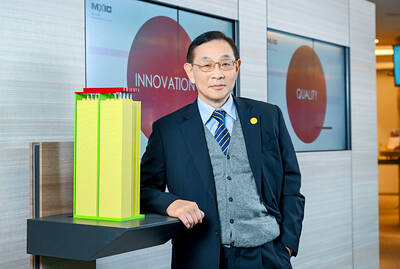
Macronix International Co (旺宏), the world’s biggest NOR flash memory supplier, yesterday said it would spend NT$22 billion (US$699.1 million) on capacity expansion this year to increase its production of mid-to-low-density memory chips as the world’s major memorychip suppliers are phasing out the market. The company said its planned capital expenditures are about 11 times higher than the NT$1.8 billion it spent on new facilities and equipment last year. A majority of this year’s outlay would be allocated to step up capacity of multi-level cell (MLC) NAND flash memory chips, which are used in embedded multimedia cards (eMMC), a managed

CULPRITS: Factors that affected the slip included falling global crude oil prices, wait-and-see consumer attitudes due to US tariffs and a different Lunar New Year holiday schedule Taiwan’s retail sales ended a nine-year growth streak last year, slipping 0.2 percent from a year earlier as uncertainty over US tariff policies affected demand for durable goods, data released on Friday by the Ministry of Economic Affairs showed. Last year’s retail sales totaled NT$4.84 trillion (US$153.27 billion), down about NT$9.5 billion, or 0.2 percent, from 2024. Despite the decline, the figure was still the second-highest annual sales total on record. Ministry statistics department deputy head Chen Yu-fang (陳玉芳) said sales of cars, motorcycles and related products, which accounted for 17.4 percent of total retail rales last year, fell NT$68.1 billion, or


 RSS
RSS