


Teco Electric and Machinery Co (東元電機) yesterday launched a new plant in Vietnam’s Binh Duong Province that is expected to produce 200,000 small, premium efficiency motors this year and 300,000 next year.
The US$12 million plant in the My Phuoc Industrial Park, about 42km from Ho Chi Minh City, is to manufacture products mainly for the US, Southeast Asian, Australian and New Zealand markets, Teco said.
The facility also provides the company with an option to avoid tariffs amid an ongoing US-China trade dispute and is in line with the government’s New Southbound Policy, it said.
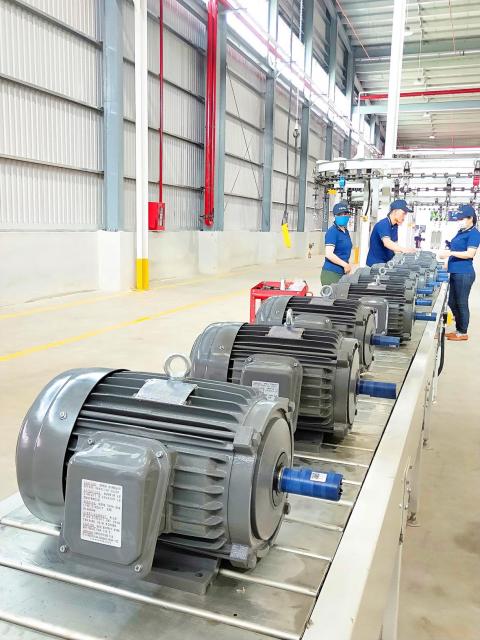
Photo: Lee Ching-hui, Taipei Times
“The My Phuoc factory, designed to environmentally friendly standards, is equipped with automated and smart production lines,” Teco chairwoman Sophia Chiu (邱純枝) said in a statement.
“This is the first time we have applied Internet of Things technology at our overseas plants, so that we can monitor the plant’s product quality, machine condition and management efficiency from Taiwan,” Chiu said.
The plant is a critical intelligent production base for Teco in Southeast Asia and the company plans to introduce a logistics control system and more advanced automation in the next few years, she said.
That plant, construction of which began in July last year, is the first phase of the Teco Vietnam Technology Park (越南東元科技工業園) project, the company said.
“A total of 150 companies will be able to move into the technology park after the whole project is completed in 2027,” it said.
A number of companies have been in talks about renting space in the park, it added.
Teco shares yesterday closed down 0.43 percent at NT$23.25 in Taipei trading.

The EU and US are nearing an agreement to coordinate on producing and securing critical minerals, part of a push to break reliance on Chinese supplies. The potential deal would create incentives, such as minimum prices, that could advantage non-Chinese suppliers, according to a draft of an “action plan” seen by Bloomberg. The EU and US would also cooperate on standards, investments and joint projects, as well as coordinate on any supply disruptions by countries like China. The two sides are additionally seeking other “like-minded partners” to join a multicountry accord to help create these new critical mineral supply chains, which feed into
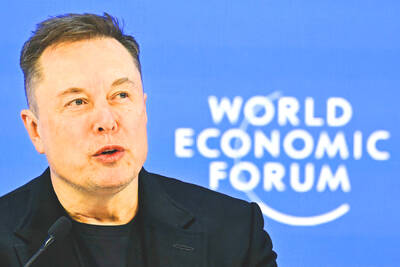
Elon Musk’s lieutenants have reached out to chip industry suppliers, including Applied Materials Inc, Tokyo Electron Ltd and Lam Research Corp, for his envisioned Terafab, early steps in an audacious and likely arduous attempt to break into the production of cutting-edge chips. Staff working for the joint venture between Tesla Inc and Space Exploration Technologies Corp (SpaceX) have sought price quotes and delivery times for an array of chipmaking gear, people familiar with the matter said. In past weeks, they’ve contacted makers of photomasks, substrates, etchers, depositors, cleaning devices, testers and other tools, according to the people, who asked not to

Japan approved ¥631.5 billion (US$3.97 billion) in additional subsidies to hasten Rapidus Corp’s entry into the high-stakes artificial intelligence (AI) chipmaking arena, ramping up support for a project widely regarded as a long shot. The capital is intended to bankroll Rapidus’ work for information technology firm Fujitsu Ltd, one of the initial customers that Tokyo hopes would get the signature endeavor off the ground. The new money raises the fees and investments that the government is injecting into the start-up to ¥2.6 trillion by the end of the current fiscal year to March next year, the Japanese Ministry of Economy, Trade and
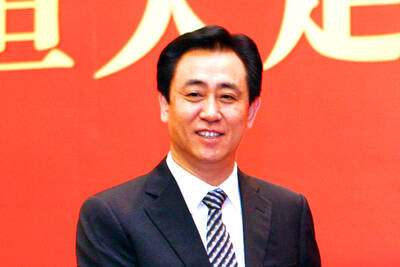
The founder of Chinese property giant Evergrande Group (恆大集團) has pleaded guilty to charges of fraud and bribery, a court said yesterday, the latest blow for what was once the country’s leading developer. Evergrande’s rise was propelled by decades of rapid urbanization and rising living standards, but in 2020, its access to credit dramatically narrowed when the government introduced curbs on excessive borrowing and speculation. The company defaulted in 2021 after struggling to repay creditors. Founder Xu Jiayin (許家印), 67, known as Hui Ka Yan in Cantonese, was reportedly held by police in 2023, with Evergrande saying he had been subjected to


 RSS
RSS