


Bulk shipper First Steamship Co Ltd (益航) expects steady shipping business this year, with earnings set to rise from last year thanks to disposal gains from share sales and the contribution of its department store business in China.
It said on Monday last week that it expected the bulk shipping sector this year to be similar to last year, and it has managed to maintain flexibility in its fleet of nine vessels in order to reduce market risk and ensure a stable income.
Two of the vessels are leased on long-term contracts of more than five years, four are leased on one-year contracts and the other three are operated under a shipping pool agreement with other companies.
A Kamsarmax-type cargo ship is under construction and will be delivered in November next year, the company said.
The Baltic Dry Index — which tracks the costs of transporting dry commodities such as coal, iron ore and grain — experienced a downward correction in the first quarter, but the company said the outlook for dry bulk shipping is still bullish. As the index has moved up since last month, when transport costs increased along with the rising commodities trade, the company said it anticipates this momentum would continue.
“We believe the index will bounce back to the level of 2018,” First Steamship said in a conference presentation on Monday.
Gross profit from shipping rose 34.42 percent to US$12.73 million last year, compared with US$9.47 million a year earlier.
However, shipping accounted for just 13.7 percent of First Steamship’s total revenue of NT$8.04 billion (US$260.1 million) last year, with its retail business in China bringing in 80.3 percent. Other operations include leasing, financial services and property development.
The company reported a weak net income of NT$6 million for last year, down from NT$565 million a year earlier, mainly due to a non-operating loss of NT$279 million at its retail arm, Grand Ocean Retail Group Ltd (大洋百貨), as well as a non-operating loss of NT$692.1 million related to its three other subsidiaries: Hong Kong-listed Sandmartin International Holdings Ltd (聖馬丁國際控股), Mariner Finance Ltd (友成融資租賃) and Taiwan Environment Scientific Co Ltd (台境企業).
Earnings per share were NT$0.01 last year, compared with NT$1.06 the previous year.
In the conference, Grand Ocean spokesperson Chang Chin-kuo (張進國) said the retailer would continue restructuring and focus on e-commerce, while targeting young consumers.
After shutting down three underperforming department stores in China’s Xiantan, Suzhou and Tongling last year, the retailer now operates 15 outlets and plans to launch a new store in Shanghai this year.
First Steamship last month sold all of its 286.05 million, or 19.22 percent, shares of Russian casino operator Summit Ascent Holdings Ltd (凱升控股) to Victor Sky Holdings Ltd (勝天控股) for NT$2.18 billion.
It invested NT$1.14 billion in Summit Ascent in 2017. The share sale would contribute NT$1.55 to the company’s earnings per share this year, chairman Jerry Kuo (郭人豪) said on Monday.
In the first quarter, First Steamship’s consolidated revenue climbed 5.19 percent to NT$2.14 billion, from NT$2.03 billion a year earlier.
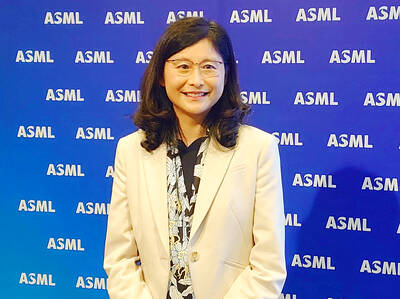
Netherlands-based semiconductor equipment supplier ASML Holding NV yesterday said that it is planning to hire an additional 1,000 people in Taiwan this year in response to growing demand from clients. ASML had previously planned to recruit 600 people this year, but that the plan has been adjusted upward, ASML vice president and ASML Taiwan general manager Grace Wang (汪佳慧) told reporters. ASML has a workforce of more than 4,500 in Taiwan, accounting for about 10 percent of its global total, Wang said. This year’s recruitment campaign would focus on adding people in the customer support, manufacturing and supply chain domains to assist ASML
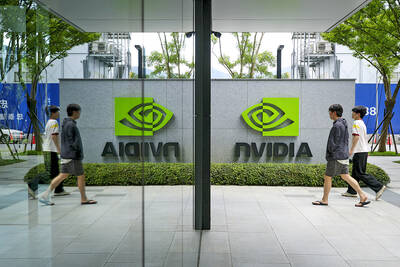
UNDER MICROSCOPE: Taiwan detained three people who allegedly conspired to buy servers in Taiwan and export them using fraudulent documentation, prosecutors said Nvidia Corp chief executive officer Jensen Huang (黃仁勳) on Saturday urged Super Micro Computer Inc to tighten up on compliance after Taiwan detained three people this week for allegedly making fraudulent declarations about artificial intelligence (AI) servers made by its US partner. The development marked the nation’s first crackdown on semiconductor smuggling, which grew after the US slapped restrictions on exports of high-end chips such as Nvidia AI accelerators to China. Nvidia is “rigorous” in explaining regulations to all of its partners, Huang told reporters after arriving in Taipei. “Ultimately Super Micro has to run their own company,” he said in response to
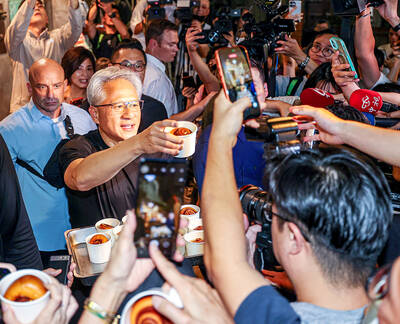
Nvidia Corp yesterday announced that CEO Jensen Huang (黃仁勳) would attend an employee meeting in Taipei tomorrow to celebrate the launch of the company’s Taiwan headquarters project. Huang would attend a gathering at the site of Nvidia’s planned headquarters in Beitou Shilin Technology Park (北投士林科技園區), the company said in a statement. After arriving in Taiwan on Saturday last week, Huang told reporters that he plans to meet with Quanta Computer Inc (廣達) chairman Barry Lam (林百里) and Taiwan Semiconductor Manufacturing Co (TSMC, 台積電) chairman C.C. Wei (魏哲家), and would attend the groundbreaking ceremony for Nvidia’s Taiwan headquarters tomorrow. Nvidia has not yet applied

Huawei Technologies Co (華為) said it has come up with a new pathway to shorten its gap with industry leader Taiwan Semiconductor Manufacturing Co (TSMC, 台積電), potentially achieving a breakthrough in making advanced semiconductors without cutting-edge equipment. Right now there is about a five-year gap between what TSMC is capable of and what Huawei, together with its manufacturing partner Semiconductor Manufacturing International Corp (中芯), can produce. Huawei is to start making 1.4-nanometer chips by 2031 with its own “LogicFolding” technology, Huawei semiconductor chief He Tingbo (何庭波) said in a rare public appearance during a chip conference yesterday, while TSMC has


 RSS
RSS