


Hon Hai Precision Industry Co’s (鴻海) state-of-the-art 6G flat panel production site in Mount Pleasant, Wisconsin, is scheduled to start production in the fourth quarter of next year, the company said on Monday in a statement in the US.
Hon Hai, known internationally as Foxconn Technology Group (富士康科技集團), said construction of the facility in the Valley Science and Technology Park is scheduled to begin by this summer.
The announcement came after Hon Hai said in late January that it was rethinking the US$10 billion investment, saying that the project would be adjusted to focus mainly on research and development instead of manufacturing.
According to international media reports, the investment was revised in light of the steep cost of making advanced TV screens in the US, given the cost of labor there.
Monday’s statement indicated that the LCD plant would produce screens for a wide range of applications, including education, health and medical care, entertainment, sports, security and smart city development.
“Our commitment from day one has been to establish a winning formula for Foxconn and for Wisconsin,” Louis Woo (胡國輝), special assistant to Hon Hai founder and chairman Terry Gou (郭台銘), said in the statement.
“We continue to expand our presence around the state, create jobs and deepen our partnerships, while innovating and adapting to meet changing market needs,” Woo said. “We’re investing in Wisconsin because we know manufacturing here is going to drive even greater success and growth for Foxconn and for the community.”
Hon Hai said it would take several key steps over the next few months for the Wisconsin project, including announcing the winners of two bid packages by April 1.
“‘Wisconsin First’ has been our commitment from the start and it has been evidenced in our construction hiring to date,” Woo said.
Hon Hai on Nov. 10, 2017, signed an agreement with Wisconsin Economic Development Corp to build a flat screen manufacturing campus in the state.
The investment was sold as creating up to 13,000 jobs over six years that would have an estimated average salary of US$53,875.
Gou and US President Donald Trump attended a groundbreaking ceremony at the Mount Pleasant site on June 28 last year.
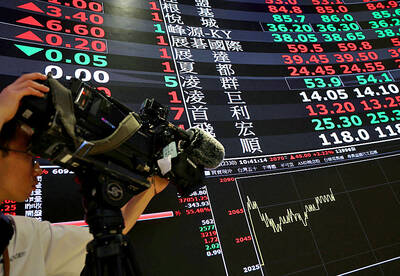
After several years flying high as Asia’s best Nvidia Corp proxy, Taiwan Semiconductor Manufacturing Co (TSMC, 台積電) is increasingly vying with other artificial intelligence (AI) stocks for investor attention. Stock traders are chasing a wider array of beneficiaries as mainstream usage of AI creates demand for hardware beyond the most-advanced chips TSMC makes for Nvidia. Subthemes from the deepening memory crunch to advances in robotics are also luring bids. At the same time, investment caps on single stocks are pushing funds to diversify, while retail investors long familiar with TSMC through its US depositary receipts are being offered a broader set of
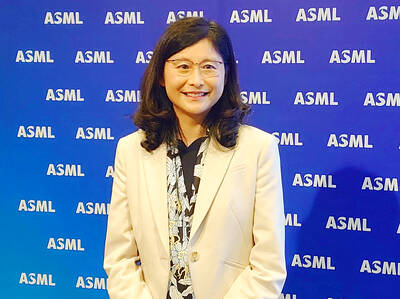
Netherlands-based semiconductor equipment supplier ASML Holding NV yesterday said that it is planning to hire an additional 1,000 people in Taiwan this year in response to growing demand from clients. ASML had previously planned to recruit 600 people this year, but that the plan has been adjusted upward, ASML vice president and ASML Taiwan general manager Grace Wang (汪佳慧) told reporters. ASML has a workforce of more than 4,500 in Taiwan, accounting for about 10 percent of its global total, Wang said. This year’s recruitment campaign would focus on adding people in the customer support, manufacturing and supply chain domains to assist ASML
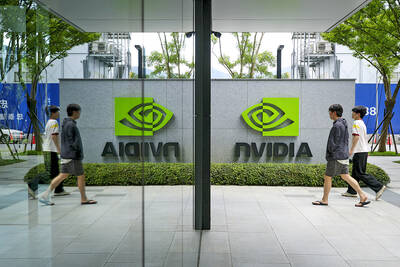
UNDER MICROSCOPE: Taiwan detained three people who allegedly conspired to buy servers in Taiwan and export them using fraudulent documentation, prosecutors said Nvidia Corp chief executive officer Jensen Huang (黃仁勳) on Saturday urged Super Micro Computer Inc to tighten up on compliance after Taiwan detained three people this week for allegedly making fraudulent declarations about artificial intelligence (AI) servers made by its US partner. The development marked the nation’s first crackdown on semiconductor smuggling, which grew after the US slapped restrictions on exports of high-end chips such as Nvidia AI accelerators to China. Nvidia is “rigorous” in explaining regulations to all of its partners, Huang told reporters after arriving in Taipei. “Ultimately Super Micro has to run their own company,” he said in response to
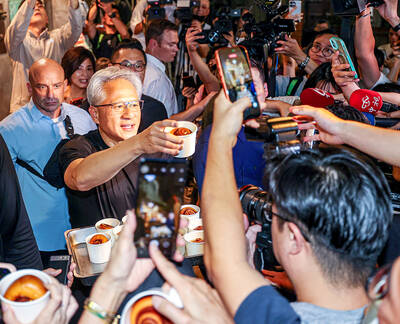
Nvidia Corp yesterday announced that CEO Jensen Huang (黃仁勳) would attend an employee meeting in Taipei tomorrow to celebrate the launch of the company’s Taiwan headquarters project. Huang would attend a gathering at the site of Nvidia’s planned headquarters in Beitou Shilin Technology Park (北投士林科技園區), the company said in a statement. After arriving in Taiwan on Saturday last week, Huang told reporters that he plans to meet with Quanta Computer Inc (廣達) chairman Barry Lam (林百里) and Taiwan Semiconductor Manufacturing Co (TSMC, 台積電) chairman C.C. Wei (魏哲家), and would attend the groundbreaking ceremony for Nvidia’s Taiwan headquarters tomorrow. Nvidia has not yet applied


 RSS
RSS