


CPC Corp, Taiwan (CPC, 台灣中油) yesterday said it is winding down Taiwan-Japan Oxo Chemical Industries Inc (TJOC, 曄揚), a joint venture with Japanese petrochemical maker KH Neochem Co, due to difficulties obtaining regulatory approval.
Formed in 2016, the venture would have been one of the largest Taiwanese-Japanese petrochemical investments at about NT$13.7 billion (US$444.07 million), but it has faced resistance from locals near the planned site in Kaohsiung over potential air pollution.
CPC and KH Neochem, which owns a 47 percent stake in TJOC, are expected to split the estimated NT$400 million loss from the unit’s liquidation, along with Mega International Commercial Bank (兆豐銀行), which holds a 6 percent stake.
In October last year, KH Neochem’s board of directors announced the decision to pull out of the deal.
The state-run CPC has begun the liquidation process, pending approval from the Ministry of Economic Affairs, vice president Fang Jeng-zen (方振仁) said.
There were other factors apart from regulatory hurdles that led to the demise of TJOC, including higher-than-expected construction costs, while falling oil prices and slowing global economic growth have cast uncertainty and gloom over the petrochemical sector, Fang said by telephone.
TJOC was aiming to tap into the market for higher value-added petrochemical products and had plans to build up an annual output of 180,000 tonnes of isononyl alcohol (INA) and 21,000 tonnes of butylene terpolymer using production technologies licensed from KH Neochem.
The firms were particularly optimistic about INA, which is used to produce di-isononyl phthalate, a plasticizer used to replace di-octyl phthalate following an EU ban.
“CPC has maintained good relations with KH Neochem and does not rule out exploring other collaborations in the future,” Fang said.
“Expanding into segments of high value-added products remains a priority at CPC,” Fang said, adding that higher-tier products have much smaller production volumes, which would help mitigate concerns about pollution.
Meanwhile, a meeting between CPC chairman Tai Chein (戴謙) and Kaohsiung Mayor Han Kuo-yu (韓國瑜) on Friday last week established better communication between the two sides and would help the city balance investment opportunities, economic growth and environmental conservation, Fang said.

Cairo’s new monorail slices across the city skyline, running above the familiar chaos of blaring horns and aging buses’ exhaust fumes that mark rush hour below. The US$4.5 billion monorail, opened this month, is among Egypt’s most prominent new transport projects, part of a debt-funded infrastructure drive criticized for sapping state finances while bringing limited benefits to most of the country’s 109 million people. “It feels like you’re in a different country,” said Ramy Sayed, a restaurant manager, aboard a driverless Innovia 300 train. “No noise, no traffic, we’re not used to this.” The eastern line runs 56km from the bustling middle-class
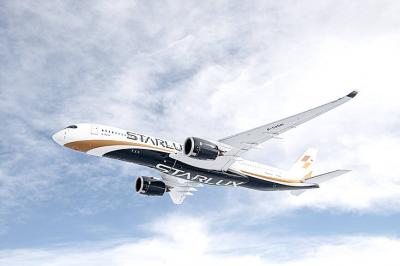
Starlux Airlines Co (星宇航空) today unveiled a long-haul network expansion plan at a shareholders’ meeting in Taipei, including direct flights to Barcelona, Spain, and Zurich, Switzerland, as well as a service connecting Taipei, Sydney and New Zealand. Starlux is to become the first Taiwanese carrier to offer non-stop services to the two European cities, while the inaugural oceanic route is expected to expand transit opportunities within the Australia-New Zealand market, Starlux said. Flight services to Chicago, Dallas, Washington and New York are under evaluation, the airline added. Prior to the shareholders’ meeting, the airline earlier this year announced that it would be

Taiwanese prosecutors suspect that three people successfully smuggled at least one shipment of Nvidia Corp artificial intelligence (AI) chips to China after first exporting them to Japan, people familiar with the matter said. The trio was detained last week by the Keelung District Prosecutors’ Office for allegedly falsifying documents related to exports of Super Micro Computer Inc servers containing advanced Nvidia chips, which the US has barred from sale to China without a license from Washington. The move marked Taiwan’s first public crackdown on AI chip diversion after years of pressure from the US to take a more active role in curtailing
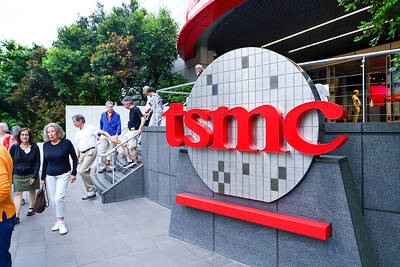
Taiwan Semiconductor Manufacturing Co (TSMC, 台積電) employee bonuses are likely to grow more than 30 percent this year, in line with the past few years as the company’s profits continue to set new records, an anonymous source cited TSMC chairman C.C. Wei (魏哲家) as saying yesterday. TSMC, the world’s largest contract chipmaker, is committed to taking care of its workers, the source said, citing Wei’s meeting with employees yesterday morning. Wei also expressed gratitude to employees for their contribution to the company’s improving bottom line, the source added. Since 2023, TSMC’s employee bonuses have grown at an annual rate of


 RSS
RSS