


Asustek Computer Inc (華碩), one of the world’s largest PC brands, yesterday said its consolidated sales for the fourth quarter of last year fell 13 percent from a year earlier, at a time when trade tensions between the US and China affected global demand.
The company also cited a component shortage in the PC industry as a reason for the drop in sales from October to last month.
In a statement, Asustek said it posted consolidated sales of NT$99.4 billion (US$3.23 billion), down 3 percent from the previous quarter.
Meanwhile, Asustek said it generated NT$88.1 billion in brand sales in the fourth quarter, down 15 percent from a year earlier and down 6 percent from a quarter earlier.
Last month alone, the PC brand’s consolidated sales totaled NT$33.6 billion, down 8 percent from a year earlier and 3 percent from a month earlier, while its brand sales also fell 17 percent from a year earlier and dropped 14 percent from a month earlier to NT$22.7 billion.
Last year, Asustek’s consolidated sales fell 9.7 percent from a year earlier to NT$391.56 billion, while its brand sales shed 10 percent at NT$352.45 billion.
Asustek said it would focus more on developing gaming PCs, a niche market in the global PC business, and boosting its presence in the Artificial Intelligence of Things (AIoT) sector in a bid to deal with the impact of a slowing PC market and eventually rake in more sales.
Faced with escalating competition in the global PC industry, Asustek last month announced a management reshuffle with chief executive officer Jerry Shen (沈振來) stepping down at the end of the month, beginning a period of business restructuring.
Under a new dual leadership model, S.Y. Hsu (許先越) and Samson Hu (胡書賓) became Austek’s chief executive officers on Tuesday last week to help guide the company’s AIoT venture.
Last month, Asustek said it would book about NT$6.2 billion in one-time expenses, including losses resulting from inventories, the amortization of advance royalties and costs from business reorganization in the fourth quarter, which raised concerns that it would report a loss for the quarter.
Asustek released its fourth quarter sales report before the local equity market closed yesterday. Its shares ended up 2.31 percent at NT$221 after the gains posted in the US and other regional markets.
Meanwhile, Asustek’s Taiwanese rival, Acer Inc (宏碁), has also experienced setbacks while trying to expand beyond its core PC-oriented business.
Acer on Friday last week rejected rumors that it is planning to dissolve StarVR Corp (宏星技術), its 63.25 percent-owned virtual reality subsidiary, in the middle of this year.
Acer said that it booked a loss of NT$233 million when its virtual reality partner, Swedish developer Starbreeze AB, filed for reconstruction at the beginning of last month, due to a lack of liquidity.

Taiwanese firms have increased investment in the Philippines in recent years as Manila’s ties with Washington deepen and global supply chains continue to shift away from China, an expert at the Chung-Hua Institution for Economic Research (CIER, 中華經濟研究院) said yesterday. The Philippines had not been among Taiwanese investors’ top choices in Southeast Asia, CIER Taiwan ASEAN Studies Center director Kristy Hsu (徐遵慈) said at a seminar in Taipei. However, Taiwan’s investment in the country has grown significantly since the COVID-19 pandemic, reaching US $257 million last year, a high in recent years, she said. Although Taiwan’s total investment in the Philippines still lags
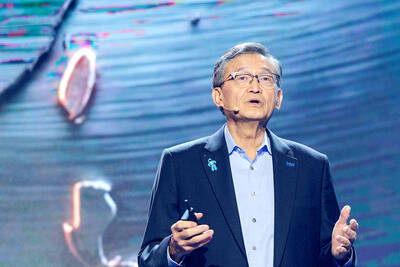
Intel Corp regards Taiwan Semiconductor Manufacturing Co (TSMC, 台積電) as a longstanding partner, as the US chipmaker would continue outsourcing production of advanced chips to TSMC, Intel chief executive officer Lip-Bu Tan (陳立武) said yesterday. “I don’t look at people as competitors. I look at the collaboration... Nvidia is also, you know, a good friend,” Tan told a news conference following his keynote speech at the Computex trade show in Taipei. “It’s a very trusted partnership for us... We are a big, top customer for them, and we’re going to continue doing that,” he said, referring to TSMC, the world’s largest foundry

Artificial intelligence (AI) agents would supplant smartphones as the center of people’s digital lives, fundamentally reshaping personal devices and driving a major computing upgrade cycle, Qualcomm Inc CEO Cristiano Amon said yesterday. In his keynote speech for this year’s Computex trade show in Taipei, Amon said that the rise of "agentic AI" — AI systems capable of reasoning, planning and carrying out tasks autonomously — would transform how people interact with technology across phones, PCs, vehicles and wearable devices. Describing the technology as the next major evolution in computing, Amon said that "2026 is the year of agents.” For decades, smartphones have sat
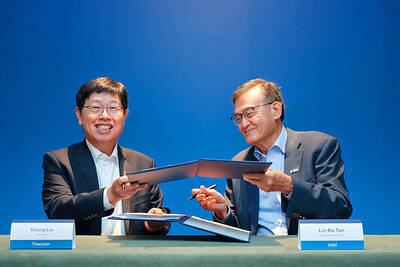
Hon Hai Precision Industry Co (鴻海精密) yesterday said it would work with US chipmaker Intel Corp to jointly develop and deploy next-generation artificial intelligence (AI) infrastructure and intelligent computing platforms in a move to capture booming demand for AI computing systems. Hon Hai, also known as Foxconn Technology Group (富士康), said in a statement that the partnership would combine its global manufacturing scale, system integration expertise and AI data center deployment capabilities with Intel’s strengths in processor architecture, silicon technologies and software ecosystem. The companies said they plan to work on equipment used in AI data centers, including server racks powered by


 RSS
RSS